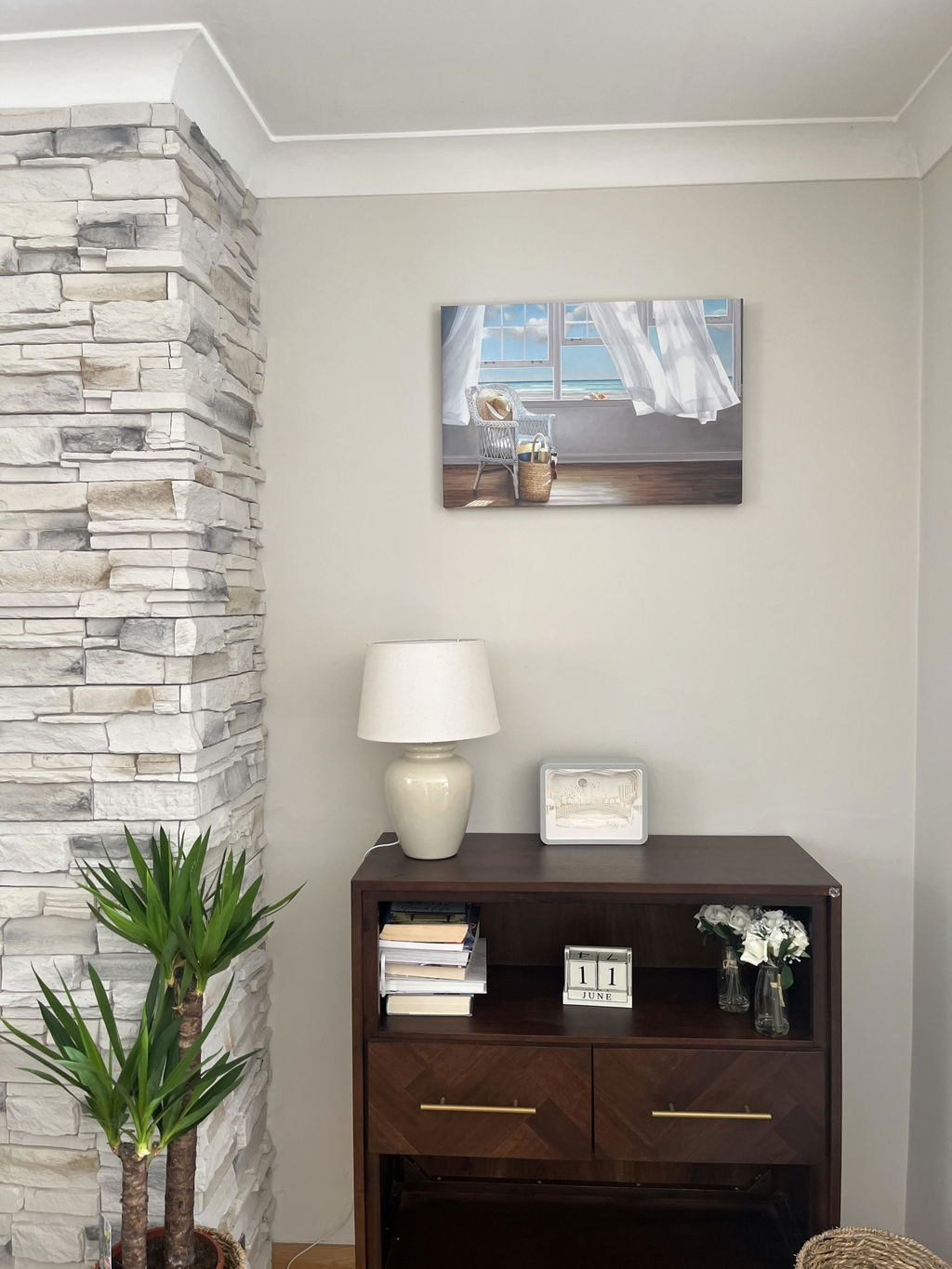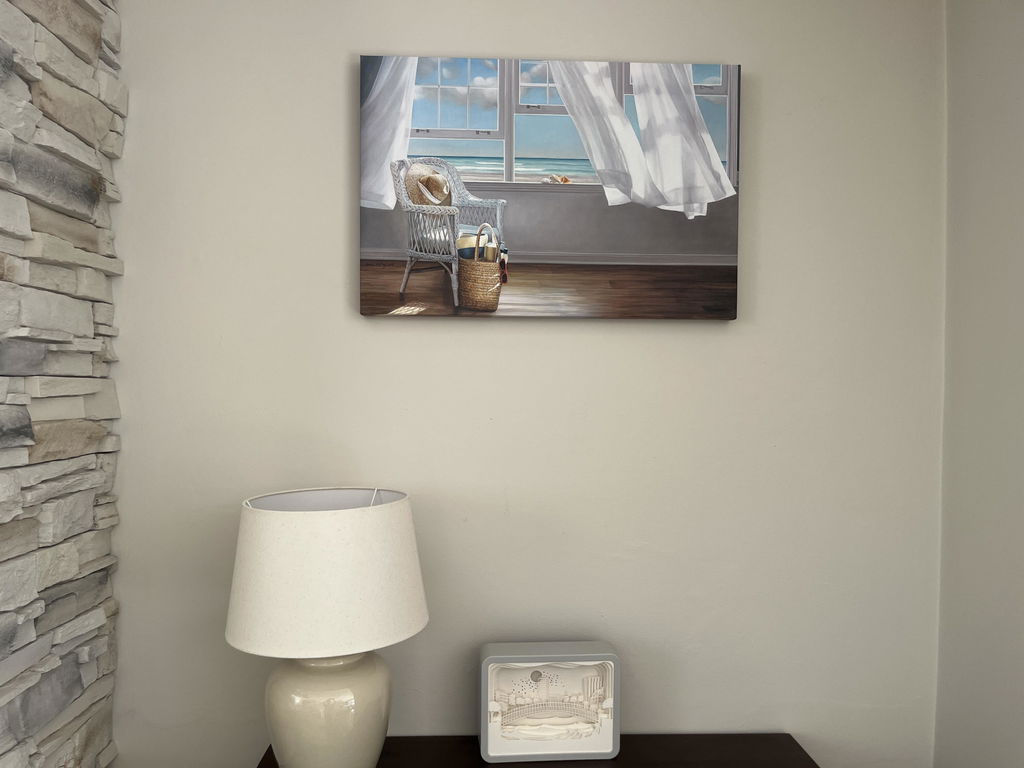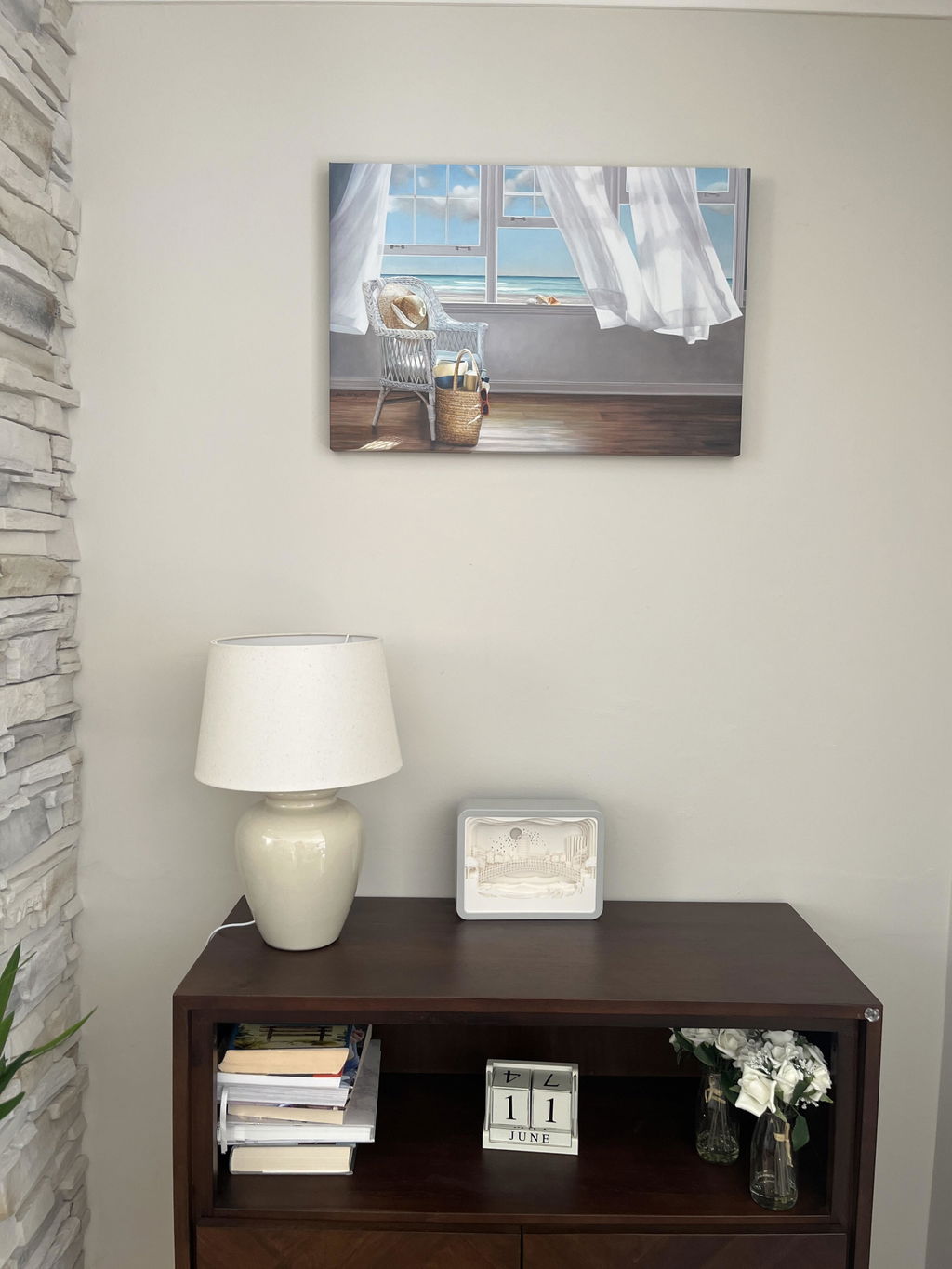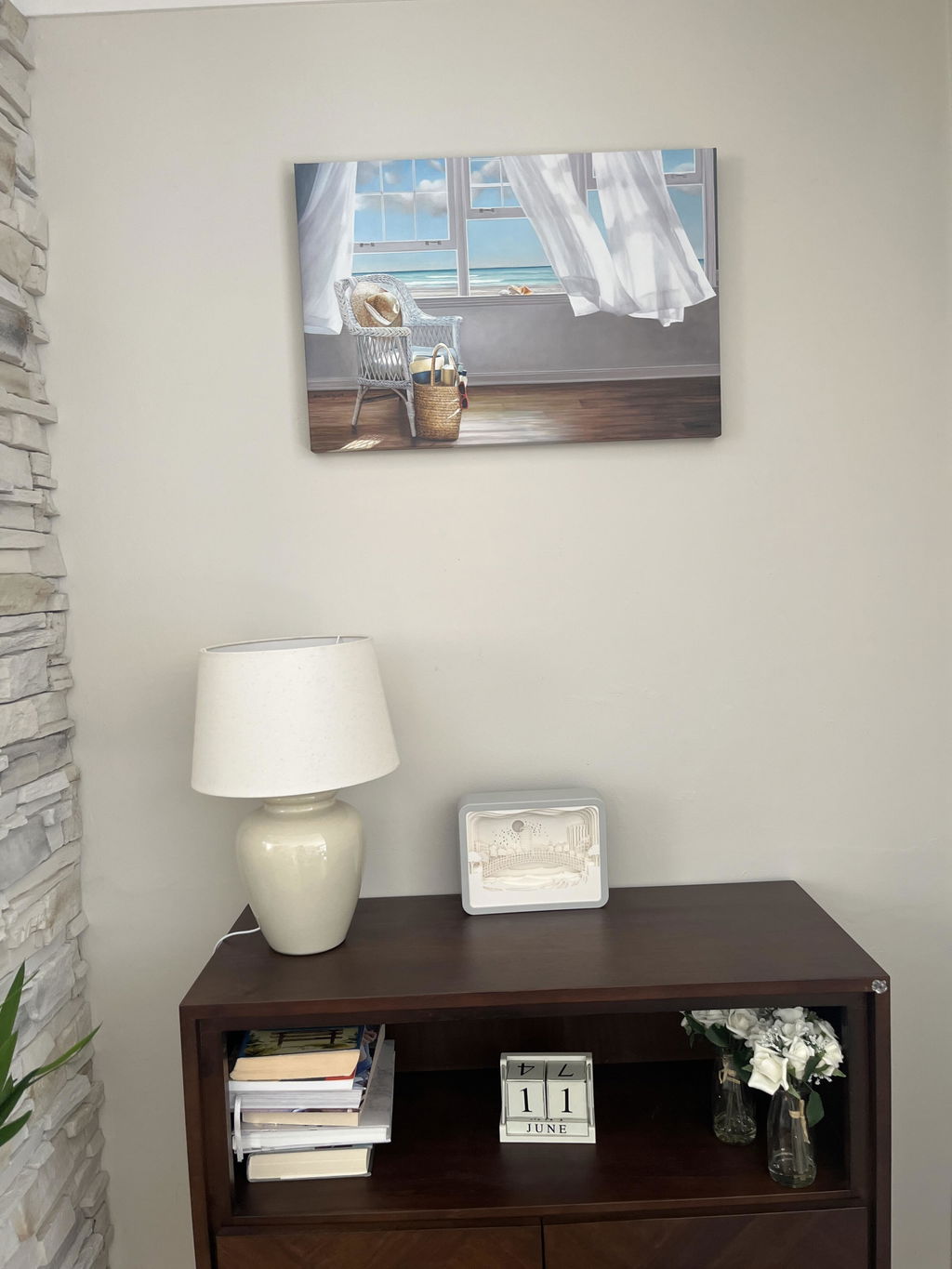

You've probably seen an Allayn Stevens painting in one of two ways. Either you found a richly textured natural scene or still-life and thought, “I'd love to own that,” or you found the same image offered in print form and suddenly weren't sure what was original.
That confusion is normal. It's also one of the biggest stumbling blocks for first-time buyers of Allayn Stevens original oil paintings. A work can look hand-painted in a photo, yet appear elsewhere as a reproduction. If you're spending serious money, you need more than a pretty listing. You need a way to judge the art, verify what it is, and buy with confidence.
Table of Contents
- An Introduction to Collecting Allayn Stevens
- Exploring Her Style and Technique
- Verifying Authenticity A Checklist for Buyers
- Valuing and Acquiring an Original Allayn Stevens
- Framing Display and Long-Term Care
- A Guide for Interior Designers and Commercial Buyers
- Frequently Asked Questions About Allayn Stevens Paintings
An Introduction to Collecting Allayn Stevens
Buying original art usually begins with a feeling, then turns into research. You respond to the mood of the painting first. After that, practical questions show up quickly. Is it an original? Is the asking price reasonable? Is it right for your room, or are you reacting to a photo rather than the object itself?
Allayn Stevens is the kind of artist who often pulls people into that second stage. Her paintings are approachable but not bland. They suit lived-in homes, polished interiors, and professional spaces because they tend to balance decorative appeal with a painterly presence.
She's also an artist people often encounter while browsing design-oriented art, which adds another layer of confusion. A buyer may discover the composition in print form before realizing originals exist too. If your taste leans clean and restrained, it helps to understand how a hand-painted work behaves differently on the wall than a flat reproduction. A piece on simple and elegant interiors can help you think about that relationship between art and room style.
What new collectors usually need to decide
- Original or print: The first question isn't whether you like the image. It's whether you're looking at a one-of-one painted object or a reproduction of that image.
- Decorative fit: A good painting should hold the room together without feeling like it was chosen only to match the sofa.
- Buying route: Some works appear through galleries, some through resale channels, and some through private hands.
Practical rule: Buy the painting only after you can describe both what you love about it and what proves it's authentic.
That combination matters. Taste helps you choose well. Verification helps you avoid regret.
Exploring Her Style and Technique
Allayn Stevens has been an established artist for more than 30 years, with study at institutions including San Miguel de Allende Instituto and Laguna Beach College of Art, and she continues to produce large-scale original oil paintings on canvas, including 24 x 36 inch works that suit interior settings, as noted by Fulcrum Gallery's artist profile.

Why her paintings feel familiar and refined
Stevens' appeal starts with subject matter. She works in genres that many collectors feel comfortable living with for years: scenes of nature and still-life paintings. That matters more than people think. A first significant purchase usually needs to do two jobs at once. It should reward close looking, and it should remain easy to live with every day.
Her scenic paintings often attract buyers who want calm without emptiness. A good scenic painting doesn't just fill wall space. It opens a room visually and sets a pace for the way the room feels. That's one reason designers often gravitate toward representational work when they want warmth rather than tension.
Still-life paintings work differently. They bring structure, balance, and intimacy. Even when the palette is rich, the arrangement can make the room feel ordered.
If you've mostly looked at contemporary abstracts, it may help to compare the experience with abstract wall art prints. Abstract work often energizes a space through rhythm and shape. Stevens' paintings usually create interest through place, light, recognizable forms, and painterly surface.
What oil paint adds to the experience
Oil painting has a physical presence that a reproduction rarely captures well in photographs. You're not only seeing color. You're seeing edges, layering, and small shifts in sheen where brushstrokes catch the light differently.
That surface quality is especially important in larger works. A generously sized painting can anchor a room because it has visual authority, but the medium has to support that scale. Oil does. It can hold depth, softness, and texture all at once.
A strong original oil painting changes slightly through the day. Morning light, side light, and evening light don't hit the surface in the same way.
That's part of the pleasure of ownership. You don't finish looking at it in one visit. The painting keeps giving back as your eye gets more practiced.
Verifying Authenticity A Checklist for Buyers
This is the point where many buyers hesitate, and rightly so. A common source of confusion is whether a work is an original painting or a stock print. That uncertainty is especially important when provenance is unclear. One cited buyer concern notes that 68% of online art buyers hesitate to purchase without verified provenance, and it also points to forum discussions where works can look original while also appearing as prints. The linked reference used for this verification context is MutualArt's Allayn Stevens page.

Start with the object, not the listing
Photos can mislead you in both directions. A textured print can look hand-painted online. A real oil painting can look oddly flat under poor lighting.
Ask for direct, angled photographs of the surface. You want to see whether paint sits above the canvas in ridges, soft mounds, or directional strokes. Originals usually show variation across the image. Reproductions often show a more uniform surface, even when printed on canvas.
Stevens' originals have been described in at least one listing as oil on Fredix canvas, with examples ranging from 24 x 36 inches to a larger 40 x 51.5 inches work titled Cotswold Cottage, according to the 1stDibs listing for that painting. That doesn't authenticate every work by itself, but material details like canvas brand, dimensions, and paint handling help you assess whether a seller is describing a real object or repeating generic copy.
Ask for paperwork before you ask for a discount
New buyers sometimes focus on bargaining too early. First ask what documents exist.
Useful paperwork can include:
- Gallery receipt: This helps establish where the work entered the market.
- Prior ownership record: Even a simple chain of custody is better than a vague story.
- Certificate of authenticity: A COA isn't magic, but it's valuable when it comes from a credible seller or artist source.
- Condition notes: These tell you whether the painting has had repairs, relining, overpainting, or other treatment.
If the seller can't provide any documentation, don't panic. But do slow down. In that case, your inspection standards should rise, not fall.
| Verification Point | What to Look For | Why It Matters |
|---|---|---|
| Signature | A signature that appears integrated with the paint surface, not mechanically printed | It helps distinguish a hand-painted work from a reproduction |
| Surface texture | Visible brushwork, paint buildup, and uneven hand-applied marks | Originals usually show physical variation that prints lack |
| Canvas and stretcher | Quality canvas, stable stretcher bars, and age-consistent construction | Materials can support or undermine the seller's description |
| Provenance | Receipts, labels, prior listings, or ownership history | Documentation supports value and buyer confidence |
| Condition | Craquelure, retouching, abrasion, or repairs | Condition affects both enjoyment and long-term value |
Buyer check: If a seller avoids close-up photos, sidesteps provenance questions, or won't describe the surface in detail, treat that as useful information.
A blacklight review by a conservator or experienced dealer can also help reveal repairs or alterations that ordinary room light hides. For a first significant purchase, that extra scrutiny is often money well spent.
Valuing and Acquiring an Original Allayn Stevens
The easiest pricing mistake is assuming a painting's value comes from image appeal alone. In practice, buyers weigh several things at once: authenticity, size, condition, subject matter, and how often a comparable original appears for sale.
Allayn Stevens has a documented secondary-market presence, with auction results reaching $3,200 USD for a single painting. That gives buyers a real benchmark for her market visibility and shows that original works do trade beyond casual decorative resale.

What affects value
Size matters, but not in a simple bigger-equals-better way. A large work can command more attention and fit better in a formal room, lobby, or hospitality setting. But subject matter also influences demand. A painting that feels especially characteristic of the artist's style may attract stronger interest than a less resolved piece of similar scale.
Condition matters just as much. A painting with a clean surface, stable canvas, and no obvious repair history usually gives buyers more confidence. Framing can influence presentation too, though seasoned collectors try to separate the value of the painting from the value of an attractive frame.
A practical way to think about value is to ask three questions:
- Is this a convincing example of the artist's work?
- Is the condition good enough that I won't inherit hidden costs?
- Would I still want this painting if I never resold it?
That third question keeps your decision grounded. Original art should have a market rationale, but it should also earn its place in your life.
Where buyers usually find available works
You may find Stevens' originals through galleries, estate dispersals, auctions, dealer inventory, or private resale. Estate channels can be especially useful when a collection includes works that haven't been circulating publicly. If you want to understand how art changes hands in that setting, this overview of successful art estate sales offers helpful context on valuation, presentation, and sale process.
For wall placement and scale planning, it also helps to study room context before you buy. A guide to large wall art ideas can help you test whether a substantial original will anchor the room or overpower it.
Good acquisitions often come from patient searching, not fast clicking.
When inventory feels unclear, ask sellers direct questions. Is the work currently available? Is it an original oil painting, not a print? Has it been exhibited, resold, or recently cleaned? Clear answers usually signal a seller who understands art transactions. Vague answers usually signal more work for you.
Framing Display and Long-Term Care
Once you've bought an original, your job changes. You're no longer shopping. You're preserving a painted object that responds to light, dust, placement, and handling.

Choose a frame that supports the painting
A frame should help the painting read clearly from across the room and close up. It shouldn't compete with the brushwork or pull attention away from the image. With representational oil paintings, buyers often do well with restrained profiles, warm wood tones, or classic finishes that echo the painting's mood rather than overpower it.
If you like organic, timeless materials, a look at natural wood frames can help you think through how frame tone affects the final presentation.
A few practical framing principles help:
- Keep proportions balanced: A heavy frame can suit a substantial work, but too much ornament can make the piece feel dated.
- Check structural support: The frame should hold the canvas securely without stressing the corners.
- Ask about hanging hardware: Originals need hardware appropriate to the painting's weight.
Protect the surface over time
Display location matters more than many first-time buyers expect. Don't hang an oil painting where direct sunlight hits it daily. Don't place it over a heat source if you can avoid it. Try to keep it in a stable interior environment rather than in a damp bathroom or a spot with constant temperature swings.
Cleaning should be gentle. Dust the frame and exposed areas carefully with a soft, dry cloth or a very soft brush. Don't spray household cleaner anywhere near the painting. Don't wipe the paint surface with water. Don't try internet repair tricks if you see grime, cracking, or a small puncture.
A conservator is the right person for cleaning, consolidation, or repair. A general framer is not automatically a painting specialist.
Insurance is also worth considering once the work becomes part of your collection. Keep copies of receipts, seller correspondence, condition photos, and dimensions in one folder. If you ever move, lend, or resell the work, that record will matter.
A Guide for Interior Designers and Commercial Buyers
Design professionals often face a different question from private collectors. It isn't only “Is this beautiful?” It's “Will this perform in the room, satisfy the client, and hold up as a design decision over time?”
When an original works better than a reproduction
An original oil painting does something a print usually can't. It adds surface variation and visual depth that become part of the room's material palette. In hospitality, executive offices, model residences, and reception areas, that difference can be felt even by people who don't know art terminology.
Stevens' work is especially useful when a project needs warmth, familiarity, and a composed visual anchor. Natural views can soften modern interiors that feel too hard or architectural. Still-life works can bring order and intimacy to dining rooms, lounges, and private offices.
For workplace settings, a resource on office wall art ideas can help frame the broader design logic behind selecting artwork that calms, focuses, or enhances a professional environment.
How to specify with confidence
When presenting an original to a client, speak in design language first and collecting language second. Explain scale, palette, mood, and placement. Then explain originality, documentation, and care requirements.
Designers usually benefit from asking these questions before final approval:
- Sightline check: Will the painting read well from the room's main entry and seating positions?
- Lighting review: Does the proposed lighting bring out texture without creating distracting glare?
- Client fit: Is the subject matter broad enough to age well in the space?
- Documentation file: Will the client receive invoice records, condition notes, and hanging guidance?
A well-chosen original can become the room's emotional center. That's a stronger outcome than to fill a blank wall.
Frequently Asked Questions About Allayn Stevens Paintings
Are Allayn Stevens paintings a good investment
They can be a meaningful purchase for both aesthetic and market reasons, but it's smarter to think of them as a collectible artwork first. There is documented auction activity and a real benchmark for value in the secondary market, which gives buyers some grounding. Still, any individual painting's future resale appeal will depend on authenticity, condition, size, subject, and how desirable that specific example is.
Buy what you'd be happy to live with for a long time. That mindset protects you from treating art like a guaranteed financial product.
Can you buy directly from the artist
Sometimes buyers can locate artist-connected inventory, but availability may be unclear online. In many cases, people encounter Stevens' imagery through print-oriented retail pages or resale listings rather than a clearly documented original-work channel. If you do find a direct or semi-direct offering, ask the same questions you'd ask any dealer: Is this an original oil painting, what are the exact dimensions, what paperwork comes with it, and what is the return policy?
If those answers are thin, keep looking.
How should an original oil painting be shipped and insured
Ask for detailed packing methods in writing before payment. The seller should explain how the painting will be wrapped, protected at the corners, cushioned, and boxed or crated. You should also ask whether the frame will ship attached or separately if it's vulnerable.
For insurance, keep the sales invoice, photos of the front and back, condition notes, and shipping paperwork. Once the painting arrives, inspect it immediately and photograph it before hanging. If there's damage, you'll want a clear record from day one.
If you love art but don't need an original, Printano is a practical place to explore museum-quality wall décor, framed options, and a wide range of styles for homes, offices, and design projects. It's especially useful when you want the look and mood of fine art with flexible sizing, framing, and straightforward online ordering.