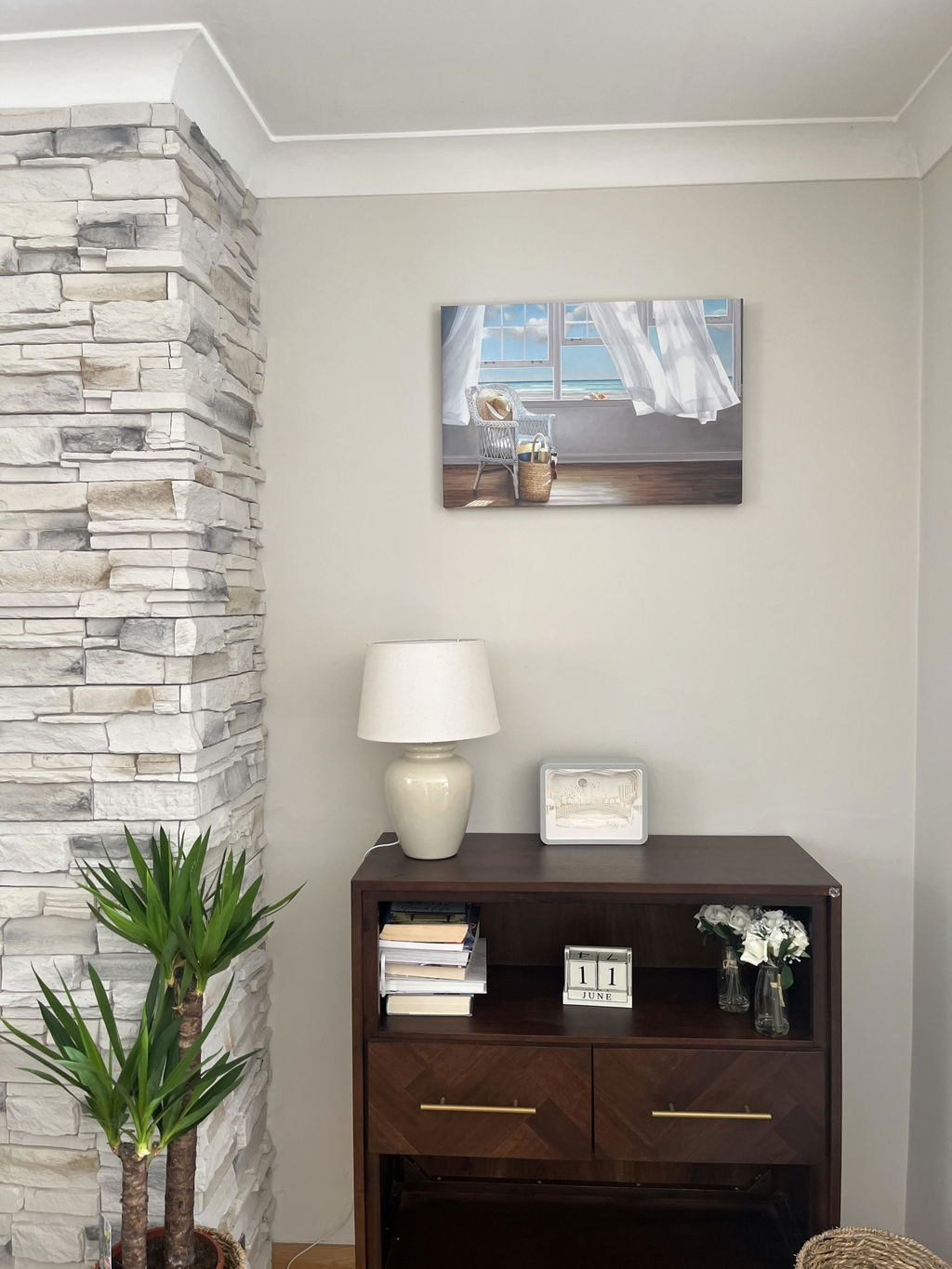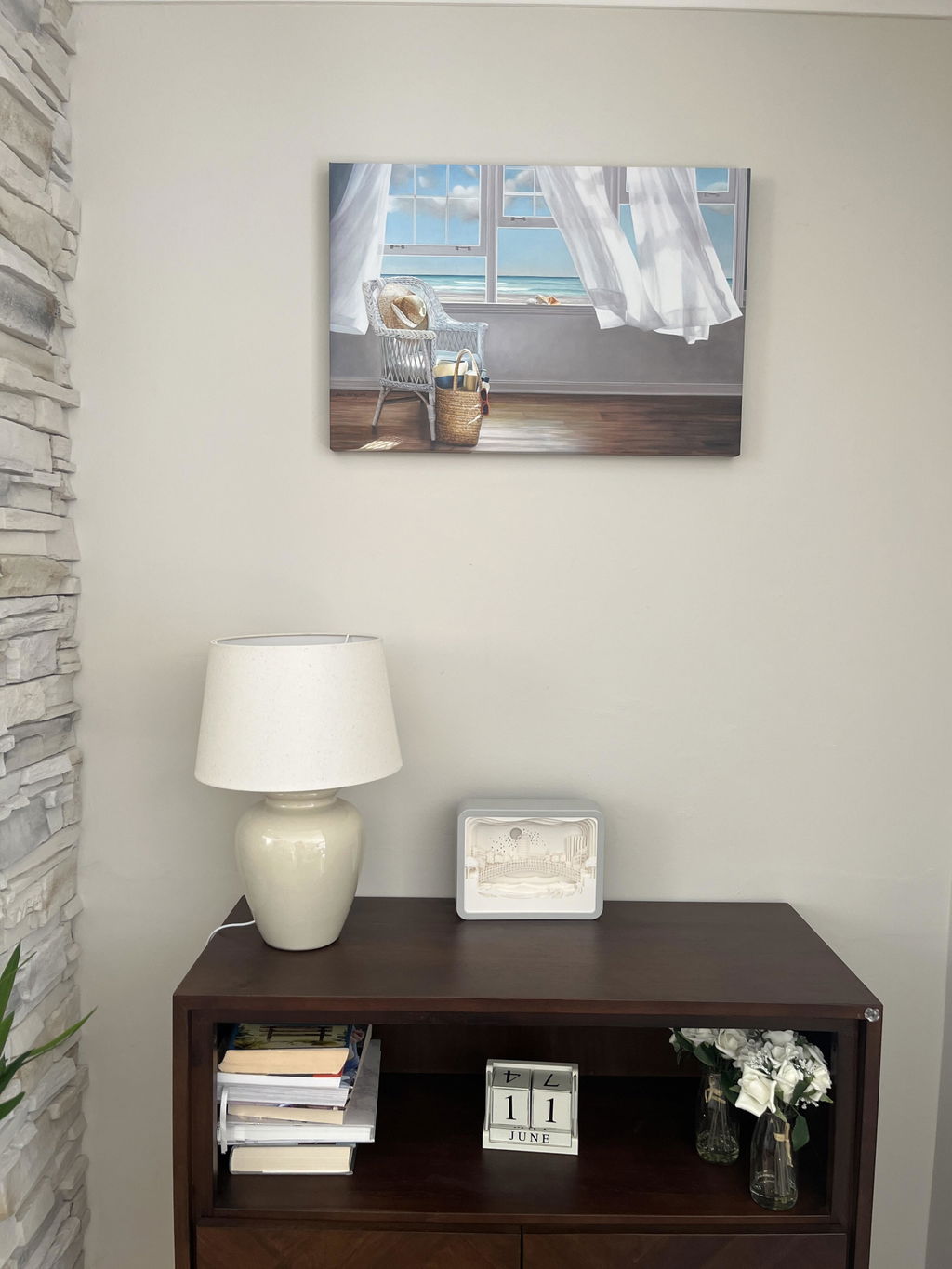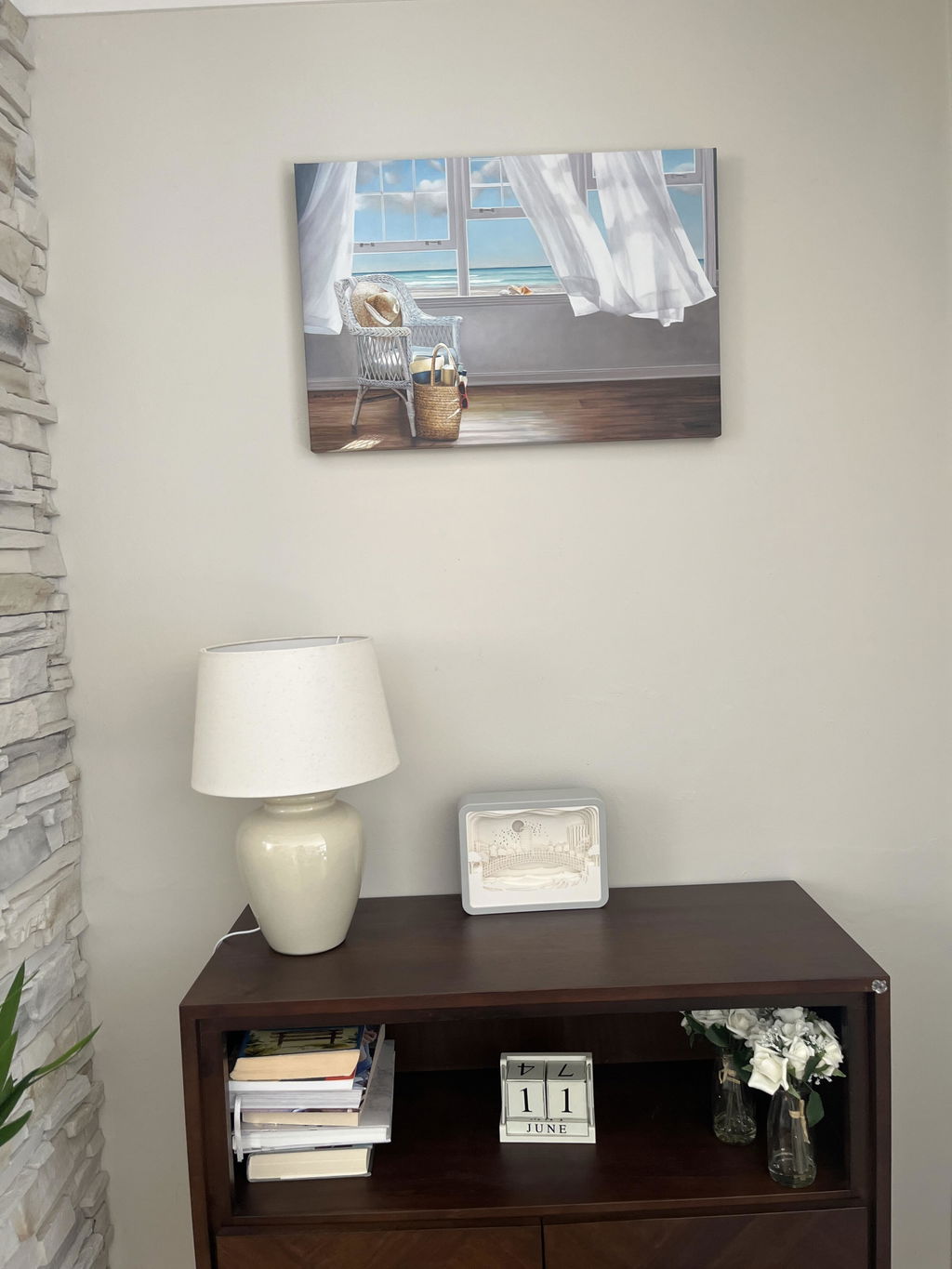

A client once showed me a living room that felt careful but flat. We changed one thing, a large animal portrait with a calm gaze, and the whole room suddenly had a point of view.
Table of Contents
- The Wild and Wonderful World of Animal Art
- Find Your Style From Photorealism to Abstraction
- A Practical Guide to Sizing and Placement
- Material Matters Choosing Canvas Paper and Frames
- Designing Your Space Matching Art to Your Home
- Sourcing Quality Art and Supporting Artists
- Care Gifting and Creative Uses
The Wild and Wonderful World of Animal Art
Animal wall art has range that people often underestimate. Many shoppers first think of children's rooms or rustic cabins, but the category is far broader than that. A monochrome horse study can feel refined in a dining room. A loose bird silhouette can soften a minimalist office. A close-up wildlife portrait can anchor a modern apartment.
That flexibility is one reason animal imagery has lasted for so long in visual culture. The broader wall art and home décor market generated about $56.9 billion in 2022 and was projected to reach roughly $72.3 billion by 2030, with an estimated 3.1% CAGR from 2023 to 2030 according to the verified market data provided in this reference. Animal imagery sits comfortably inside that larger market because it speaks to so many tastes, from natural history lovers to pet owners to people who want a strong visual subject.
Why animal subjects feel personal
People respond to animals quickly. You don't need art training to feel something when you see a fox in motion, a resting tiger, or a watchful owl. The subject does a lot of the emotional work for you.
That makes animal wall art useful when a room needs an identity. If your space feels neutral but unfinished, a single piece can introduce warmth, drama, humor, or serenity without forcing a complete redesign.
Animal art works best when it isn't treated as filler. Choose it the way you'd choose a chair or a rug. It should change the room's mood, not just occupy the wall.
One piece can set the whole tone
I often tell people to stop browsing by animal first and start browsing by feeling. Do you want grounded and quiet, playful and bright, or bold and cinematic? That question leads to better choices than asking whether you prefer lions over birds.
A close-cropped piece like Animal Zoom is a good example of how the category can move beyond themed décor. Tight composition, strong eye contact, and simplified surroundings give a piece like that a more editorial, contemporary feel.
Find Your Style From Photorealism to Abstraction
The easiest way to choose animal wall art is to identify the kind of visual language you already trust. Some buyers want realism because it feels immediate and grounded. Others want a looser interpretation because it leaves more room for mood.
Why animal imagery keeps working
A realistic wolf portrait and an abstract crane print can belong to the same broad category while doing completely different jobs in a room. One creates presence. The other creates rhythm.
Recent trend coverage notes that realistic animal pictures remain popular, while designer interest is growing around large abstract animal canvas prints, suggesting movement toward bolder, more emotional focal points rather than purely literal depictions in this trend reference. That doesn't mean realism is fading. It means buyers now have more permission to treat animal art as expressive design, not only representation.

Four style directions worth knowing
Photographic
Photographic animal art is about detail, texture, and eye contact. Fur, feathers, water droplets, and natural surroundings all matter here. This style suits rooms that already rely on clean lines, natural materials, or restrained color palettes.
Use it when:
- You want a focal point: A sharp wildlife portrait can hold a large wall without much help from surrounding décor.
- You like modern interiors: Black, white, taupe, oak, and stone finishes pair easily with photographic animal work.
- You want emotional clarity: Realism tells the viewer exactly what to look at.
Illustrated
Illustrated animal art includes watercolor, ink drawing, line art, and more whimsical interpretations. It often feels lighter and more decorative than photography.
This works especially well if your room needs softness. Kitchens, nurseries, reading nooks, and casual entryways often benefit from an illustrated piece because it adds personality without feeling heavy.
Abstract
Abstract animal art doesn't always show the full animal clearly. It may suggest movement through shape, color, silhouette, or brushwork. If you're drawn to interiors that feel edited and expressive, this is often the most refined choice.
A watercolor piece such as Elephant Watercolor shows how an animal subject can stay recognizable while still feeling airy and painterly. That balance is useful when you want character without visual noise.
Vintage
Vintage animal art includes natural history studies, equestrian sketches, old-world illustrations, and retro-inspired prints. It can feel scholarly, nostalgic, or collected over time.
Choose vintage if your room has:
- Traditional furniture: Wood tones, upholstered seating, brass, or classic moldings
- Layered styling: Books, ceramics, antique-look mirrors, and patterned textiles
- A collected mood: You want the art to feel discovered rather than freshly styled
When to go bold and when to stay quiet
Some buyers get stuck choosing between impact and harmony. A simple rule helps.
| If your room needs... | Choose... |
|---|---|
| A centerpiece | Large-scale photographic or abstract animal art |
| A gentle accent | Illustration, line art, or a calm silhouette |
| More energy | High-contrast or color-driven abstract work |
| More softness | Watercolor, muted wildlife, or vintage studies |
Practical rule: If the room already has strong pattern, busy shelving, or colorful upholstery, quieter animal art usually works better. If the room feels plain, a large statement piece can do the heavy lifting.
A Practical Guide to Sizing and Placement
Size anxiety ruins a lot of good art decisions. People find a piece they love, then order it too small because they're worried about overpowering the room. The usual result is the opposite. The wall looks underdressed, and the art loses authority.
Near the start of the process, it helps to see placement visually.

Start with the wall zone, not the artwork
Industry size guidance recommends matching art to the furniture or wall zone, not choosing size by aesthetics alone. Common wall art sizes include 8×10 inches and 12×16 inches for small pieces, then 20×28 inches, 24×36 inches, and up to 36×50 inches for large formats. Art above sofas or beds should generally span about one-half to two-thirds of the furniture width, according to this wall art size guide.
That guideline matters because furniture creates a visual base. If the art is too narrow, it floats. If it's too wide, it can feel cramped or accidental.
Use this quick lens:
- Above a sofa: Think in terms of relationship to the sofa, not the empty wall around it.
- Above a bed: Leave enough breathing room on either side so the bed still reads as the primary form.
- In a hallway: Narrow vertical pieces or a sequence of smaller works usually feels more natural than one oversized horizontal print.
For larger statement pieces, this guide to decorating with oversized art gives extra context on when scale becomes an asset rather than a risk.
What works in small spaces
Compact interiors require a different mindset. Busy scenes with multiple competing subjects can feel crowded when viewed from a short distance.
Verified guidance for wildlife art in small spaces recommends images with a single strong focal subject, minimal distractions, and visual breathing room. A slightly larger mat around a smaller print increases perceived negative space, and narrow frames in wood or matte black metal keep the display visually light, as explained in this wildlife wall art advice for small spaces.
In a tight room, clarity beats complexity. One strong animal form reads better than a detailed herd scene.
A bird in profile, a resting leopard, or a close-up pet portrait often performs better than an expansive natural setting with tiny wildlife figures.
A video walkthrough can also help if you're deciding how far to push scale in real rooms.
A quick placement checklist
Before you order or hang, check these:
- Measure the furniture width: Use that measurement to estimate your ideal art span.
- Check viewing distance: If you stand very close to the wall, simpler compositions usually read better.
- Notice orientation: Vertical art lifts the eye. Horizontal art widens the room's feeling.
- Mock it up first: Tape paper to the wall in the same size as the artwork.
- Think of edges: Leave enough empty wall around the piece so it looks intentional.
Material Matters Choosing Canvas Paper and Frames
The same animal image can feel relaxed, crisp, dramatic, or formal depending on how it's produced. Material choice isn't a technical afterthought. It's part of the design decision.
How each material changes the mood

A simple comparison helps here.
| Format | Best for | Visual effect |
|---|---|---|
| Canvas print | Large focal pieces, casual galleries, textured interiors | Softens the image slightly and adds a gallery-style surface |
| Framed art print | Living rooms, bedrooms, offices, gallery walls | Feels polished, structured, and finished |
| Unframed photo paper | Flexible styling, custom framing later, lighter budgets | Crisp image presentation with a clean, straightforward look |
| Premium textured paper | Refined interiors, matte lovers, art-forward spaces | More tactile and subdued, often with a quieter, substantial feel |
Canvas often works well for bold animal subjects because the texture adds presence without demanding glossy shine. A large lion, horse, or abstract bird composition on canvas can feel integrated and architectural.
Framed paper prints usually suit more precise interiors. If your room relies on defined lines, symmetry, or a collected gallery feel, framed prints often look sharper and more intentional.
Frame decisions that shape the final look
Frames can either disappear or speak up. Neither is wrong.
Choose a subtle frame when:
- The artwork has strong color or detail: You don't want the border competing with the image.
- Your room is already layered: A thin black, oak, or simple white frame keeps the focus on the art.
- You're building a set: Consistent frame profiles help multiple pieces look coherent
Choose a more noticeable frame when the art itself is quiet. A delicate bird drawing can gain authority from a deeper frame or floating presentation. If you're comparing styles, floating frame prints are useful to study because they change how the artwork sits in space.
A frame isn't only decoration. It tells the eye where the artwork begins and how formal the room wants to feel.
Material also affects where the piece belongs. Canvas can soften echo-heavy modern rooms. Glass-front framed prints may feel more suitable in dining rooms, offices, or entryways. Matte textured paper tends to suit spaces where you want calm, low-glare surfaces.
If you're unsure, ask yourself one question: should this art feel like part of the architecture, or like an object placed on the wall? Canvas leans architectural. Framed paper leans object-like. That distinction helps surprisingly fast.
Designing Your Space Matching Art to Your Home
Buying art you love is only half the job. The piece also needs to converse with the room around it. When that connection is missing, even beautiful work can feel borrowed from another house.
Use color as your bridge
The easiest bridge is color repetition. Pull one or two hues from the artwork and echo them elsewhere in the room through a cushion, vase, throw, or rug detail. The match doesn't need to be exact. It just needs to feel related.

If the art includes moss green, rust, sand, or charcoal, repeat one of those tones in a small accessory nearby. That tiny echo makes the wall look intentional. When you're building a grouped display, sets of framed art can help you create that visual rhythm across more than one piece.
A good shortcut is to decide whether the art should:
- Blend: Similar tones to the room for a calm effect
- Contrast: A distinct accent color to wake the room up
- Balance: A missing tone that ties warm and cool elements together
Match the subject to the room's personality
Some pairings come naturally.
A black-and-white wildlife portrait can suit a minimalist or industrial room because it offers drama without adding clutter. Colorful illustrated birds often work beautifully in bohemian or eclectic homes because they support layered textiles and mixed materials. Vintage equestrian or natural-history-inspired pieces can feel right at home with traditional furniture and classic architectural details.
Room function matters too. Bedrooms usually benefit from calmer animal imagery. Think resting forms, silhouettes, gentle line work, or muted palettes. Living rooms can handle stronger presence because people spend time there socially and from different angles.
If you're styling the wall around a television, the art needs to support the screen without competing with it. This guide on how to decorate behind your TV is useful because it focuses on balancing scale and visual weight in a spot where many rooms go wrong.
If the wall is visually busy
A lot of people assume animal art should be expressive because the subject is expressive. Not always. In a room with open shelving, patterned curtains, or strong upholstery, restraint usually wins.
Try this filter:
- Busy room, quiet art: silhouette, sketch, muted study, monochrome photograph
- Quiet room, bold art: large portrait, abstract animal form, high-contrast piece
- Mixed room, balanced art: one clear subject with moderate color and a simple frame
When the room already says a lot, let the art speak in a lower voice.
That approach is what makes a piece look styled rather than squeezed in.
Sourcing Quality Art and Supporting Artists
Buying online gives you access to more choice than a local store ever could, but it also puts more responsibility on you as the buyer. You need to judge quality through images, product descriptions, and policies before anything is on your wall.
What quality looks like online
Museum-quality reproduction is easiest to understand in practical terms. Look for sharp detail, believable color, and materials intended to hold their appearance over time. For animal wall art, that matters because fur texture, feather detail, tonal depth, and background softness can all disappear if the print quality is weak.
Product pages should make the format clear. You should know whether you're getting canvas, framed paper, unframed paper, or a textured stock. You should also be able to tell how the piece is packed, what sizes are available, and whether orientation options fit your wall.
Good sourcing also means checking whether the seller tells you anything meaningful about the artist or artwork. Art feels different when it comes from a visible creative community rather than from an anonymous image feed.
Why the market matters to buyers
Animal wall art isn't a tiny niche. Verified market data places the global wall art market at $56.9 billion in 2022, and U.S. e-commerce accounted for 15.6% of total retail sales in Q4 2024, showing how normal online buying has become for home décor categories according to the verified data reference. That shift matters because it lets buyers compare styles, sizes, and formats more easily than they could in a gallery-only model.
It also broadens access to artists. Catalog-based platforms can represent many creators at once. In the publisher information provided for this article, Printano is described as supporting over 1,000 artists globally, which gives buyers a wider range of visual voices to choose from.
If you're comparing large-scale options for empty walls, Slone Brothers Furniture's wall decor ideas can help you think through how a single statement piece differs from a grouped arrangement.
Questions worth asking before you order
Use these questions to slow the decision down in a good way:
- Can I see the finish clearly: Matte, satin, textured, and canvas surfaces all change the mood.
- Does the seller explain the materials: Vague descriptions often lead to mismatched expectations.
- Is the artwork cropped well in the chosen size: Animal subjects can lose impact if important features sit too close to the edge.
- Will this piece still work if I move: Strong art should have some flexibility across future rooms.
- Am I supporting a real artist ecosystem: That's often visible in artist pages, credits, and catalog transparency.
Quality and ethics aren't separate decisions. When you buy carefully made work from a platform that gives artists visibility, you usually end up with a better-looking result and a purchase you feel better about keeping.
Care Gifting and Creative Uses
Art lasts longer when daily care is simple and consistent. Daily care doesn't require special products. It needs better placement and a lighter touch.
Simple care habits
Keep animal wall art away from harsh direct sunlight when possible, especially if the piece hangs in a room with strong afternoon exposure. Light can gradually change how colors appear over time.
Dust frames and canvas gently with a soft, dry cloth. For framed pieces under glass, spray cleaner onto the cloth rather than onto the frame or glass itself. That reduces the chance of moisture slipping into edges.
When you hang the piece, use hardware appropriate for the wall type and the artwork's weight. A beautiful print loses its charm fast if it sits crooked or feels unstable.
Animal art makes an easy-to-personalize gift
Animal wall art is one of the most useful gift categories because it can feel personal without being overly intimate. You can choose by favorite animal, home style, or emotional tone.
A few thoughtful matches:
- For new parents: Gentle illustrated woodland animals or a calm safari-inspired print
- For pet lovers: A portrait or stylized piece that echoes their companion animal
- For a housewarming: A strong wildlife image or abstract animal piece that helps define a new space
- For an office gift: Clean line art or monochrome animal photography that doesn't overwhelm a work setting
Beyond the home
Animal imagery also works well in shared and commercial spaces because it's broadly approachable. Hospitality settings often use it to create atmosphere. Wellness spaces may choose calming birds, horses, or nature-linked animal forms. Veterinary clinics can use it to make walls feel warmer and less clinical. Offices often benefit from animal art that adds character without becoming distracting.
The key is still the same one you've seen throughout this guide. Choose by mood, scale, and setting. Don't buy the first animal picture you like. Buy the one that helps the room become what you want it to be.
If you're ready to narrow your options, browse Printano with a clear checklist in mind: the feeling you want, the size your wall can support, and the material that fits your room. That small bit of strategy turns art shopping from guesswork into a confident design decision.
Authored using Outrank app