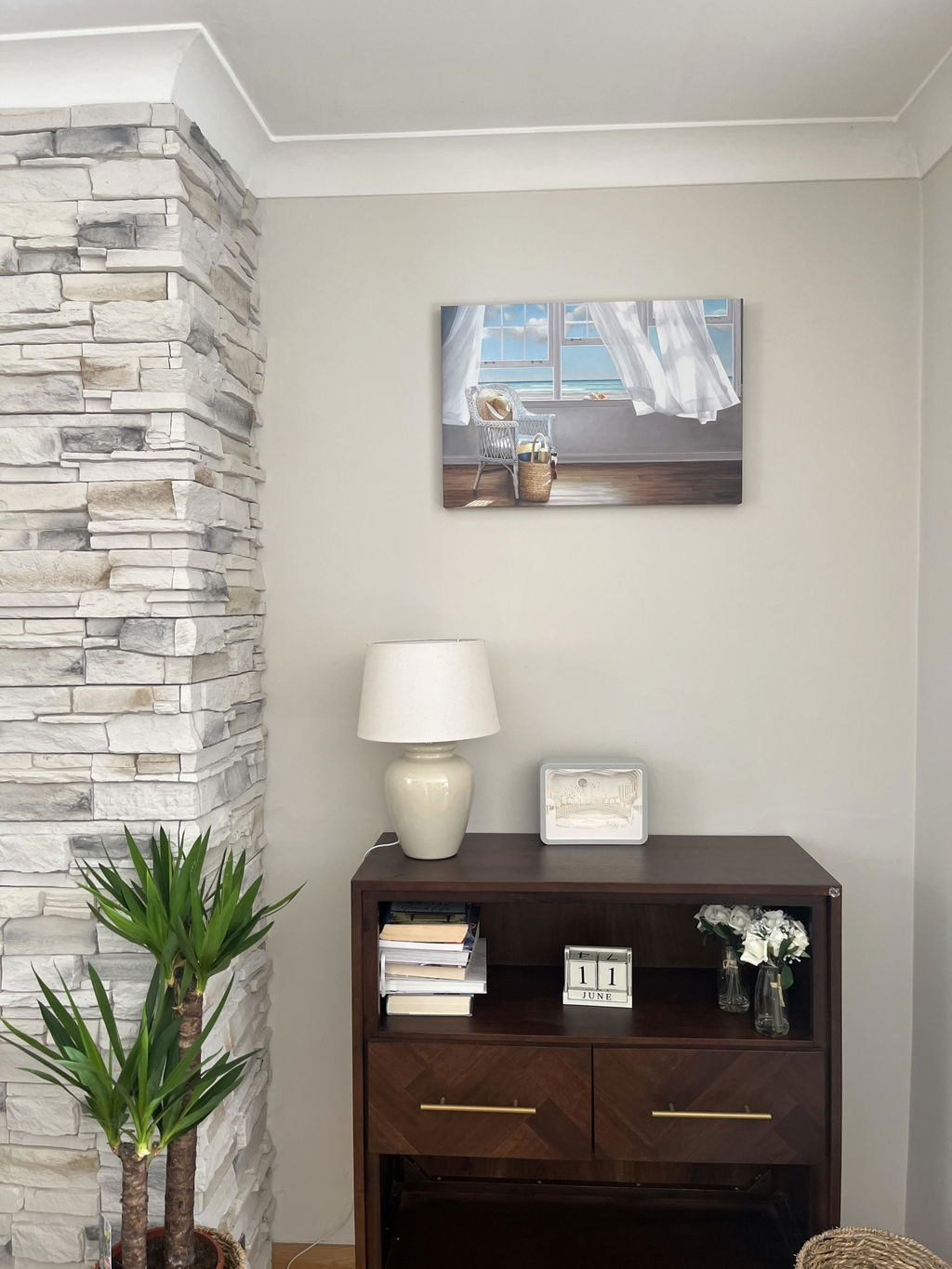

You're probably standing in the doorway of your child's room looking at four blank walls and too many possibilities. One minute you're drawn to playful murals and bright prints. The next, you're wondering how long any of it will last once dinosaurs become astronauts, or pink becomes sage, or stickers lose their charm.
That tension is where good kids bedroom wall decor starts. The room needs personality, but it also needs staying power. It has to feel joyful now, safe every day, and flexible enough that you're not repainting the whole space each time your child changes their mind.
The most successful kids' rooms aren't built around a one-season obsession. They're layered. They hold a clear mood, a practical color story, and wall pieces that can be swapped as the child grows. That approach also makes sense in a category that's seeing sustained investment. The global wall decor market was valued at USD 32.68 billion in 2023 and is projected to reach USD 51.65 billion by 2032 (Global Market Insights wall decor market analysis).
Table of Contents
- A Guide to Decorating Your Child's Personal Wonderland
- Finding Your Vision with Themes and Colors
- Choosing the Right Art Materials and Sizes
- Designing Artful and Engaging Layouts
- Ensuring Safe and Secure Installation
- Creating a Room They Will Always Remember
A Guide to Decorating Your Child's Personal Wonderland
The best starting point is a theme with room to grow. A woodland room can begin with animals, leaves, and soft greens for a toddler, then shift toward scenery photography, maps, or botanical sketches later. A space theme can start playful and become more graphic and refined over time. A single cartoon character rarely gives you that flexibility.
That's why I advise parents to choose a concept instead of a mascot. Think jungle adventure, sky and stars, storybook forest, ocean explorer, or abstract color play. Those directions are easier to refresh with new art, textiles, and accessories without changing the whole shell of the room.
Practical rule: If the theme can still make sense when your child is five years older, it's probably a smart foundation.
Color comes next, and it often leads many rooms off course. Parents often try to combine every color their child likes into one space, which usually creates visual noise. A calmer method is to pick one anchor color, one supporting color, and a neutral that can stay in place even when the art changes. If you like using visual tools to narrow options, browsing by palette can help you stay disciplined. A useful example is this animal wall art color-led inspiration, which shows how a theme can stay cohesive without feeling repetitive.
A layered room also works better when the wall decor relates to the furniture. If you're adding a canopy or bed tent, the art should support that vertical focal point rather than compete with it. Parents planning a cozy sleep zone may find this guide on how to choose and install bed tents helpful because it shows how overhead features affect the rest of the room visually and practically.
A good room doesn't need every wall filled. It needs a few well-judged decisions that make the space feel personal, settled, and easy to update.
Finding Your Vision with Themes and Colors
Some themes look adorable for six months and dated by the next school year. Others have enough range to evolve without losing their identity. That's the difference between decorating for a moment and designing a room your child can live in.
Choose a broad theme, not a narrow character
In projected 2026 trends, younger children's rooms lean toward bright turquoise, yellow, and pink, while older kids' spaces shift toward muted pastels and soft neutrals. Across age groups, parents are also leaning into botanical prints, jungle safaris, and outer space motifs, often with interactive pieces such as AR-enabled posters (kids room decor trend overview from OJCommerce).
That split is useful. It tells you not every room should be treated the same way. A preschooler's room can handle more playful contrast. A pre-teen's room usually benefits from a steadier palette that won't feel babyish.

Here are theme directions that tend to age well:
- Nature explorer works with animals, leaves, mountains, insects, and natural textures.
- Cosmic adventurer gives you stars, planets, navy, charcoal, silver, and room-darkening accents.
- Whimsical wonderland suits softer palettes, storybook illustrations, and more decorative shapes.
- Urban playful fits bold graphics, vehicles, maps, stripes, and punchy blocks of color.
If you're designing for a nursery or a shared room and want a broader starting point, Hiccapop baby room themes can be a useful mood-board reference because the ideas aren't tied to one short-lived trend.
Build the palette from one anchor color
A child's room doesn't need to be colorless to be adaptable. It needs order. Start with the color that will cover the largest visual area in the decor, then decide whether the accents should energize the room or soften it.
A clean formula looks like this:
| Room style | Best color direction | Why it works |
|---|---|---|
| Toddler playroom | Brighter accent colors with a calm neutral base | The room still feels lively without becoming chaotic |
| Early school-age bedroom | Theme-led palette with one stronger pop | You can reflect current interests without locking the room into them |
| Pre-teen hangout | Muted pastels, gray-blues, soft greens, warm neutrals | The room feels more grown-up and lasts longer |
For color inspiration that helps connect trend tones to wall art choices, this 2025 Color of the Year guide is a practical reference point.
Match material to how the room is used
The same artwork can feel completely different depending on format. For a toddler's playroom, lightweight options with softer visual edges often make sense. For an older child's reading corner or hangout room, framed pieces can add more structure.
A useful test is simple. Ask whether the room is mostly for sleeping, playing, studying, or all three. The answer should shape your material choices as much as your theme.
Choosing the Right Art Materials and Sizes
A wall piece can be beautiful and still wrong for the room. In kids' spaces, material choice changes how safe the art feels, how easy it is to maintain, and whether the room reads as playful or polished.
Think about the wall like a working surface
Parents are increasingly prioritizing responsible materials when they buy decor. In projected 2026 trends, sustainable and eco-friendly materials rank among the top three criteria for nursery and kids' room decor, alongside broader interest in biophilic design and durable, museum-quality reproduction (nursery wall decor trend report from Tilian Kids).
That matters because children's rooms work hard. Walls sit near humidifiers, toy storage, dress-up corners, and little hands. You want art that looks intentional but also tolerates real life.

A simple comparison for common art formats
I usually think about art materials in terms of durability, weight, and mood.
| Format | Best use | Watch-out |
|---|---|---|
| Framed print | Bedrooms that need a finished, tailored look | Only use kid-safe glazing and secure hardware |
| Canvas | Playrooms, over-dresser focal walls, casual layered rooms | Texture softens the image, which may not suit every style |
| Paper print | Gallery walls and easy seasonal refreshes | Needs proper framing or mounting to stay neat |
In practice, framed pieces suit older children's rooms well when you want a more composed look. Canvas often works beautifully in rooms where you want lighter weight and a softer edge. Paper prints are ideal when the wall is meant to change often, especially if you're adding your child's own drawings into the mix.
If you're framing family photos or children's work alongside purchased art, this article on framing children's art safely is worth reading because it highlights the practical details parents tend to overlook.
For a deeper look at the visual feel of stretched artwork, canvas wall art ideas can help you judge where canvas feels crisp and modern versus soft and decorative.
Size and orientation that feel balanced
Most sizing mistakes come from going too small. One tiny frame above a bed often looks accidental unless it's part of a deliberate grouping. A single large piece creates calm. A cluster creates movement.
A reliable approach:
- Above a bed choose one statement piece or a tight pair that reads as one unit.
- Above a dresser use art that visually connects with the furniture width, so the wall doesn't feel top-heavy.
- On a narrow wall choose vertical art to emphasize height.
- In a busy play area keep the composition simpler so the room doesn't feel overstimulating.
The wall should support the room's rhythm. If the bedding, rug, and storage are already lively, quieter art often does more.
Designing Artful and Engaging Layouts
Layout is where a room starts to feel designed instead of merely decorated. Good kids bedroom wall decor isn't just about what you hang. It's about how the arrangement guides the eye, supports daily routines, and leaves room for change.

A common layout mistake is treating every wall equally. Not every wall deserves a feature. One wall can hold the main story, another can support storage, and another can stay visually quiet so the room can breathe.
Build zones with wall decor
I like to divide children's rooms into visual zones even when the floor plan is small. The bed wall usually wants calm. The play area can take more color and movement. The reading corner benefits from art that feels gentle and a little slower.
Three layouts tend to work especially well:
-
The anchor wall
Use one larger piece above the bed or dresser. This creates instant order and gives the room a focal point that doesn't need constant rearranging.
-
The grow-with-me gallery
Start with a few permanent pieces, then leave space to rotate in new interests, holiday art, school projects, or postcards. That flexibility is what makes the wall feel alive rather than fixed.
-
The zone marker
Hang a small cluster above a book ledge, toy kitchen, or desk to signal that this part of the room has its own identity.
If you're planning a grouped arrangement, these gallery wall art set ideas are useful for seeing how coordinated pieces create structure without becoming stiff.
A child's room feels richer when the art reflects how they use the space, not just what matches the bedding.
A safe layout checklist that still looks polished
Before you hang anything, pause and check the room from a child's height. You'll notice risks faster from that angle than from the doorway.
Use this checklist:
- Keep climb zones clear above beds, toy chests, and furniture children may scale.
- Avoid heavy visual clutter near sleep areas, because too much motion on the wall can make the room feel restless.
- Group deliberately so several small frames read as one composition instead of scattered dots.
- Leave breathing room between pieces. Tight spacing can look elegant. Random spacing usually looks messy.
- Reserve lower placement for soft or lightweight decorative elements, not anything rigid or breakable.
A quick demo can help if you're more visual than technical. This video shows simple hanging basics in an easy format:
The strongest layouts feel edited. They give the child something to enjoy, but they also leave enough visual quiet for sleep, books, and growing up.
Ensuring Safe and Secure Installation
Beautiful wall decor that isn't installed properly is a problem waiting for a child to test it. Safety decisions don't sit outside the design process. They are the design process in a family home.
A strong method is removable layering, which lets the room evolve without forcing a full reset every few years. Expert guidance on this approach notes an 85% success rate in avoiding full-room repaints, and it specifically calls for shatterproof glazing and safety fasteners because improperly attached frames are a leading cause of wall decor accidents in children's rooms. The same expert source also warns that over-theming correlates with a 40% higher rate of room dissatisfaction by age 7 (expert video on removable layering and wall decor safety).

How removable layering works in real rooms
This approach starts with the fixed elements. Bed, dresser, rug, storage, and lighting come first. Those are the expensive decisions, and they should stay broad and timeless.
Then you add the wall decor in layers:
- First layer is the calm base. Paint, perhaps one larger piece, and any long-term feature such as a name sign or growth chart.
- Second layer is the flexible personality. Decals, smaller framed prints, themed objects, and seasonal swaps.
- Third layer is the child's input. Artwork, photos, awards, postcards, and changing interests.
That sequence prevents two expensive mistakes. First, it stops parents from designing the whole room around one passing obsession. Second, it reduces the urge to repaint or replace major pieces whenever tastes shift.
For the hardware side of the job, this guide on how to hang wall art is a practical companion because placement and mounting matter just as much as style.
Mistakes that age badly
The rooms that need redoing fastest usually make one of these choices:
- Everything matches too perfectly. If the bedding, lamp, wall art, storage bins, and mural all scream the same theme, the room has nowhere to go next.
- Frames are installed casually. A nice frame with the wrong hardware is still unsafe.
- Art is hung where kids can tug it. Anything near bunk ladders, bed rails, or climbing furniture needs extra scrutiny.
- The wall is too crowded. A child can outgrow visual overload almost as quickly as they outgrow a favorite motif.
Leave the permanent decisions neutral enough that the room can absorb new interests without fighting them.
The final safety pass
Before you call the room done, do one last check in daylight and again at night with lamps on. Look for glare, sharp corners at active play height, and anything that feels tempting to pull.
The best kids bedroom wall decor does four jobs at once. It reflects the child, it suits the room, it allows change, and it stays secure through daily life. When all four are working together, the room feels easier to live with year after year.
Creating a Room They Will Always Remember
The rooms children remember most aren't always the fanciest ones. They're the rooms that felt like theirs. A wall with animals they loved for years. A small gallery of drawings and photos. A color palette that made the room feel calm at bedtime and cheerful in the morning.
That's why adaptable design matters so much in kids bedroom wall decor. A room can be imaginative without being disposable. It can follow a theme without trapping you in it. And it can look polished without ever feeling too precious for real family life.
If the walls are layered thoughtfully, your child's space can shift naturally as they grow. The art changes. The interests change. The room still makes sense.
That's the sweet spot. Not a showroom. Not a one-weekend craft explosion. A room with personality, flexibility, and care behind every choice. Those are the spaces children settle into, and the ones parents don't dread updating later.
If you're ready to find art that fits a child's room without making the space feel generic, browse Printano for museum-quality wall decor in multiple sizes, orientations, and formats. It's a practical place to source pieces that can start playful, stay stylish, and adapt as the room grows with your child.