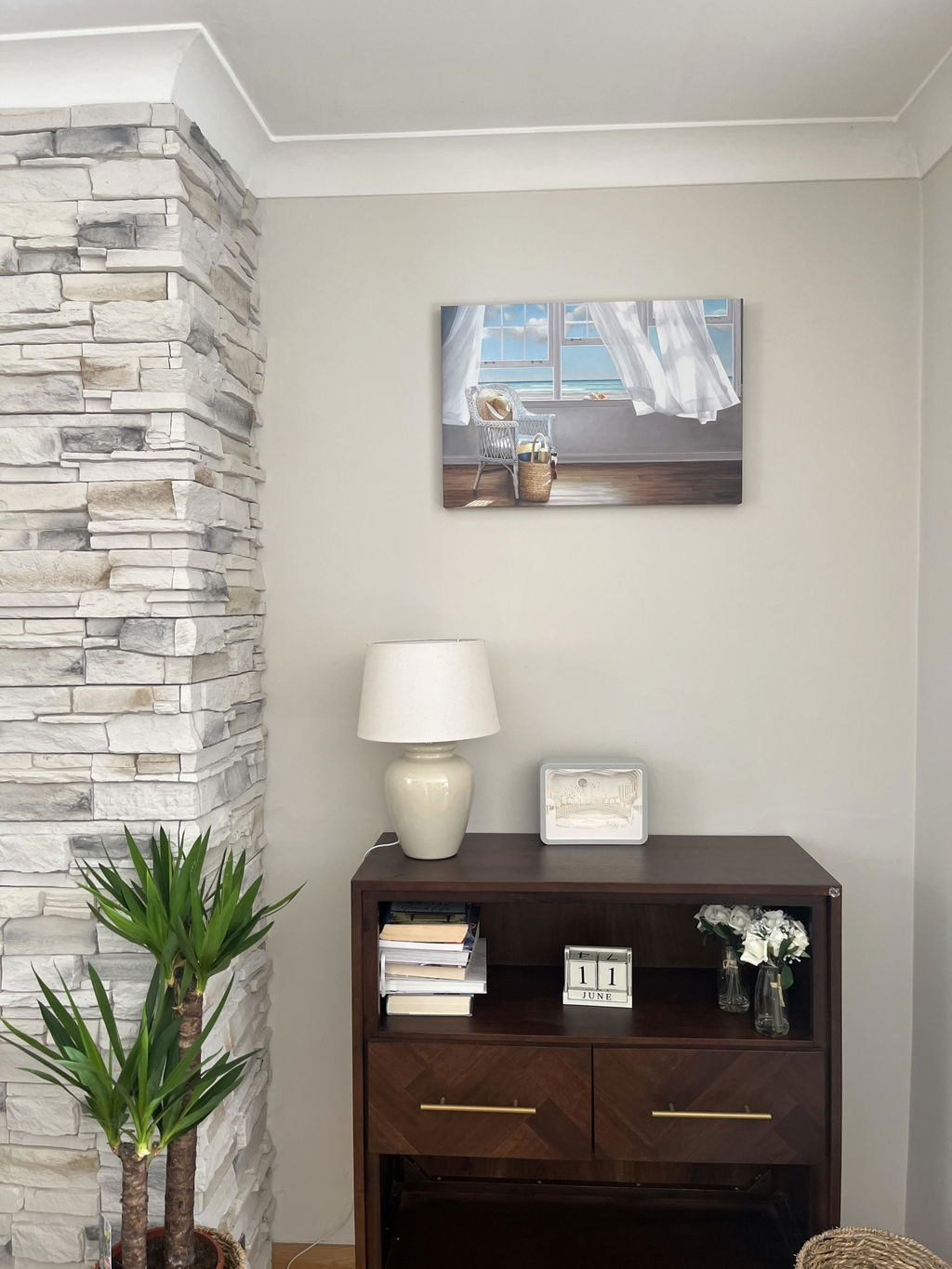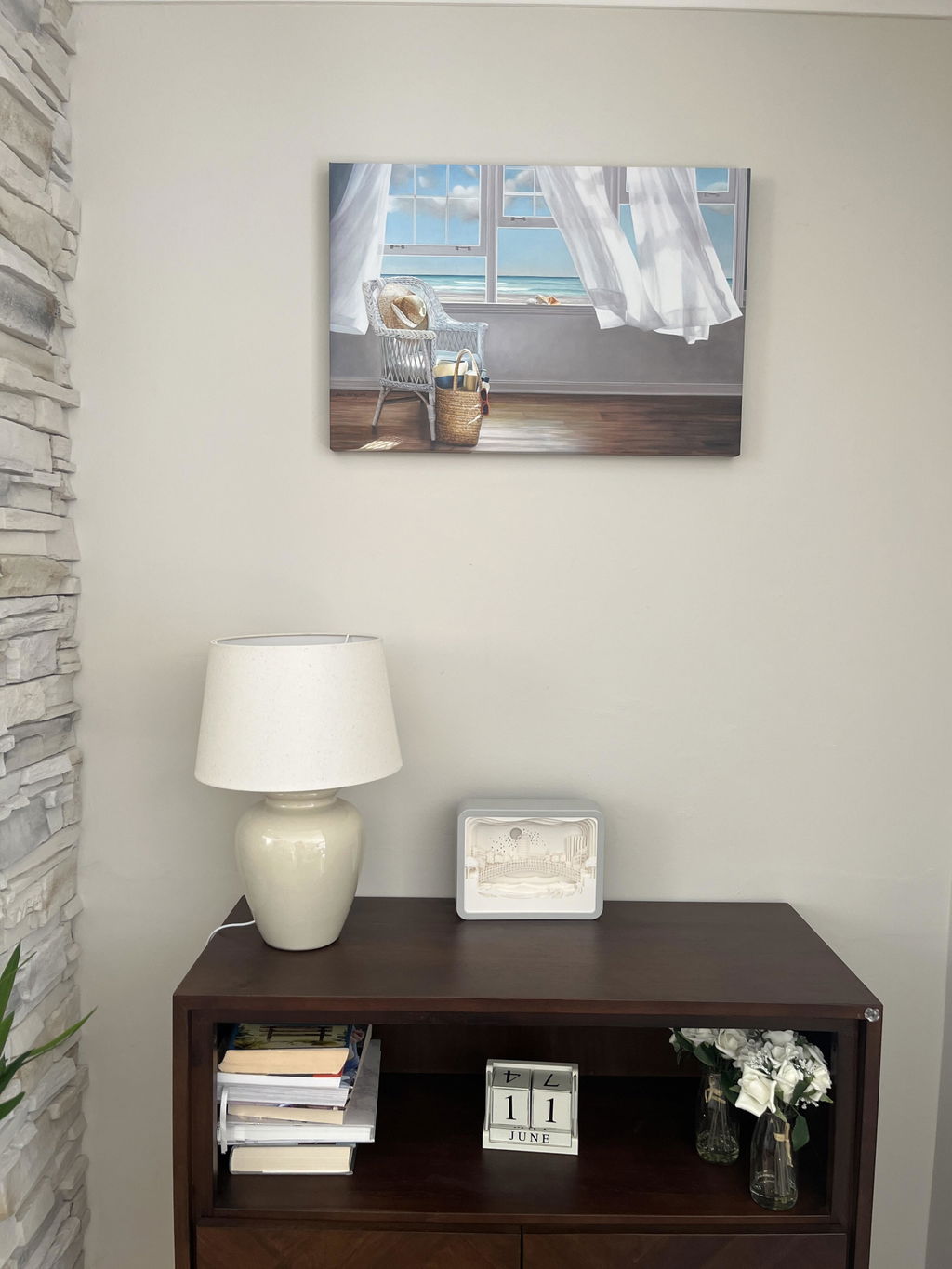

You're probably here because you have a wall that feels unfinished. The sofa is in place, the rug works, the lighting is decent, but the room still looks like it's waiting for something. That “something” is often art, and abstract art is one of the easiest ways to bring a room together without locking yourself into a literal subject like a natural scene, portrait, or city scene.
That's part of why abstract art keeps showing up in modern homes, rentals, offices, and hospitality spaces. The abstract segment is projected to account for 30.49% of the global wall art market in 2026 according to Fortune Business Insights' wall art market report. In plain English, a lot of people choose abstract wall art prints because they adapt well to different interiors.
If your style leans calm and restrained, abstract work can support that. If your room needs movement, contrast, or a focal point, it can do that too. For pared-back spaces, this piece on decorating minimalist interiors with wall decor is a useful companion.
Table of Contents
- Your Guide to Choosing Abstract Wall Art
- Understanding Abstract Art Styles
- Choosing Your Print Material and Quality
- The Art of Sizing and Orientation
- Matching Abstract Art to Your Room and Palette
- A Guide to Framing and Hanging
- Smart Buying Tips on Printano
Your Guide to Choosing Abstract Wall Art
Abstract wall art prints can feel mysterious when you're shopping online. You see color blocks, brushstrokes, texture, shapes, and titles that don't explain much. That can make people think they need art training to choose well. You don't.
A better way to think about abstract art is this. It works like music without lyrics. It doesn't tell you exactly what to see. It creates a mood, rhythm, and atmosphere, and that makes it very useful in decorating.
Some pieces bring order through clean geometry. Others soften a room with hazy color transitions. Some add energy through bold contrast or loose movement. When you stop asking “What is it supposed to be?” and start asking “What does it do in my room?” the whole category becomes easier to shop.
Practical rule: Choose abstract art the same way you choose textiles or paint. Start with the feeling you want, then narrow by color, scale, and finish.
There are four decisions that matter most.
- Style: Do you want crisp structure, expressive movement, quiet minimalism, or color-led atmosphere?
- Material: The same artwork feels different on satin paper, textured paper, or canvas.
- Size: A strong piece can still look wrong if it's too small for the wall or furniture below it.
- Placement: Orientation, height, and spacing affect whether the room feels balanced or awkward.
People often get stuck at the first step because “abstract” sounds broad. It is broad. That's the advantage. It gives you room to choose something personal without being boxed into one subject or design era.
Understanding Abstract Art Styles
Abstract art isn't random. Even when a piece looks loose or spontaneous, it still relies on choices about shape, spacing, contrast, rhythm, and color. Learning a few style categories helps you describe what you like instead of scrolling endlessly and hoping for a gut reaction.

What abstract art is really doing
Think of representational art as a sentence. It names the thing directly. Abstract art is closer to tone of voice. It communicates through emphasis, pause, repetition, and tension.
That's why two abstract pieces in the same colors can feel completely different. One may feel disciplined because the lines are controlled and evenly spaced. Another may feel emotional because the shapes overlap, drift, or break apart.
If you tend to like monochrome spaces, sharp furniture lines, or black accents, you may also respond well to black abstract wall art ideas. The palette often makes style differences easier to spot.
Four styles worth knowing
Geometric abstraction
This style uses shapes, grids, arcs, lines, and repeated forms. It usually feels organized and deliberate. If your room has modern furniture, metal finishes, or architectural lighting, geometric abstract wall art prints often echo that structure nicely.
A good analogy is custom-made clothing. Everything looks measured.
Lyrical abstraction
Lyrical pieces feel freer and more fluid. You'll notice sweeping strokes, layered color, soft edges, and movement that seems less engineered. These work well when a room needs warmth or a softer emotional tone.
This style often suits bedrooms, reading corners, and living rooms with natural fabrics, curved furniture, or muted palettes.
Some people call this “the art that makes the room exhale.” That's not a technical term, but it's often accurate.
Minimalist abstract
Minimalist abstraction strips things down to essentials. One line, one field of color, one subtle contrast, or a carefully placed shape can carry the whole composition. These pieces are especially useful when you want art to complete the room without dominating it.
They're strong choices for smaller rooms, entryways, and spaces where visual clutter builds quickly.
Color field and action-led work
These are very different in mood, but they solve similar decorating problems. Color field works rely on larger areas of color and often create a calm, immersive effect. Action-led pieces emphasize gesture, splatter, or visible movement and bring energy.
Use color field when the room needs atmosphere. Use action-driven work when the room feels too still or polite.
A helpful shopping shortcut is to save a few pieces you like, then ask what they have in common. Usually it's one of three things: shape language, color behavior, or energy level. Once you identify that pattern, your choices get easier fast.
Choosing Your Print Material and Quality
Material changes more than durability. It changes how the artwork speaks. The same abstract composition can feel crisp and contemporary on satin paper, softer and more collectible on textured stock, or more relaxed and substantial on canvas.

How material changes the look
Satin photo paper usually gives you clean detail and richer apparent contrast. It's a smart fit for bold color, sharper edges, and modern frames. If you like polished interiors, this surface often reads clearly from across the room.
Premium textured paper has more of a fine-art presence. Texture can make subtle abstract work feel deeper and less glossy. It's useful for muted palettes, brush-led compositions, and rooms with layered natural materials like linen, oak, boucle, or wool.
Canvas print shifts the feel again. Canvas tends to soften glare and bring a more classic gallery character. It's especially appealing when you want a frameless look or a larger statement piece that doesn't feel too formal. If you're weighing edge styles and depth, this guide to floating frame prints can help you compare looks.
What museum quality means in practice
When people read “museum quality,” they often assume it's just marketing language. The useful part is the technical standard behind it.
For high-fidelity abstract wall art prints, the benchmark is 3000 to 4800 pixels per linear dimension, and a 16" x 20" canvas needs at least 4800 x 6000 pixels to maintain the 300 DPI standard for museum-quality reproduction, according to Printify's art print sizing guide. That matters because abstract art often relies on delicate gradients, edge transitions, and texture. If the source file is weak, those areas can look flat or banded in print.
Here's a quick visual explainer before you compare options in more detail.
Print Material Comparison
| Material | Finish | Best For | Vibe |
|---|---|---|---|
| Satin Photo Paper | Smooth with a soft sheen | Crisp geometric work, bold color, framed presentation | Clean and modern |
| Premium Textured Paper | Matte with visible tooth | Soft palettes, painterly abstracts, fine-art framing | Layered and refined |
| Canvas | Textured fabric surface | Large statement art, relaxed gallery look, frameless display | Warm and substantial |
A simple way to choose is to match the material to the room's existing surfaces.
- Choose satin if the room already has glass, metal, lacquer, or sharper silhouettes.
- Choose textured paper if the room leans tactile and collected.
- Choose canvas if you want presence without shine, or you don't want to deal with a full frame.
The Art of Sizing and Orientation
You find an abstract print you love on Printano. The colors are right, the style fits your room, and then one question stops the purchase. Will this size work on my wall?
That hesitation is normal. Scale is the part that turns art from a nice object into a design choice that feels intentional.

The width rule that solves most mistakes
A reliable starting point is the 60 to 75% rule. Artwork above furniture usually looks right when it spans about 60 to 75% of that furniture's width. Marta Ellie's abstract wall art sizing guide gives a clear example. For a 240 cm sofa, the artwork should be about 145 cm to 180 cm wide.
A sofa works like a visual base. If the art is much narrower than that base, the whole arrangement feels top-heavy in reverse, with the furniture doing all the visual work and the print shrinking into the background.
That is why a single small frame above a long sofa often feels disconnected, even if the artwork itself is beautiful.
If you do not want one oversized print, build the same overall width with multiple panels. A diptych or triptych often solves the problem neatly, especially in modern spaces where repetition feels clean and structured. If you are comparing grouped layouts, these three-piece wall art ideas are useful for seeing how a set can fill a wall more naturally than one undersized piece.
A strong abstract print still needs the right scale for the wall it is serving.
How high to hang it
Height changes the result just as much. The center of the artwork should sit at 145 to 155 cm from the floor, with a 20 to 25 cm gap above the furniture below it, as noted in the same source. That spacing keeps the art visually tied to the sofa, bed, or console instead of letting it drift upward.
People often place art too high because they judge it while standing. In a living room, you usually experience the piece while seated. Lower placement tends to feel calmer, more settled, and easier on the eye.
If your room changes appearance across the year with different textiles or window treatments, placement can feel different too. A heavier winter setup may make a wall feel visually fuller than a lighter summer one, which is one reason the guide for seasonal curtain colors is helpful for thinking about how surrounding decor changes the balance around your art.
Choosing vertical horizontal or square
Orientation shapes how a room reads before anyone notices the colors or brushwork.
- Vertical pieces draw the eye upward. They suit narrow stretches of wall, spots between windows, and areas beside shelving or doorways.
- Horizontal pieces spread visual weight across a wider area. They fit naturally above beds, sofas, sideboards, and dining benches.
- Square formats feel steady and centered. They are a smart choice for symmetrical layouts, compact walls, or rooms that already have many strong lines.
Shoppers often get stuck when the wall suggests one format but the artwork feels strongest in another. If the wall and art suggest different orientations, ask which matters more: preserving the composition or solving the wall shape. In most cases, the composition should lead. It is usually better to choose a print that feels complete in its intended format than to force a crop, stretch, or awkward scale change that weakens the design.
Matching Abstract Art to Your Room and Palette
Abstract art becomes practical. A piece doesn't need to “match” every object in the room. It needs to belong to the room's conversation. That usually happens through color, mood, and shape.

A calm bedroom
A bedroom usually benefits from restraint. Soft-edged abstracts in dusty neutrals, muted greens, warm grays, or faded blue tones can create that settled feeling without becoming sleepy or dull.
If your bedding and curtains already carry gentle color, pull one secondary tone from them and repeat it in the artwork. That's often more elegant than trying to match the dominant color exactly. If you're also reworking window treatments, this guide for seasonal curtain colors is a helpful way to think about how fabrics shift a room's palette across the year.
A living room that needs a focal point
Living rooms often need one strong visual anchor: a larger lyrical abstract, a bold geometric work, or a color-led canvas can do heavy lifting. If the furniture is neutral, the art can introduce contrast. If the room already has a colorful rug, choose a piece that repeats one less obvious shade from that rug.
That trick works especially well because it makes the room feel designed instead of assembled. You're not matching the headline color. You're connecting supporting notes.
When a room feels disconnected, look for one repeatable color and one repeatable shape. Art can carry both at once.
For seasonal or trend-aware decorating, 2026 color decorating ideas can help you translate palette inspiration into wall choices.
A home office that feels clear and focused
Home offices benefit from art that supports concentration rather than competing with it. Minimalist abstract prints, controlled geometric forms, or quieter monochrome palettes usually work better than highly chaotic pieces.
Try a pair of smaller works instead of one busy statement piece if your desk wall is narrow. Repetition creates order. It also makes the work area feel intentional, especially if shelves, lighting, and stationery already add visual information.
A simple room-by-room framework helps:
- Need calm: Choose softer transitions, lower contrast, and more open space in the composition.
- Need energy: Pick stronger contrast, sharper movement, or a brighter accent color.
- Need cohesion: Repeat a color already present in a pillow, rug, throw, vase, or curtain.
- Need focus: Use fewer colors and clearer structure.
A Guide to Framing and Hanging
Framing changes the tone of abstract wall art prints almost as much as the artwork itself. It can make a piece feel architectural, casual, polished, or quiet. That's why the same print can look right in one setting and wrong in another.
What each display style communicates
A framed print usually feels finished and deliberate. It's a good choice when the room already has structured details like molding, defined furniture lines, or mixed materials. A slim frame can sharpen a minimal abstract. A warmer wood frame can soften a geometric piece.
A gallery-wrapped canvas feels more relaxed. Without glass, it often reads as less formal and more immediate. This works well in family rooms, creative studios, and spaces where you want scale without extra visual weight.
An unframed print can look fresh and casual, but it requires intention. It suits temporary styling, creative workspaces, or homeowners who want to choose custom framing later. The risk is that it can also look unfinished if the rest of the room is highly polished.
A simple hanging checklist
You don't need a big toolkit. You need consistency.
- Measure first: Mark the center point and overall width before you touch the wall.
- Use a level: Even strong art looks amateur if it tilts.
- Check furniture spacing: Keep a comfortable visual connection between the art and what sits below it.
- Test with paper templates: Tape kraft paper cut to size on the wall to preview placement.
- Group before hanging: If you're building a gallery wall, arrange everything on the floor first.
For gallery walls, treat the arrangement as one unit, not several isolated pieces. The outer edges should create a coherent shape. Abstract works usually pair best when they share at least one common thread, such as palette, line quality, or framing finish.
A balanced hang makes the art feel like it belongs to the architecture of the room, not like it was added at the last minute.
Smart Buying Tips on Printano
You spot an abstract print online and feel an instant pull. Then the practical questions arrive. Will it suit the wall, the room, the frame, and the budget you already set? Smart art buying starts by answering those questions first, because abstract art feels most successful when the visual idea and the physical space support each other.
Start with the structure, then choose the image
For many shoppers, especially those building a gallery wall or pairing several pieces together, the frame or final presentation should come first. It works like choosing the outline before filling in the color. The outer edge sets the proportion, the visual weight, and how much wall space the finished piece will claim.
The original source often cited for this idea is not a formal research paper. According to a 2024 industry analysis video, DIY buyers often run into mismatches when they fall for the artwork before confirming the frame size and format. That pattern is easy to understand. A print may look perfect on screen but feel too small, too narrow, or too visually light once it reaches the wall.
Buy for the wall you have, not the image you hope you can squeeze into place.
Packaging matters too, especially for paper prints and gifts. If you want a practical overview of protection methods in transit, this article on Best packaging for shipping posters explains the tradeoff between tube shipping and flat packing.
How to shop with less second guessing
Start with filters that match real design decisions. On Printano, browsing by color, orientation, material, artist, or collection can save time if you already know your room needs a vertical piece in muted tones or a canvas print with softer presence.
A few habits make the process clearer:
- Save options by room: A bold, high-contrast piece may suit the entry better than the bedroom.
- Read customer reviews carefully: They often reveal whether colors feel warmer, cooler, softer, or more textured in person.
- Look at artist pages: Repeated shapes, brushwork, or palettes can help you build a collection that feels related without looking copied.
- Use curated collections: They reduce visual overload and help you compare prints within a shared mood or style family.
- Check return terms before ordering: Clear policies make it easier to choose confidently, especially if you are deciding between two sizes or finishes.
One more helpful rule. If you keep saving the same type of abstract wall art prints, pay attention to that pattern. Taste is often more consistent than buyers expect. In design, repeated attraction usually means you have found a visual language that fits your home.
If you're ready to narrow your options, start with your wall width, pick the material that fits your room's surfaces, and then browse Printano by color or orientation so the art you choose already fits the space you're decorating.