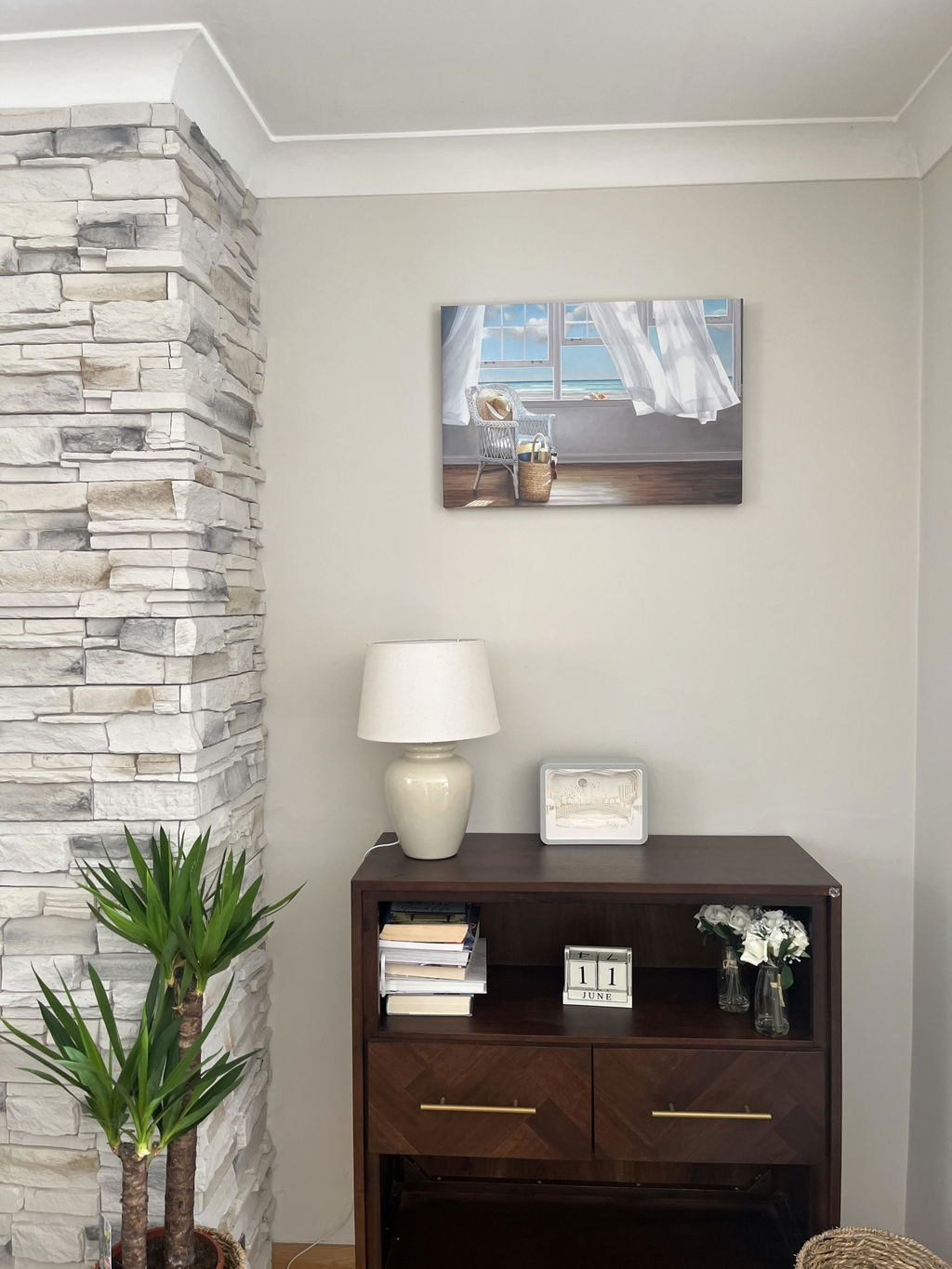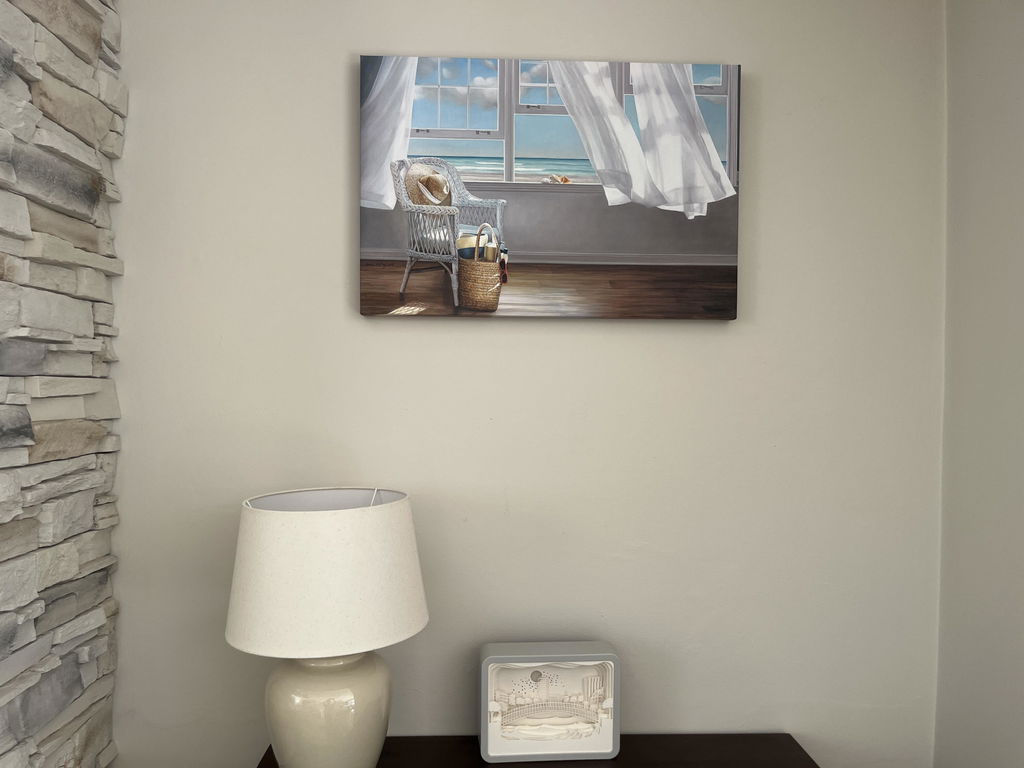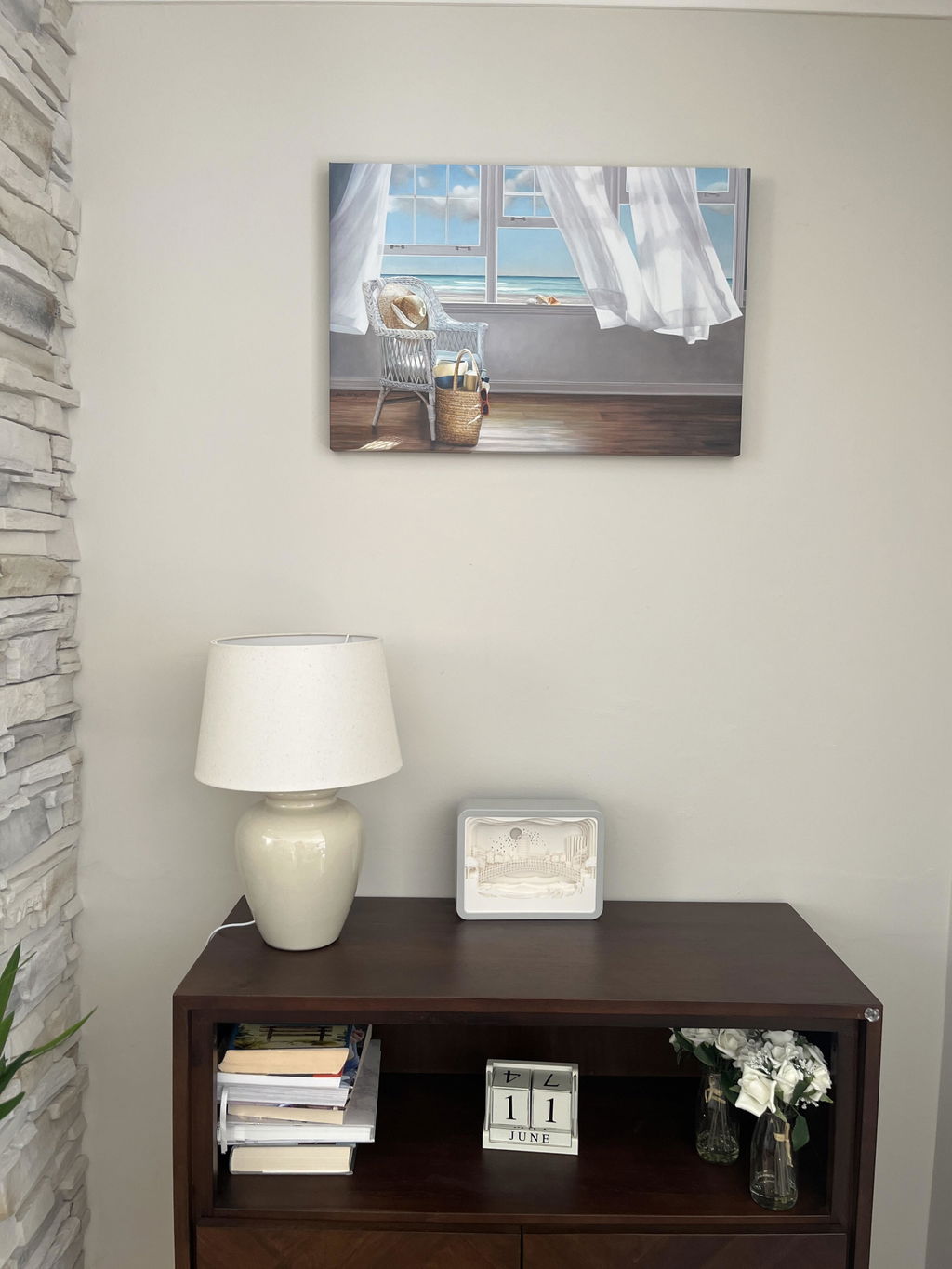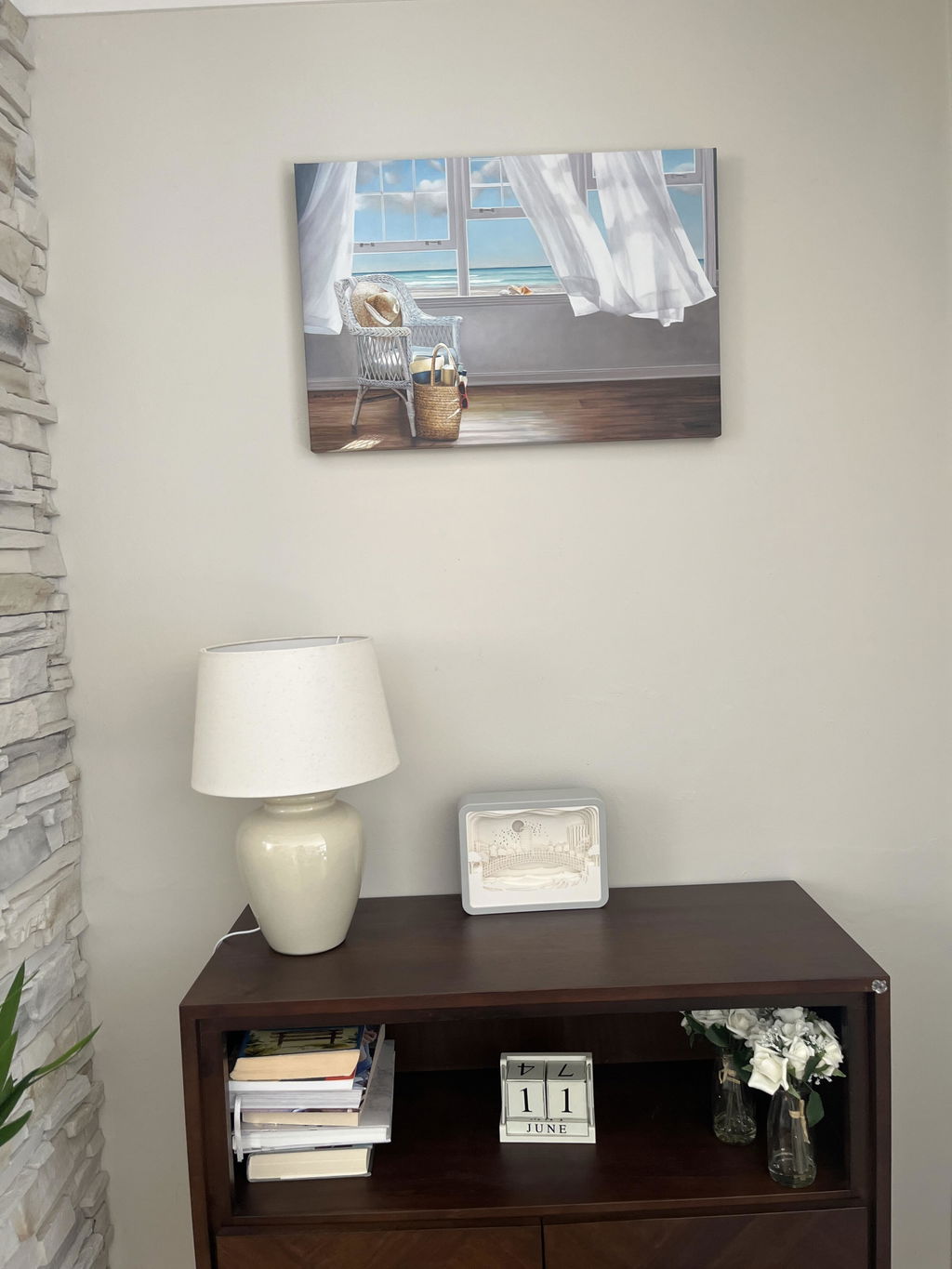

You're standing in front of a blank wall with a shopping cart full of possibilities: a glossy photo print, a framed illustration, a three-panel set, and one oversized canvas that looks perfect on the screen. The difficult part isn't finding artwork. It's deciding which format and size will solve the wall in front of you.
Canvas art prints can add warmth, softness, and visual presence without the reflective surface of glass. But canvas isn't automatically the right choice for every image or room. Wall width, ceiling height, viewing distance, lighting, and the furniture beneath the artwork all affect whether a single canvas, a panoramic split, or a gallery cluster will feel considered or awkward.
The broader art reproduction market was valued at USD 50.62 billion in 2025 and is projected to reach USD 89.78 billion by 2034, with a 6.74% CAGR projected from 2026 to 2034, according to the Fortune Business Insights art reproduction market outlook. Canvas is forecast to represent 48.37% of material share in 2026, while North America held 42.5% of the regional market in 2025, placing canvas inside a substantial décor category rather than a niche product.
Table of Contents
- What Canvas Art Prints Are and Why the Format Matters
- How Canvas Differs From Paper and Other Print Materials
- Museum-Quality Standards and What the Specs Actually Mean
- Canvas Prints Compared to Paper and Framed Prints
- Sizing and Orientation for Real Walls
- Best Rooms, Styles, and Display Options
- Care, Longevity, and Sustainability Notes
- Smart Buying Checklist and Common Questions
What Canvas Art Prints Are and Why the Format Matters
A canvas art print is an image printed onto a woven textile substrate, then commonly stretched over a wooden frame. Unlike an original painting, it begins as a digital photograph, illustration, or reproduction file. Unlike a paper print, it has a lightly textured surface and often appears as a frameless gallery wrap, although it can also be placed inside a decorative or floating frame.
That physical surface changes the way the image behaves in a room. Canvas softens the clinical sharpness of a smooth photograph and gives broad areas of color a more tactile, painterly presence. From across a living room, that texture can make a large scene or abstract feel integrated with the furniture instead of looking like a poster attached to the wall.
Practical rule: Choose canvas first for the relationship between the image and the room, not simply because the product page calls it premium.
The format works particularly well when you want one artwork to carry visual weight. A wide canvas above a sofa can establish the room's palette. A vertical piece can emphasize a tall wall. A multi-panel composition can stretch across a broad surface without requiring one enormous continuous image.

When canvas makes sense
Canvas is a strong candidate for:
- Statement walls: The textured surface and gallery-wrap construction give a large image a substantial presence.
- Casual, warm interiors: Botanical artwork, family photographs, and expressive abstracts often benefit from the softer finish.
- Rooms where glass glare is distracting: A canvas surface generally avoids the strong reflections associated with glass-fronted framing, although lighting can still affect how any artwork is viewed.
- Flexible décor schemes: Canvas can look natural in contemporary, transitional, rustic, and eclectic interiors.
Paper may be preferable when you want extremely fine detail at close range, easy replacement, or a slim, lightweight piece for a rental. Framed paper also makes more sense when the room calls for a formal, layered presentation.
Before choosing an image, measure the wall and consider where people will stand when they view it. The same canvas can feel perfectly balanced above a distant sofa and oversized in a narrow hallway. For further orientation on the format, use this guide to canvas wall art as a visual reference, then make the final decision based on your actual wall rather than a styled room photograph.
How Canvas Differs From Paper and Other Print Materials
Think of the difference between canvas and paper as the difference between upholstery fabric and a smooth sheet of photographic paper. Upholstery has a weave that catches light irregularly and adds a tactile layer. Smooth paper presents the image with fewer surface interruptions, so small details and crisp edges remain easier to inspect up close.
Fine-art canvas may be made from cotton, polyester, or a blend. The weave gives photographs and digital artwork a gentle grain, which can be flattering for images that should feel atmospheric rather than hyperclinical. Mist, foliage, painted brushwork, and muted architectural scenes often sit comfortably on canvas because the texture becomes part of the visual experience.
Paper has a different strength. A premium matte or satin sheet can preserve delicate lines, tiny textural details, and sharp photographic transitions with less interference from the substrate. That makes paper appealing for detailed illustrations, graphic work, botanical studies, and images intended for close viewing at a desk or in a compact room.
Canvas is a substrate, not a complete display format
Product catalogs often blur three separate decisions:
- Substrate: The material receiving the ink, such as canvas or paper.
- Mounting: Whether the material is stretched, mounted, or left loose.
- Presentation: Whether the finished work is unframed, framed, or supplied ready to hang.
A canvas print can be stretched over wooden stretcher bars and displayed as a gallery wrap. It can also be placed inside a floating frame, which leaves a narrow visual gap around the canvas, or enclosed in a conventional frame. A paper print can remain unframed, be mounted behind a mat, or receive a full frame with glazing.
The surface also affects perceived color. Canvas commonly produces a slightly quieter, warmer impression than a glossy photographic surface. That isn't a defect. It's a design choice that can help a large image sit comfortably beside textiles, wood, and painted walls.
For a deeper look at longevity-focused print terminology, consult this explanation of archival-quality prints. The useful question isn't whether canvas or paper is universally superior. Ask whether the image needs texture and presence or maximum close-range detail and easy framing flexibility.
Museum-Quality Standards and What the Specs Actually Mean
“Museum-quality” should identify a material and production system, not serve as a decorative label. A credible product description names the canvas weight, ink chemistry, coating, and support structure. If it says only “premium,” there is not enough information to judge how the print may perform over time.
Read the surface specifications
High-end canvas descriptions often identify heavyweight stock in the range of 400 to 450 GSM, together with cotton or cotton-blend fabric, as explained in this museum-grade canvas specification guide. GSM means grams per square meter. It does not define quality by itself, but it indicates how substantial the canvas is.
A heavier substrate can provide a stable foundation for stretching. Cotton brings a natural textile character, while a blend may balance appearance with dimensional stability. The fiber mix matters less than clear labeling and a support frame suited to the finished size. That relationship matters especially when a large canvas will be viewed from across a room, where a stable surface helps the image remain visually even.
Pigment-based giclée inks are another meaningful specification. They are more lightfast than dye-based inks and are commonly paired with acid-free substrates and UV-protective coatings. Under proper display conditions, that combination is used to target museum-style longevity of roughly 50+ years, although controlled light exposure and stable indoor conditions remain important variables, as explained in this museum-quality print materials guide.

Understand the support structure
The printed surface is only one part of the object. Solid hardwood stretcher bars give the canvas a firm frame and can help reduce warping. A tight gallery wrap keeps the image even and folds excess canvas around the sides, producing the clean, frameless appearance many buyers expect.
Before buying, ask:
- What is the canvas made from? Cotton, polyester, and blends behave differently.
- What ink is used? Look for pigment-based giclée or clearly identified archival inks.
- Is the substrate acid-free? This helps reduce material deterioration over time.
- Is there UV protection? A coating can help manage light exposure, but it does not make direct sun harmless.
- What supports the canvas? Solid hardwood stretcher bars provide clearer information than an unspecified wooden frame.
- Is the print finished by hand? Hand-stretching may produce a flatter, more carefully tensioned surface, but the claim should come with material details.
A technical product page should separate verifiable benchmarks from marketing language. “Archival” has meaning when it is supported by ink, substrate, coating, and construction details. On its own, it is incomplete.
This video provides another visual explanation of how printing and presentation affect the finished artwork:
For more detail on construction and finish, see this guide to museum-quality canvas prints. The practical buying habit is simple: look for named materials before trusting labels. Those specifications also help you choose a format that suits the wall, viewing distance, and intended display rather than selecting a size from the product page alone.
Canvas Prints Compared to Paper and Framed Prints
There isn't one winning wall-art material. Canvas, premium paper, and framed prints solve different visual and practical problems. The right choice depends on how close viewers will stand, how formal the room should feel, and whether the artwork needs the authority of a frame.
Canvas gives a wall a softer, more dimensional appearance. Its surface can reduce the sense that you're looking at a flat sheet, especially when the image is large. It also avoids the added visual border of a frame, unless you choose a framed canvas or floating frame.
Paper provides a smoother field for fine detail. It's often the more flexible option when you expect to change artwork, add a mat, or coordinate several pieces with different frame finishes. Paper prints can also be easier to store or replace, particularly in a rental or frequently changing display.
Framed prints make the strongest formal statement. The frame adds visual boundaries, protects the artwork when glazing is used, and can connect the piece to other architectural details such as dark wood, brass, or painted trim. The trade-off is added weight, depth, and a more deliberate installation.
Canvas vs Paper vs Framed Prints at a Glance
| Feature | Canvas Print | Premium Paper Print | Framed Print |
|---|---|---|---|
| Surface character | Woven, tactile, softer visual finish | Smooth or lightly textured, detail-focused | Depends on the paper or canvas inside the frame |
| Visual weight | Substantial without necessarily looking formal | Light and adaptable | Most architectural and formal |
| Glare | Usually lower than glass-fronted art, though lighting still matters | Depends on satin or matte finish and framing | Glazing can create reflections |
| Framing requirement | No, gallery wrap can be ready to hang | Often benefits from a mat and frame | Already presented as a complete framed object |
| Close-view detail | Texture can soften very fine detail | Strong choice for crisp, intricate work | Can preserve paper detail while adding protection |
| Best room role | Statement art above sofas, beds, consoles, and wide walls | Flexible collections, studies, rentals, and detailed works | Formal living rooms, offices, dining rooms, and hospitality spaces |
| Maintenance | Dust gently and avoid harsh moisture | Protect from handling, bending, and dampness | Clean glazing carefully and inspect hanging hardware |
Canvas can also be framed, so “canvas versus framed print” isn't always a true either-or comparison. The choice may be between an unframed gallery wrap and a framed canvas. If you're unsure how framing changes the presentation, this guide to framing a painting can help you compare profiles and proportions.
Use canvas when the room needs warmth and scale. Choose paper when flexibility and close-range detail matter most. Choose a framed presentation when the artwork should feel anchored, collected, and formally finished.
Sizing and Orientation for Real Walls
A beautiful image can fail if it's the wrong size. Shoppers often choose artwork by image preference first, then try to force it onto a wall. Reverse that order. Measure the available wall, identify the furniture beneath it, and select the orientation that follows the architecture.
For artwork above a sofa, console, or bed, a useful starting point is the two-thirds width rule. The artwork, or the combined width of a grouped arrangement, should occupy about two-thirds of the furniture width. Treat that as a proportion guide rather than an inflexible formula. A narrow piece can look lost, while a very wide piece can crowd the furniture and make the wall feel top-heavy.
Measure before you browse
Use painter's tape to mark the outer edges of a proposed canvas on the wall. Stand where people will normally view it and check the composition from that distance. This quick mock-up reveals problems that product thumbnails hide, especially when an oversized image competes with windows, shelving, ceiling beams, or doorways.
Ceiling height influences orientation:
- Tall walls: Vertical canvases reinforce height and can balance a narrow architectural bay.
- Wide furniture: Horizontal canvases usually echo the line of a sofa, sideboard, or dining table.
- Square spaces: Square artwork can provide a stable central shape when neither width nor height dominates.
- Open-plan rooms: An oversized statement canvas can define a seating zone without adding a physical divider.
- Small rentals: A smaller single piece or compact cluster often preserves breathing room better than one dominant canvas.

Choose the format that solves the wall
A single oversized canvas creates the clearest focal point. It works best when the image has enough compositional strength to occupy the whole area and when the wall can support a decisive visual gesture.
A panoramic split is useful on an exceptionally wide wall or above a long dining surface. The division adds rhythm, but it also introduces gaps and alignment decisions. The image should tolerate separation rather than relying on one uninterrupted detail.
A gallery cluster gives you flexibility. You can distribute visual weight across several pieces and adapt the arrangement to an irregular wall. The risk is overcrowding, so keep a clear relationship between the group, the furniture, and the surrounding negative space.
For a practical example of how a common art dimension can behave in different spaces, review this guide to 16 x 20 art prints. The measurement matters less than the proportion it creates on your wall.
Best Rooms, Styles, and Display Options
Canvas art prints work best when their surface and scale support the function of the room. A bedroom usually benefits from calm composition and restrained contrast. A living room can handle a stronger focal point because the artwork often sits opposite the main seating area and establishes the mood for the entire space.
Match the composition to the room
Living room: Start with the sofa width, then decide whether the wall needs one horizontal statement or a grouped arrangement. Bold abstracts, expansive wall art, and large-scale photography can work above a sofa, provided the artwork doesn't compete with nearby shelving or lighting.
Bedroom: Soft, tonal botanicals and quiet abstract forms tend to support a restful atmosphere. A horizontal canvas above the headboard can echo the bed, while a vertical pair can work on either side when the wall has more height than width.
Dining room: A panoramic canvas can suit a broad wall or long sideboard. Food photography isn't the only option. Architectural scenes, restrained color fields, and atmospheric vistas can create conversation without making the room feel themed.
Hallway: Choose a sequence that reads clearly while walking past. A compact gallery cluster can provide rhythm, but a single vertical work may be more effective on a narrow wall between doors.
Nursery or family room: Use cheerful color, simple shapes, and artwork with enough visual clarity to read from across the room. Secure every piece carefully, and keep installation hardware appropriate for the wall and the artwork's weight.
Home office: A vertical piece can fill the wall beside a desk, while a horizontal composition can occupy the background behind a work surface. Select artwork that supports the desired energy without creating visual distraction during calls or focused work.
Hospitality and retail: Repetition and consistency often matter more than one dramatic piece. A coordinated series can establish identity across rooms, while a framed canvas may suit a lobby that needs a more polished architectural finish.
Decide how the canvas should be displayed
A ready-to-hang stretched canvas keeps the presentation simple. It suits buyers who want the artwork to arrive as a finished wall object without selecting a frame. A floating frame adds separation around the canvas and can make the piece feel more intentional without covering the printed edges.
A conventional frame increases visual definition and can connect the artwork to the room's existing finishes. It's worth considering when the space already uses framed mirrors, architectural molding, or formal furniture. In a relaxed interior, an unframed gallery wrap may feel more natural and less visually heavy.
Printano offers a catalog of more than 9,000 artworks from over 1,000 artists, with canvas, paper, and framed formats available in multiple sizes and orientations. Its filters by color, category, collection, and format can help narrow the search when you're matching artwork to a specific wall rather than browsing without a plan.
Care, Longevity, and Sustainability Notes
A canvas print lasts best in a stable indoor setting. Direct light, moisture, temperature swings, and frequent handling can change its surface over time. Museum-style materials may support a lifespan of roughly 50+ years under proper display conditions, but that estimate assumes protection from direct sunlight and unstable environments.
Keep the artwork away from strong sunlight whenever possible. Pigment inks and UV-protective coatings can slow fading, yet they cannot remove the risk created by prolonged exposure. Harsh directional lamps may also make one area appear more prominent than another. Diffuse room lighting or carefully aimed picture lighting is usually gentler.
Humidity affects both the canvas and its wooden stretcher bars. Avoid placing valuable work in damp areas, directly beside radiators, or against exterior walls where condensation may form. Kitchens and bathrooms need extra care because steam, grease, and moisture can affect the textile and support structure.
Cleaning should stay dry and light. Use a clean, soft duster or a very gentle brush. Do not saturate the canvas, spray household cleaner onto it, or rub the printed surface. Slackness, warping, coating problems, or other surface damage call for a professional conservator. Home re-stretching and re-varnishing can worsen the problem.
Sustainability begins with buying deliberately and choosing artwork you expect to keep. Check whether the supplier describes its substrates, material sourcing, and production process clearly. Print-on-demand manufacturing can limit unsold inventory, while durable construction may reduce the need for replacement. These benefits depend on the supplier's actual practices, so broad environmental wording should lead to specific questions about materials, production, packaging, and disposal.
Smart Buying Checklist and Common Questions
Use this checklist before ordering:
- Verify canvas specs: Look for the substrate type, weight, coating, and whether the canvas is acid-free.
- Check ink quality: Prefer clearly identified pigment-based giclée or archival-grade inks.
- Inspect the support: Confirm the stretcher-bar material and whether the canvas is properly tensioned.
- Measure the wall: Compare the artwork's total width with the furniture beneath it and test the orientation with tape.
- Plan the environment: Check sunlight, moisture, heat sources, and safe hanging points before delivery.
- Review the return policy: Make sure you understand the retailer's process if the size or finish doesn't suit the room.

Common questions
Do canvas prints need glass? Usually not. A gallery-wrapped canvas is designed to be displayed without glazing, which preserves its textile surface and avoids the reflections associated with glass. A framed canvas may still use an open presentation rather than glass, depending on the construction.
Are canvas prints suitable for bathrooms and kitchens? They can work in carefully chosen, well-ventilated areas, but persistent steam, splashes, grease, and condensation create avoidable risks. Keep canvas away from direct moisture and choose a more moisture-tolerant material for particularly damp locations.
How do I coordinate several pieces? Repeat one connecting element, such as color temperature, subject, artist, or frame finish. Varying every feature can make the wall feel chaotic, while making every piece identical can remove the sense of curation.
How should I hang a heavy canvas? Use hardware rated for the artwork's weight and the wall type. For larger pieces, locate a stud when possible or use an appropriate wall anchor, then check that the hanging wire, brackets, and frame are secure before placing the canvas.
If you're ready to compare artwork by size, orientation, material, and framing style, browse Printano to find canvas and fine-art print options for the wall you've measured. Select the format that fits your room's proportions first, then choose the image that gives the space its character.