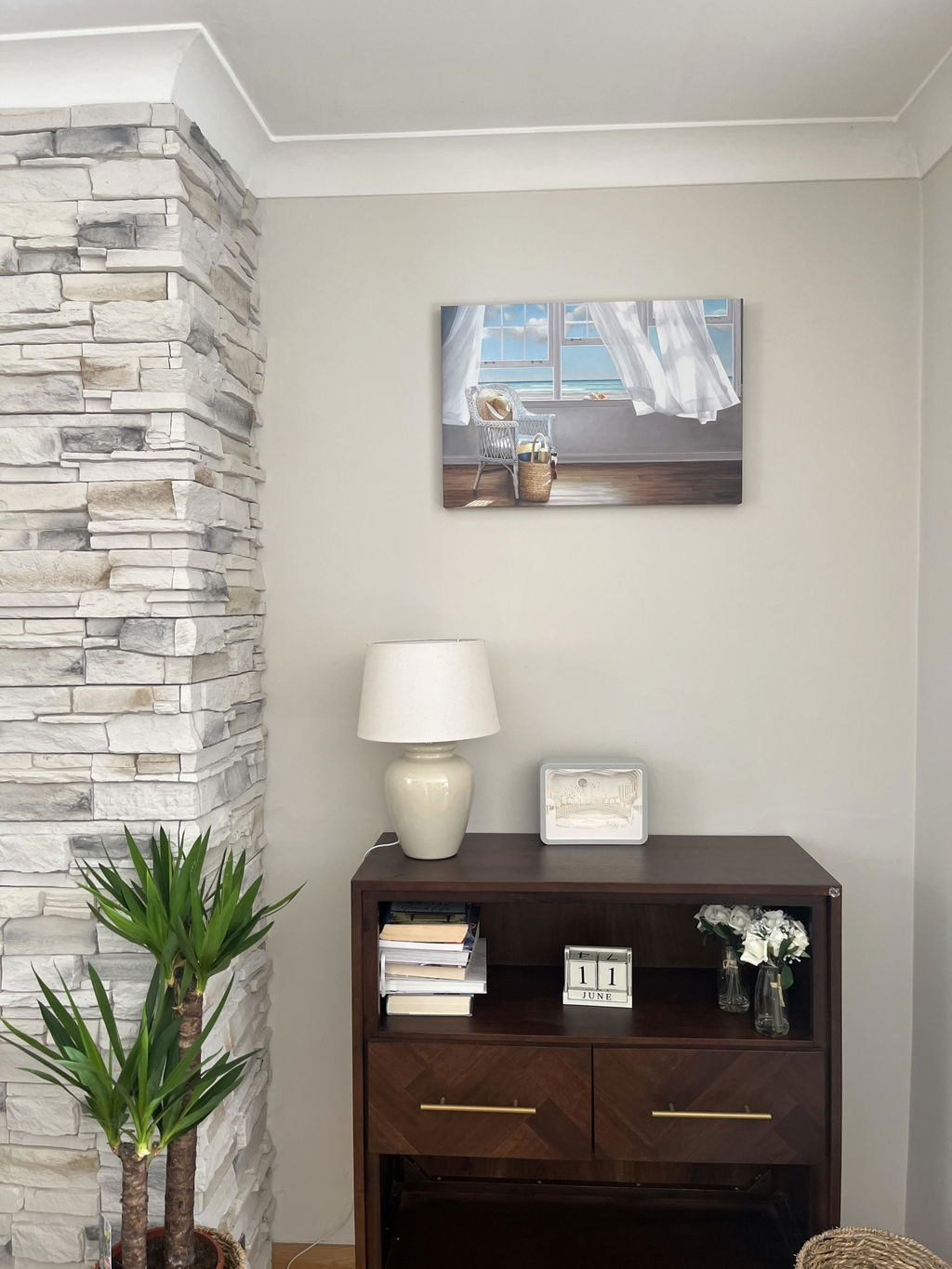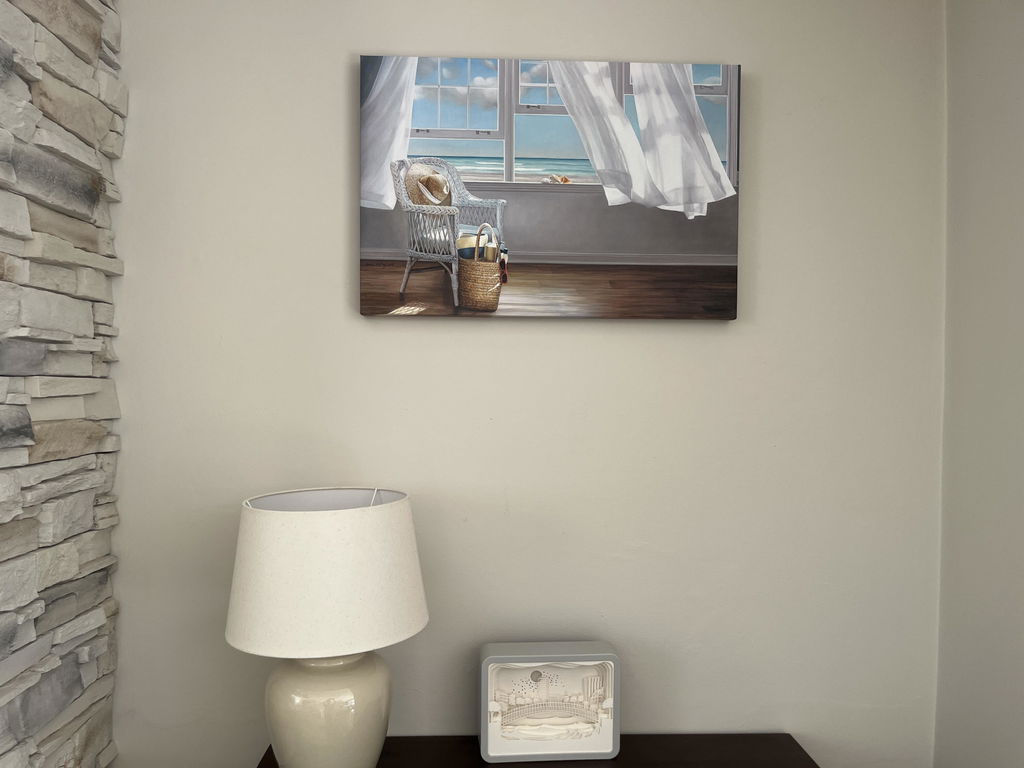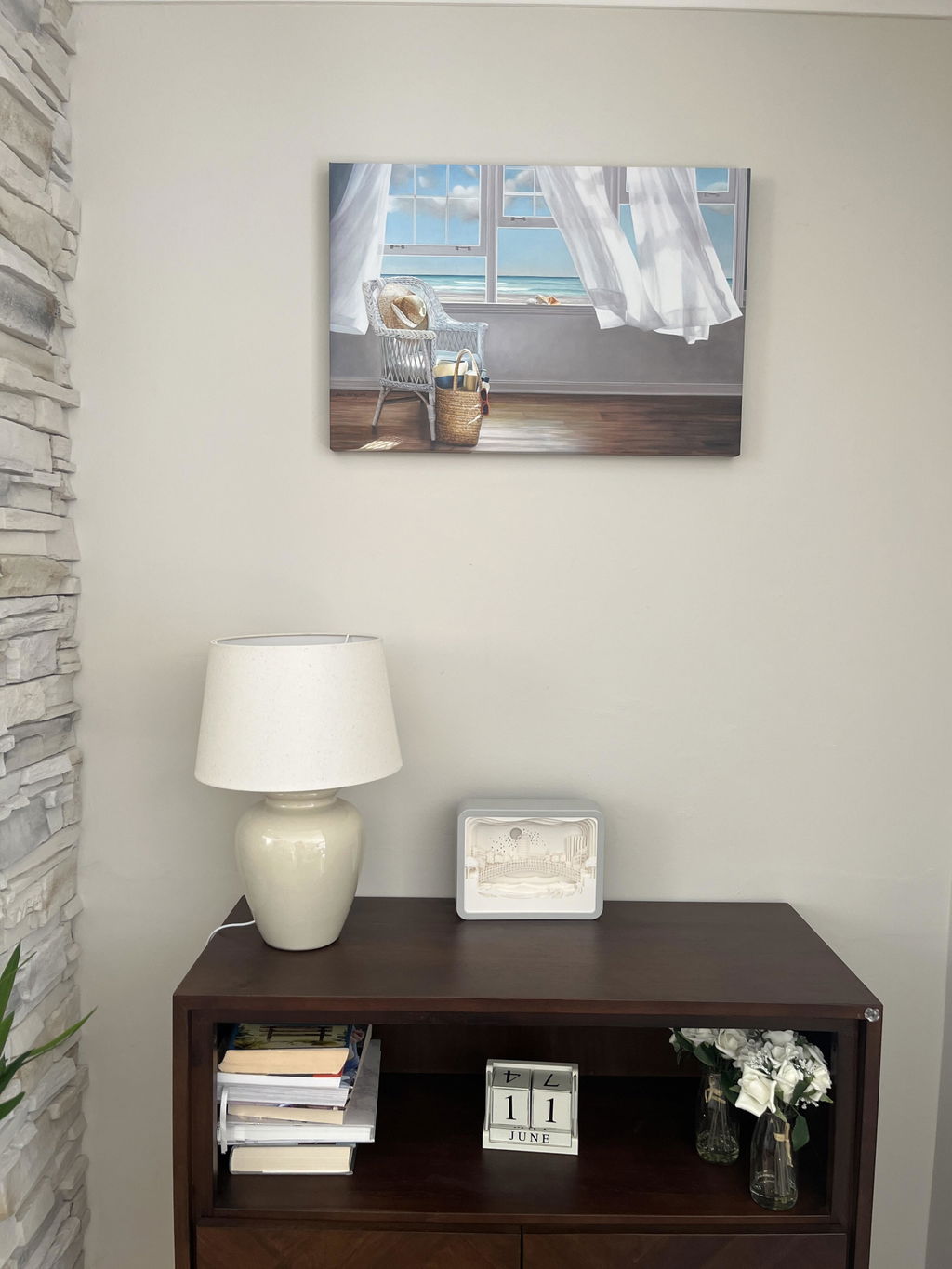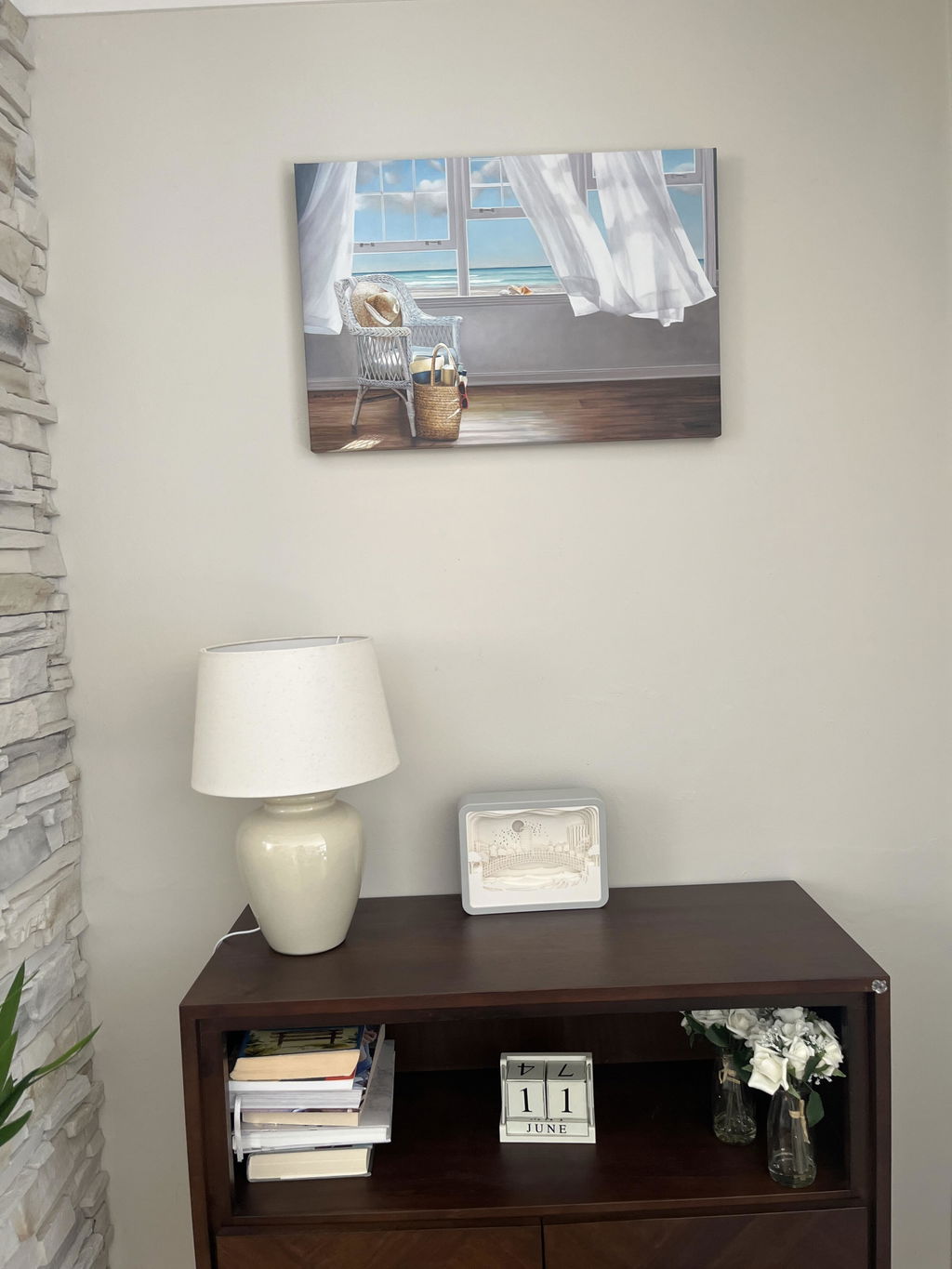

You're probably here because you have a wall that feels unfinished. Maybe it's the big stretch above the sofa, the narrow spot by the staircase, or that awkward area under a sloped ceiling where nothing seems to look right. You know art would help, but choosing the wrong size, finish, or material can make the room feel more confused instead of more polished.
Canvas wall art is one of the easiest ways to make a space feel intentional. It adds color, texture, and presence without the formality of traditional framed originals. It also solves a very modern decorating problem. People want art that's beautiful, approachable, and easy to order online without second-guessing every detail.
Table of Contents
- From Blank Wall to Beautiful Statement
- Understanding Canvas Quality Materials and Finishes
- Finding the Perfect Fit With Size Orientation and Framing
- Styling Canvas Art for Every Room and Aesthetic
- Installation and Long-Term Care for Your Artwork
- How to Confidently Buy Canvas Wall Art Online
From Blank Wall to Beautiful Statement
A blank wall can make even a well-furnished room feel temporary. You may have the right sofa, the right rug, and lighting you love, but the room still feels like it hasn't fully landed. Art often provides that missing layer.
Canvas wall art works especially well because it doesn't feel flat or overly formal. Unlike a standard paper poster, canvas has a woven texture and a bit of body. That texture softens the look of printed imagery and gives the piece more presence from across the room.
Why canvas feels different from a poster
Paper prints usually read as sleek and graphic. Canvas reads warmer. The surface diffuses light differently, so the art often feels less harsh and more integrated into the room.
That matters in everyday spaces. In a living room, bedroom, entry, or office, many people want art that feels elevated but still relaxed. Canvas does that well because it sits in the sweet spot between decorative and gallery-inspired.
Practical rule: If you want art to feel substantial without adding visual heaviness, canvas is often the easiest format to live with.
Canvas has also become more accessible for regular homeowners, not just collectors. The global wall art market was valued at approximately $61.01 billion in 2025 and is projected to reach $99.15 billion by 2033, with canvas wall art acting as a major driver because of durability and the growth of e-commerce, according to Grand View Research's wall art market report.
Why more people are choosing canvas wall art
Part of the appeal is practical. Canvas arrives ready to display in many formats, offers a polished look without requiring traditional matting, and suits many decorating styles. It can look soft and organic in a calm bedroom, bold and architectural in a dining room, or playful in a hallway.
It also gives you more freedom when you're decorating larger areas. If you're trying to fill a generous wall above a sofa or bed, oversized canvas usually feels cleaner and more intentional than clustering lots of smaller frames. If you need ideas for that kind of scale, these large wall art ideas for bigger spaces can help you picture what works.
A good canvas piece doesn't just cover empty space. It sets the tone for the room. It can make a home feel calmer, more personal, or more finished in a single move.
Understanding Canvas Quality Materials and Finishes
A lot of canvas wall art looks similar in product photos. The difference shows up later, when one piece stays crisp and taut while another starts to sag, dull, or feel flimsy. Quality lives in the details.
What the canvas is actually made of

Most canvas prints use one of three material types:
| Material | What it feels like | Best for |
|---|---|---|
| Cotton canvas | Softer, more natural texture | Fine art style reproductions |
| Polyester canvas | Smoother, more uniform surface | Sharper detail and everyday durability |
| Poly-cotton blend | A balanced middle ground | Buyers who want texture and strength |
For many homes, a blend is the most practical choice. It keeps some of the organic feel of cotton while improving structural stability.
If you're comparing products and want a clearer sense of what “archival” quality should include, this guide to archival quality prints and what to look for is worth reviewing.
Why GSM matters more than most buyers realize
One of the simplest quality clues is GSM, which means grams per square meter. Think of it as a measure of fabric weight and density.
Premium museum-grade canvas uses a 300 to 400 GSM cotton-polyester blend, with 340 to 400 GSM being especially important for preventing transparency and helping the canvas stay structurally stable over time, as noted in Resident's guide to museum-quality canvas prints.
Why does that matter in plain English? Lighter canvas can look acceptable when it first arrives, but it's more likely to feel thin, show underlying structure, or loosen with time. Heavier canvas tends to hold its shape better.
A simple way to read product quality is this:
- Low-detail listing: It mentions “premium canvas” but gives no material weight.
- Better listing: It tells you the canvas type and GSM range.
- Best listing: It also explains stretcher bar construction, ink type, and finish.
Heavier canvas usually gives you fewer surprises later. That's especially important in busy homes, commercial settings, or rooms with changing temperatures.
Inks and finishes that affect how art ages
The print process matters just as much as the fabric. Museum-quality reproduction relies on giclée-grade pigment inks printed at 1140 dpi to 2880 dpi, then sealed with a UV-protective varnish. That combination can extend fade resistance to over 75 years under normal indoor conditions, according to ArtAcademi's explanation of museum-grade giclée printing.
That's the difference between something that merely looks good on delivery day and something that keeps its color integrity for years.
When you see finish options, here's what they usually mean:
- Matte finish reduces glare and gives a softer fine-art look.
- Satin finish adds a gentle sheen and often makes color feel a bit richer.
- Glossy finish creates the strongest shine and the most reflection.
For most interiors, matte or satin is easier to live with. Gloss can work in modern spaces, but it reflects more light and can compete with windows or lamps.
If you want a polished piece that still feels easy and livable, pay attention to the quiet specifications. Material, GSM, ink, and varnish are what separate a decorative canvas from one that stays beautiful.
Finding the Perfect Fit With Size Orientation and Framing
Sizing is where many buyers get stuck. They don't usually choose bad art. They choose art that's too small, too tall, or the wrong shape for the architecture around it.
Simple sizing rules that work in real homes

A few rules of thumb make the process much easier:
- Above furniture: Choose art that spans about 2/3 to 3/4 of the furniture width below it.
- On an empty wall: Aim for the art to fill about 60 to 75% of the open wall area.
- Hanging height: Place the center near eye level. In many homes, that means around 57 to 60 inches from the floor.
- Gallery groupings: Keep spacing visually tight, usually 2 to 4 inches between pieces.
These guidelines are included in the visual checklist above because they help you avoid the most common mistake. Art that floats too small in a large area almost always feels accidental.
For frame style inspiration, especially if you love a warmer finish, these natural wood frame ideas and options are a helpful reference.
How orientation changes the feel of a room
Orientation affects more than composition. It changes how the room reads.
A horizontal canvas emphasizes width. It works beautifully above a sofa, bed, console, or dining banquette.
A vertical canvas draws the eye upward. It's useful in narrow walls, entry niches, between windows, or spaces with tall ceilings.
A square canvas feels balanced and modern. It's often the easiest solution when you want a clean, centered moment without pushing the eye too strongly in one direction.
This short video gives a useful visual sense of placement and proportion in real rooms:
What to do with awkward walls and unusual architecture
This is the part most retailers barely address. A 2025 Houzz survey found that 42% of homeowners see sizing art for non-standard architectural features, such as angled ceilings or bay windows, as a top decorating frustration, as cited by Atelier Printworks.
If your wall isn't a straightforward rectangle, don't force a standard solution. Instead, work from the shape of the space.
Try this approach:
- Map the usable visual area, not just the full wall.
- Treat sloped ceilings as boundaries, not background.
- Use vertical pieces in tight wedges where horizontal art would feel cramped.
- Consider pairs or triptychs when one large rectangle would fight the architecture.
- Leave intentional breathing room around odd corners and trim.
On awkward walls, the goal isn't maximum coverage. It's visual balance.
Framing choices that change the final look
The same artwork can look completely different depending on how it's finished.
| Style | Look | Best for |
|---|---|---|
| Gallery wrap | Clean edges, frameless feel | Modern, casual, minimalist spaces |
| Floater frame | Small gap around the canvas, more refined | Transitional, elevated interiors |
| Traditional frame | More formal and classic | Collected rooms, layered decor |
If your room already has strong furniture lines, a gallery wrap can keep things simple. If the room needs definition, a floater frame often gives canvas wall art a more refined look.
Styling Canvas Art for Every Room and Aesthetic
Buying the right piece is only half the story. Styling it well is what makes the room feel cohesive instead of decorated in pieces.
Room by room ideas that feel natural

In a living room, a large canvas above the sofa usually works best when it echoes at least one color already in the room. That might be the rust in a pillow, the green from a plant, or the charcoal from a rug. If you want more inspiration for this setting, these living room canvas wall art ideas show how different scales and moods can work.
In a bedroom, softer imagery tends to feel calmer. Abstract shapes, washed natural scenes, and quiet neutrals often support rest better than busy, high-contrast graphics. A single centered piece above the headboard usually feels more serene than a crowded arrangement.
In a dining room, you can push a little bolder. Richer tones, graphic abstracts, still life themes, or moody natural scenes often add depth and conversation. Dining spaces can handle artwork with more drama because people spend shorter bursts of focused time there.
In a home office, choose art that supports the mood you want to work in. Scenic vistas can feel expansive. Minimal abstracts can reduce visual noise. If you're trying to coordinate art with wall color first, this review of paint color visualizer tools can help you test palette directions before you commit.
A room feels finished when the artwork repeats something the space is already saying, whether that's color, mood, or shape.
Matching canvas art to your decorating style
If your style is minimalist, look for restrained palettes, negative space, and simple forms. A float-framed abstract in soft black, beige, or muted green usually fits beautifully.
If you lean modern farmhouse, canvas with soft natural scenes, botanicals, or tonal vintage-inspired imagery tends to work well. Warm wood framing helps.
For a coastal interior, skip the obvious seashell clichés unless they are a favorite. Hazy horizons, dune tones, watery blues, and airy neutrals often feel more current and more refined.
If your home is eclectic, canvas wall art can be the glue. Use one dominant color family across varied subjects, or repeat a frame finish so mixed pieces still feel connected.
A helpful styling check is to ask one question before buying: does this art support the room's energy, or does it interrupt it? Both can work, but you should choose intentionally.
Installation and Long-Term Care for Your Artwork
A well-chosen canvas still needs proper placement and care. Hanging it well makes it feel grounded. Caring for it properly keeps it looking crisp.
How to hang canvas art so it looks settled
Start by marking the center point of the wall or furniture below it. Then measure from the hanging hardware to the top of the piece, so you know where the hook or nail needs to go. This small step prevents the common mistake of hanging art too high.
If you need a more detailed walkthrough, this guide on how to hang wall art well covers the basics clearly.
For office partitions or temporary workspaces, standard wall-hanging advice doesn't always apply. If you're decorating a cubicle or panel system, this guide on how to safely hang items on cubicle walls is more relevant than typical home-hanging instructions.
Cleaning and care that protect the finish
Canvas doesn't need much maintenance, but it does need gentle handling.
Use a dry, soft cloth or a clean microfiber duster to remove surface dust. Don't spray cleaner directly on the artwork. Don't scrub. And don't use abrasive cloths, especially on varnished surfaces.
Keep canvas away from direct, intense sunlight when possible. Even high-quality finishes benefit from thoughtful placement.
Why humidity deserves more attention
Humidity is one of the most overlooked parts of buying canvas wall art. Bathrooms, kitchens, laundry rooms, coastal homes, and heavily air-conditioned commercial interiors all expose canvas to more environmental movement than people expect.
A study found that unsealed canvas edges can lose 15 to 20% of their structural tension after prolonged exposure to high humidity, according to ASTM. That loss of tension is what often leads to visible sagging.
Here's what to watch for if you're choosing art for a moisture-prone space:
- Sealed edges: Better protected than raw, unsealed sides.
- Solid construction: A taut initial stretch matters.
- Stable location: Avoid placing canvas right beside showers, stoves, or vents.
- Ventilation: Use fans and airflow to reduce repeated moisture buildup.
Canvas in a humid room isn't automatically a bad idea. It just needs better construction and smarter placement.
If you love the look of canvas in a bathroom or coastal home, ask more questions before buying. That extra minute can save you from a piece that loosens long before it should.
How to Confidently Buy Canvas Wall Art Online
You find a piece you love online. Then the doubts start. Will the colors feel right in your room? Will the canvas look substantial in person? Will that size work on a wall with sloped ceilings, narrow columns, or a long stretch above a radiator?
Buying online gets much easier once you know which details separate a strong listing from a risky one.
What to check before you add to cart

Start with the product page itself. A good listing should answer practical questions before you have to ask them.
Look for these details:
- Material specifications: The seller should clearly state the canvas type and what the frame or stretcher bars are made from.
- Print method: You want a clear description of the printing process, ink quality, and any protective finish used to help reduce fading over time.
- Construction details: Larger pieces need solid support. If the listing skips stretcher bar depth or build quality, be cautious.
- Finish information: Matte, satin, or gloss should be named plainly, since finish changes how color and light read in a room.
- Accurate dimensions: Check the exact width, height, and depth. This matters even more for alcoves, stair walls, shallow ledges, and other non-standard spaces.
- Multiple room mockups or close-up photos: These help you judge scale, edge finish, and surface texture.
One extra check is easy to miss. Read the listing with your room in mind, not just your style in mind. If the art is going into a bathroom, kitchen, coastal home, or any room with frequent humidity shifts, look for signs of better durability such as sealed sides, a protective coating, and clear construction details. Online photos rarely tell you that on their own.
Customer reviews can fill in the gaps. The most useful reviews mention color accuracy, packaging, corner quality, frame straightness, and whether the piece felt sturdy once unpacked.
Signs an online art store is worth trusting
A reliable art retailer reduces guesswork. The site should help you compare options clearly, especially if your wall is an awkward size or your room has environmental challenges.
Here's a simple way to judge that:
| What to look for | Why it matters |
|---|---|
| Detailed product pages | You can compare build quality, finish, and materials instead of choosing by image alone |
| Zoomed images | You can inspect texture, edge wrapping, and print sharpness more closely |
| Clear sizing options | Easier to fit wide walls, narrow walls, tall entryways, and other unusual spaces |
| Transparent reviews | Buyer feedback helps confirm color, quality, and packaging standards |
| Return policy and shipping clarity | You know what happens if the scale or finish feels wrong in person |
| Curated selection | Fewer low-quality choices make decisions faster and clearer |
Good stores also make customization easy to understand. If you can sort by orientation, browse several size options, and compare framed versus unframed versions without confusion, you are more likely to choose well the first time.
That matters because online art buying is partly about taste and partly about risk reduction. Clear information lowers that risk.
If you're ready to choose canvas wall art with fewer guesses and better quality signals, Printano is a strong place to start. The collection includes more than 9,000 artworks from over 1,000 artists, with multiple sizes, orientations, framing options, free worldwide shipping, and a 30-day return policy. It's a practical option for homeowners, designers, and anyone who wants museum-quality wall décor that feels easier to buy online.