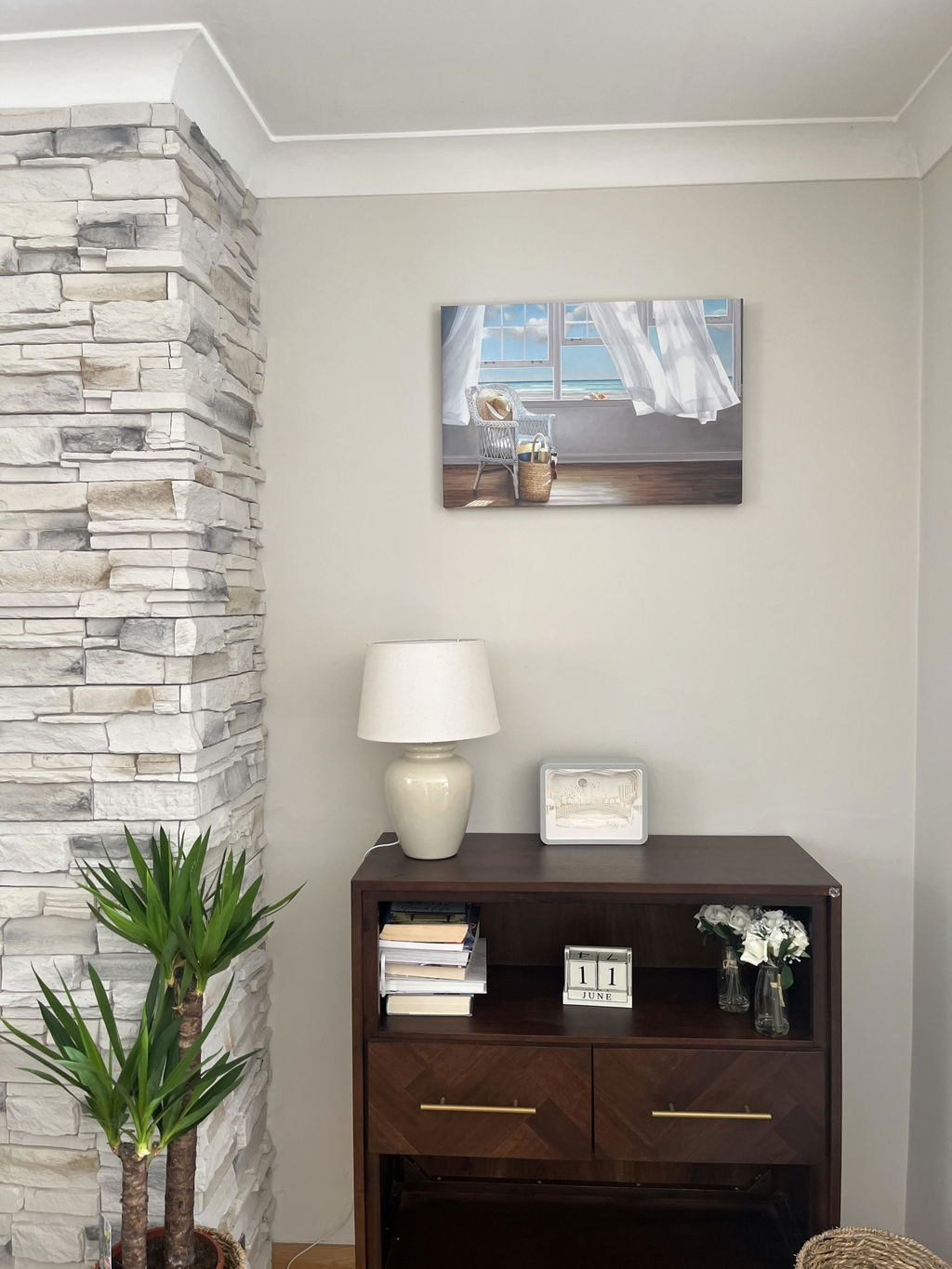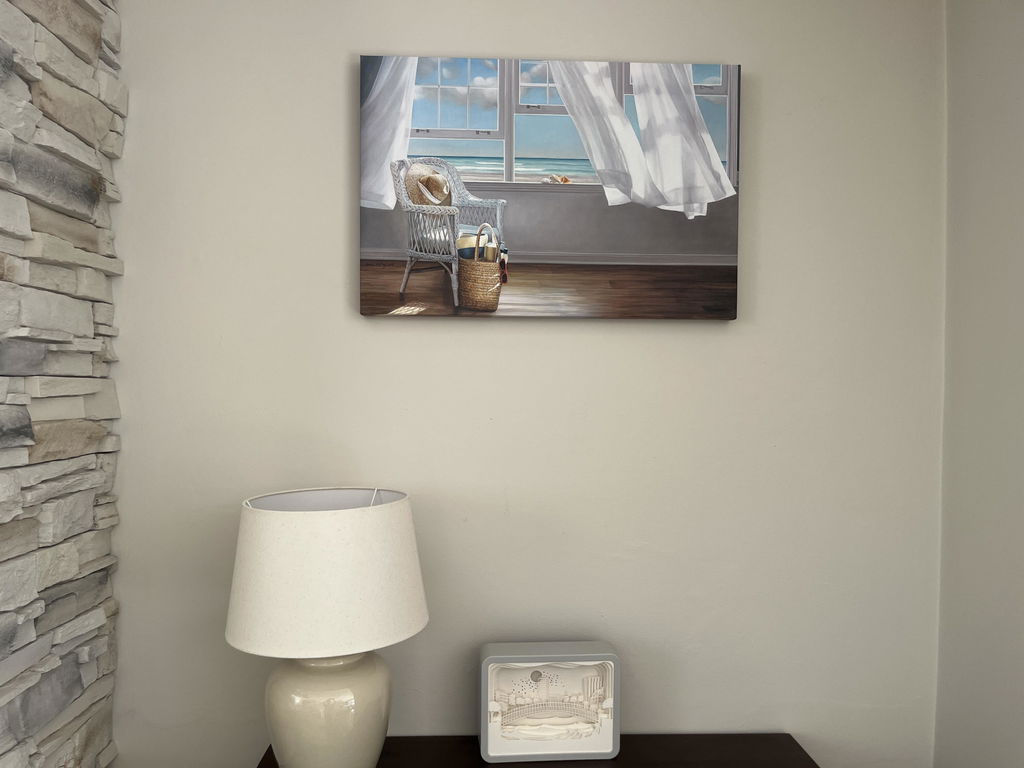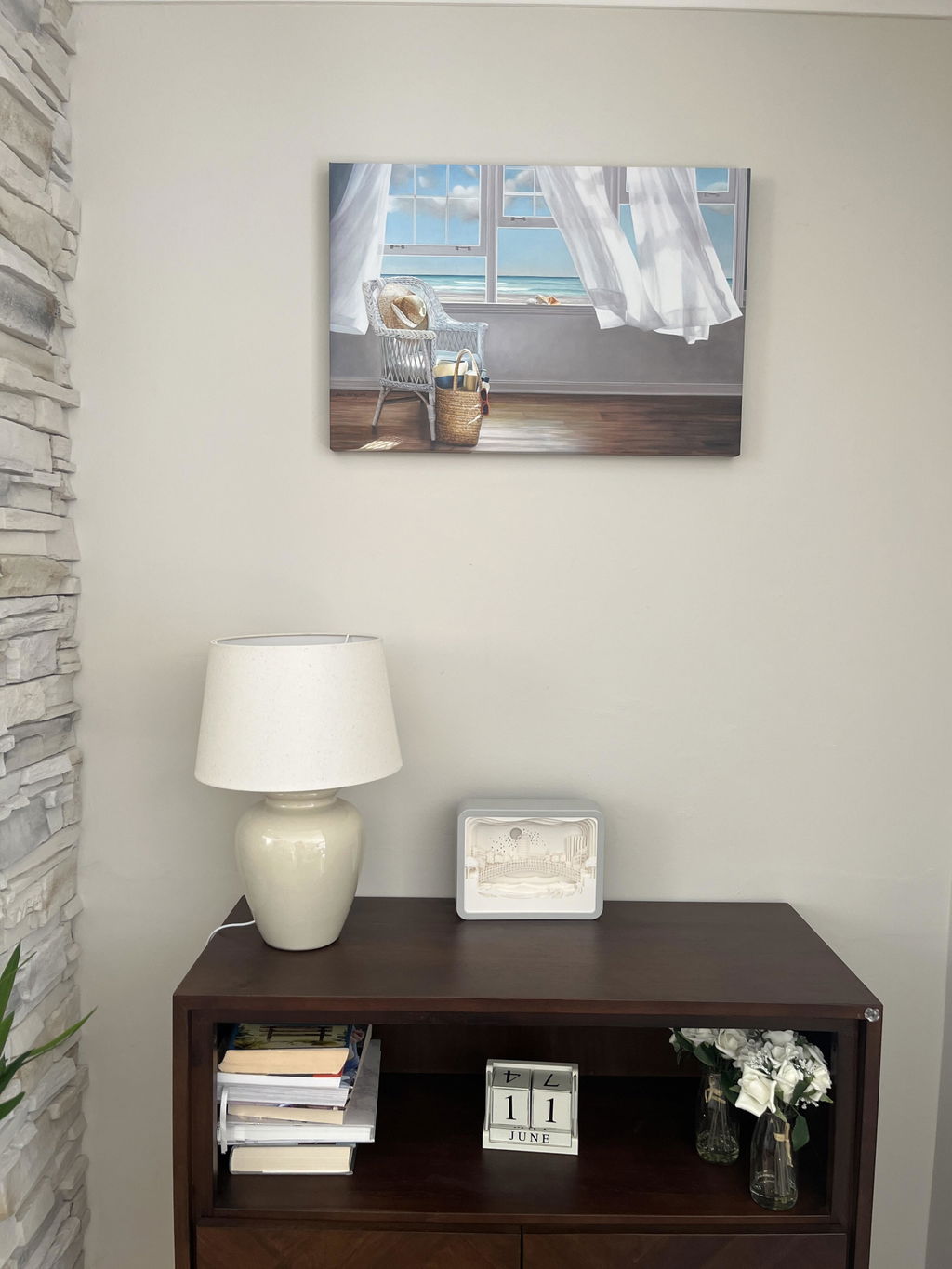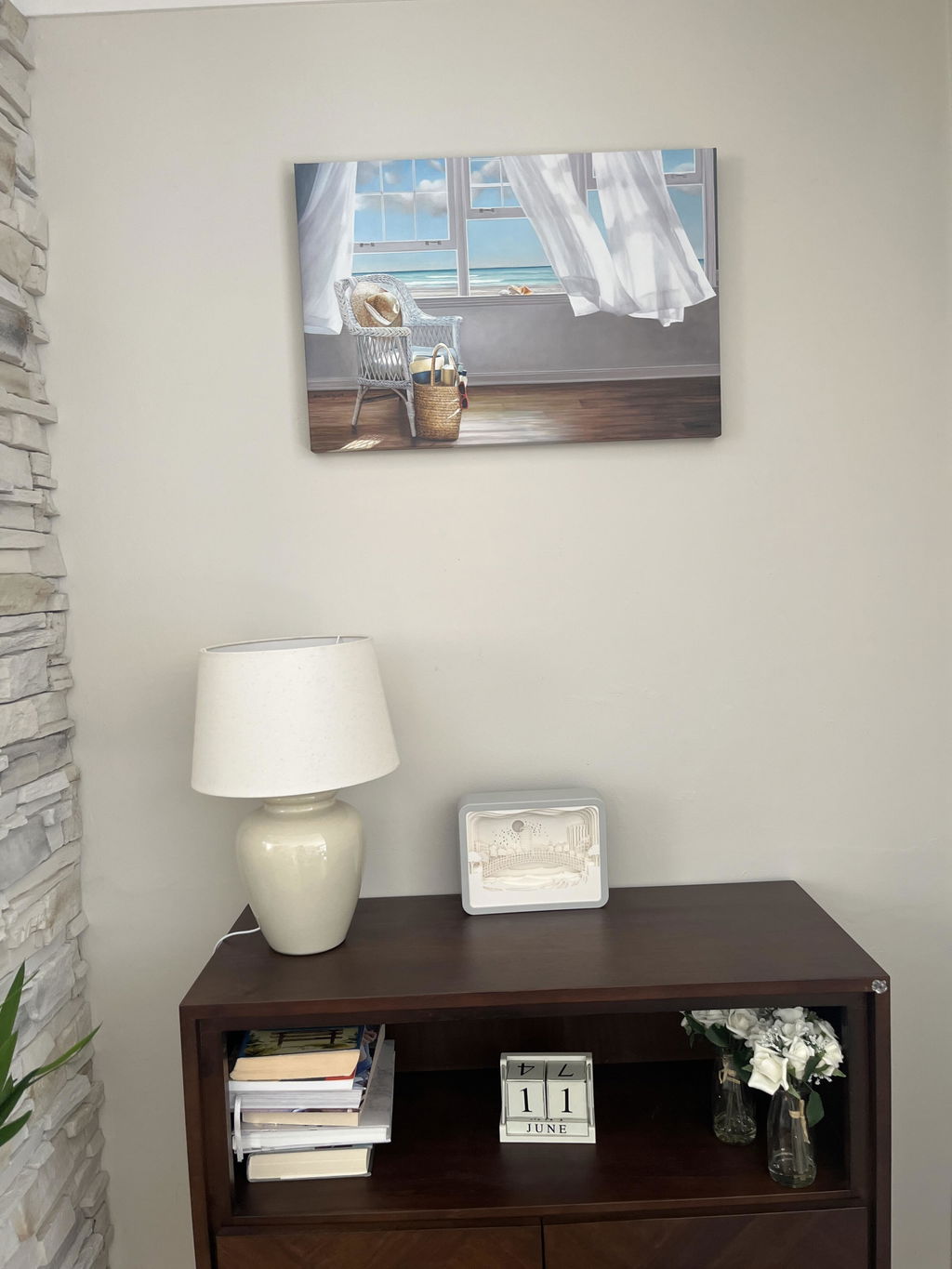

You unwrap the print, hold it up to the wall, and immediately hit the familiar pause. It looked perfect on your screen. It looks perfect in your hands. But where exactly should it go, how high is too high, and what if one wrong hole turns a clean wall into a patch job?
That hesitation is normal. Hanging art sits right at the intersection of design and DIY. A piece can be beautiful on its own and still look awkward once it's on the wall. Usually the problem isn't the art. It's placement, scale, hardware, or the relationship between the art and the furniture around it.
A good hanging job doesn't require a contractor's toolbox or a decorator's mystique. It requires a few clear rules, a little measuring, and the confidence to make decisions before the hammer comes out. Whether you're hanging one framed print on drywall, building a gallery wall over a sofa, mounting something on plaster, or styling unframed paper in a rental, the process gets much easier once you know what matters.
Table of Contents
- Your Guide to Hanging Wall Art
- The Essential Pre-Hanging Checklist
- Mastering Measurement and Placement
- Hanging Techniques for Every Wall Surface
- How to Create a Flawless Gallery Wall
- Renter-Friendly and Damage-Free Solutions
- Enjoy Your Newly Transformed Space
Your Guide to Hanging Wall Art
Most walls don't need more stuff. They need better decisions.
I've seen beautiful prints look underwhelming because they were too small for the wall, hung too high above a sofa, or paired with a frame style that fought the room instead of finishing it. I've also seen modest, affordable pieces look polished and intentional because the scale was right and the hanging was thoughtful. That's the difference people notice when they walk into a room, even if they can't explain why.
Art almost never looks wrong because it's bad. It looks wrong because it isn't relating to the wall, the furniture, or the sightline.
The practical side matters just as much. A heavy framed piece asks for different hardware than a lightweight paper print. Brick requires a different approach than drywall. Plaster punishes impatience. And renters usually need options that don't leave a trail of repairs behind.
If you want to know how to hang wall art with less guesswork, start by treating it as one decision with three parts. First, choose a piece that suits the space. Second, measure placement before you touch the wall. Third, use hardware that matches both the artwork and the surface. Get those three right and the job becomes much simpler.
The Essential Pre-Hanging Checklist
A wall can look finished on paper and still feel wrong once the art goes up. Usually the problem starts earlier than the first nail. The piece is too small for the wall, the frame adds more visual weight than the room can carry, or a delicate unframed print gets treated like a sturdy canvas.

Choose the art before you choose the hardware
Start with proportion and format.
A narrow slice of wall beside a door usually needs a vertical piece that pulls the eye up. A wide wall above a sofa often looks better with a horizontal print, a diptych, or a grouped arrangement that gives the furniture some company. Square art is useful in spots where a horizontal piece feels too stretched and a vertical one feels too tall.
Frame style affects placement more than people expect. A chunky frame projects farther from the wall and reads heavier, so it needs enough space around it to feel intentional. A slim frame feels lighter and is often easier to use in tighter rooms, hallways, and layered groupings. If you are comparing profiles, this guide to floating frame prints is helpful for deciding when extra depth improves the piece and when it only adds bulk.
Unframed prints need their own plan. They can look crisp and modern, but they are less forgiving than framed work. Paper can ripple in humid rooms, curl at the corners, and show every slight tilt. That is why the choice of print finish, mounting method, and wall location matters before you gather hardware.
This is also the point to judge scale. If the art looks undersized while it is still leaning against the wall, hanging it higher will not fix that. A better move is to choose a larger size, switch orientation, or group pieces so the overall composition fits the wall.
If you are setting up a room after a move, wait until the large pieces are in place. Once the sofa, rug, and lamps are set, the right art size and height become easier to read. If you are still coordinating deliveries and timing, a guide to shipping household goods can help you get the room settled before you start making holes.
Gather tools that match the wall
The basic kit is simple, and it saves a lot of patching later.
Keep these nearby:
- Tape measure: for width, height, and spacing.
- Pencil: for light placement marks.
- Level: for single pieces and multi-piece layouts.
- Painter's tape: for test layouts and edge guides.
- Stud finder: useful for larger framed work.
- Microfiber cloth: to clean the frame and wall before hanging.
Then match the hardware to the surface, not just to the artwork. Drywall, plaster, brick, and concrete all hold fasteners differently. A hook that performs well in drywall can fail quickly in old plaster. Masonry needs the right drill bit and anchor system, not a hopeful extra swing of the hammer.
| Wall Type | Recommended Hardware | Typical Weight Limit | Best For |
|---|---|---|---|
| Drywall | Picture hooks, drywall anchors, toggle bolts | Depends on the specific hardware and wall condition | Most standard framed art in homes |
| Plaster | Screws with anchors, pilot-hole drilling, appropriate hooks | Depends on the specific hardware and plaster integrity | Older homes with brittle wall surfaces |
| Brick | Masonry screws, wall plugs, masonry anchors | Depends on the anchor system and substrate | Heavier pieces on solid masonry |
| Concrete | Concrete anchors, masonry screws | Depends on the anchor system and drill accuracy | Secure hanging on hard modern surfaces |
Practical rule: Choose hardware for the wall first. Then confirm that it also suits the weight and hanging style of the piece.
One product detail to check before you order is whether framed art arrives ready to hang. Printano states that its framed art prints come with hanging hardware already installed, plus rubber bumpers on the back to help the frame sit more steadily against the wall. That does not replace correct anchors or careful placement, but it does remove one common setup variable.
Mastering Measurement and Placement
Good placement is what makes art feel settled instead of floating.

Use the eye-level rule as your anchor
The professional baseline is simple. Center the artwork at 57 inches from the floor. According to Phaidon's guide to hanging art, that midpoint aligns with average human eye level, approximately 57 to 60 inches, and it's widely used by decorators, galleries, and museums.
That rule helps because it gives you a repeatable starting point. Without it, art is typically hung too high. A piece that sits too high doesn't feel connected to the room. It starts to read like a separate object stuck on the upper half of the wall.
For a single piece on an open wall, the 57-inch midpoint is usually the cleanest decision. For grouped art, treat the whole arrangement as one composition and aim the collective center near that same visual line.
If you're choosing art specifically for a main seating area, these examples of canvas wall art for living room can help you think through scale and orientation before you measure.
Find the exact nail point
The center rule tells you where the art should land. It does not tell you where the nail should go. That's a different measurement.
Use this sequence:
- Measure the total height of the artwork.
- Divide that number by two to get the vertical center.
- Measure from the top of the frame down to the tightened wire or hook.
- Subtract that top-to-wire distance from the vertical center.
- Add the result to 57 inches. That final number is the wall height where your nail or hook should go.
This formula is the easiest way to avoid the classic mistake of placing the nail first and discovering the art lands several inches off target.
Measure with the hanging wire pulled taut, not slack. The resting position of the wire changes where the frame sits.
If the frame has D-rings instead of a wire, measure directly to the hanging point on the ring. If you're using two hooks, mark both with a level before committing.
Adjust for furniture and room shape
Above furniture, visual relationship matters more than the open-wall rule by itself. The verified guidance from Park West Gallery recommends keeping the bottom of the art 6 to 8 inches above the top of furniture for visual cohesion. The verified guidance from Phaidon also notes 8 to 10 inches as a standard above furniture in many installations. In practice, the right answer is to keep the art visually close enough to feel anchored, not adrift.
That's why a piece can be technically centered and still look wrong over a sofa. If the gap is too large, the art and furniture stop reading as one composition.
A few placement checks help before you hammer:
- Stand back from the room entrance: First impressions catch height problems fast.
- Sit down on the sofa or bed: Art above seating should feel connected, not ceiling-bound.
- Use painter's tape or paper templates: This reveals scale and spacing before damage.
- Take a phone photo: A camera often shows imbalance faster than your eye does in person.
Tall rooms need judgment. Verified background notes point out that rigidly applying the eye-level rule can fail in homes with significantly taller ceilings, and that in high-ceiling spaces the center height may be increased to 60 inches to better engage vertical space (Phaidon). Low-ceiling rooms need the opposite instinct. Keep the composition grounded and close enough to furniture to avoid that disconnected look.
Hanging Techniques for Every Wall Surface
The wall decides the method. If you ignore that, even correct measurements won't save the install.
Drywall
Drywall is the most forgiving surface, and that's why people get sloppy with it.
For lighter framed art, picture hooks are usually cleaner and more reliable than hammering in a bare nail at an angle. They leave a smaller mark and tend to hold more predictably when installed correctly. For larger or heavier pieces, switch to a drywall anchor or toggle bolt instead of hoping a simple hook will do the job.
A few habits make drywall installs neater:
- Use a level after the piece is on the wall: Floors, trim, and ceilings can fool your eye.
- Check for studs when the piece is large: A stud gives you a stronger anchor point.
- Add felt or rubber bumpers if needed: They reduce wall scuffs and frame sway.
- Don't over-tighten anchors: Drywall crumbles if you force hardware past its design.
If the wall surface is textured, test your hardware carefully. Some hanging methods sit unevenly on orange peel or knockdown textures, and lightweight frames can tilt forward more than expected.
Plaster
Plaster looks solid, but it can crack if you treat it like drywall.
Older plaster walls often have a brittle finish coat over wood lath or another base layer. Hammering directly into them without a pilot hole can chip the surface or send hairline cracks outward from the entry point. A drill with a small pilot bit gives you a far cleaner start.
Use screws and anchors that suit the wall condition. If the plaster feels crumbly, stop and reassess before widening the hole. The goal is to support the artwork without breaking the wall's face.
Plaster rewards patience. Drill first, then fasten. Rushing usually creates the repair you were trying to avoid.
If you hit unusual resistance or the wall sounds hollow in inconsistent spots, assume nothing. Older homes often contain surprises. In that case, it's worth testing in an inconspicuous area or getting help before you commit to a prominent location.
Brick and concrete
Brick and concrete intimidate people, but the process is straightforward once you accept that standard household hardware won't cut it.
You need a masonry drill bit and a drill capable of handling the material. Mark the hole, drill carefully, clear the dust, then install a masonry anchor or wall plug that matches the screw system you're using. After that, hang the art from the installed hardware just as you would on another surface.
Brick introduces one extra choice. Drill into the mortar joint or into the brick itself. Mortar can be easier to patch later, but it may not offer the same strength or consistency as solid brick. The right choice depends on the piece, the wall condition, and how permanent you want the install to be.
If your wall includes tile, don't improvise. The technique changes, and cracking the finish is easy. This guide to preventing cracked tiles when drilling is useful if your art placement overlaps tiled surfaces.
For oversized statement pieces, placement matters as much as fastening. A large work can dominate a room in a good way when the scale matches the wall. These examples on decorating with oversized art are helpful if you're trying to decide whether one large piece is better than several smaller ones.
How to Create a Flawless Gallery Wall
A gallery wall looks effortless only after someone has done the planning.

Pick a layout style that suits the room
Start by deciding whether you want order or movement.
A grid layout feels architectural. It works well with matching frame sizes, repeated matting, or a calm, symmetrical room. A salon-style arrangement is looser and more collected. It can mix sizes, orientations, and frame finishes, but it still needs an internal logic so it doesn't turn chaotic.
Before hanging anything, lay the pieces on the floor. If floor space is tight, use kraft paper or taped paper templates on the wall. This lets you adjust spacing and see whether one piece is visually dragging the whole composition off balance.
A grouped set can make planning much easier. If you're working with coordinated pieces, these examples of 3-piece wall art show how a set creates cohesion without requiring you to invent the relationship from scratch.
Build around one anchor piece
Choose one artwork to act as the anchor. It's usually the largest piece, the strongest image, or the one you want to hit the prime sightline.
Hang that piece first. Then build outward. If you start at the edge and work inward, small spacing errors compound fast and the entire arrangement drifts. With an anchor piece in place, every surrounding choice becomes easier because you're reacting to something fixed.
Use these principles as you expand:
- Keep spacing visually consistent: Even in an organic arrangement, the gaps should feel intentional.
- Balance visual weight: A dark, thick-framed piece can offset several lighter works.
- Repeat something: frame finish, subject matter, mat color, or palette. Repetition creates unity.
- Treat the full grouping as one composition: not as separate little islands.
Here's a visual walkthrough of the planning mindset in action:
A gallery wall should still feel related to the furniture below it. If it's over a console, sofa, or bed, don't let the grouping drift too high as you add more pieces. The center of the whole arrangement should remain the thing you judge, not the center of any one frame.
Renter-Friendly and Damage-Free Solutions
A rental wall can still look finished, collected, and personal. The trick is matching the hanging method to the artwork itself. Size, weight, frame depth, and whether the piece is framed or unframed all change what will hold safely and what will look intentional.

Make adhesive methods work better
Adhesive strips and hooks are useful, but they have limits. They work best with lighter pieces, flatter frames, and smooth painted walls. A wide oak frame, a canvas with a thick stretcher, or anything that projects far from the wall puts more stress on the adhesive than many renters expect.
Prep decides a lot here. Clean the wall, let it dry fully, and press the strip exactly where the weight is carried. Then wait the full bonding time before you hang anything. Rushing this step is one of the main reasons pieces slide or fall later.
Textured walls need extra caution.
If the wall has orange peel, old plaster variation, or heavy paint buildup, choose very lightweight art or skip adhesive entirely. In those cases, leaning a frame on a picture ledge, mantel, shelf, or credenza often looks better and avoids the trial-and-error of failed strips. I use that approach often for larger prints because it keeps the arrangement flexible and makes seasonal swaps easy.
Hang unframed prints without making them look temporary
Unframed prints need a different standard. The goal is not just to get paper onto the wall. The goal is to keep the print flat, protect the corners, and make the display look deliberate enough that it belongs with the rest of the room.
That usually means choosing the display method based on the print itself. A bold vertical print can look crisp in a magnetic poster hanger. A softer art print on paper may suit a shelf lean better, especially if you want to layer it behind a smaller framed piece. If the print is oversized, avoid weak adhesive dots at the corners. They often cause rippling and make the piece look temporary even when the artwork is strong.
A few renter-friendly options tend to hold up well:
- Magnetic poster hangers: best for clean-lined prints where you want the full paper visible
- Bulldog clips with a rail or hook: good for casual spaces, studios, and easy rotation
- Washi tape: works when the taped edge is part of the look, not an attempt to hide the method
- Shelf leaning: useful for larger paper prints or for mixing one unframed piece with smaller framed works
Paper choice matters too. Matte and satin finishes react differently to sunlight, humidity, and handling. Check the corners during the first few days. If they start to curl, switch methods instead of adding more adhesive and hoping for the best.
If you want a coordinated arrangement but still like the flexibility of lighter displays, these ideas on decorating with sets of framed art can help you decide which pieces should be framed permanently and which ones are better for rotation.
Enjoy Your Newly Transformed Space
Once the art is up, the whole room usually clicks faster than people expect. The wall feels finished. The furniture feels grounded. The room starts to reflect the people who live there.
That result comes from a few smart choices made in the right order. Pick art that suits the wall, measure placement carefully, respect the surface you're drilling into, and don't underestimate the difference between “roughly right” and properly placed.
For upkeep, dust frames with a soft dry cloth and avoid spraying cleaner directly onto glass or acrylic. Unframed prints need a gentler touch. Keep hands clean, avoid moisture, and don't let paper sit where steam, grease, or direct sunlight will wear it down quickly.
You don't need a perfectly styled house to hang art well. You just need a plan and the willingness to put something meaningful on the wall.
If you're choosing new pieces while thinking through size, orientation, framing, or unframed options, Printano offers museum-quality wall art in multiple formats, including framed prints, canvas, and paper prints, so you can match the artwork to the room and the hanging method more easily.