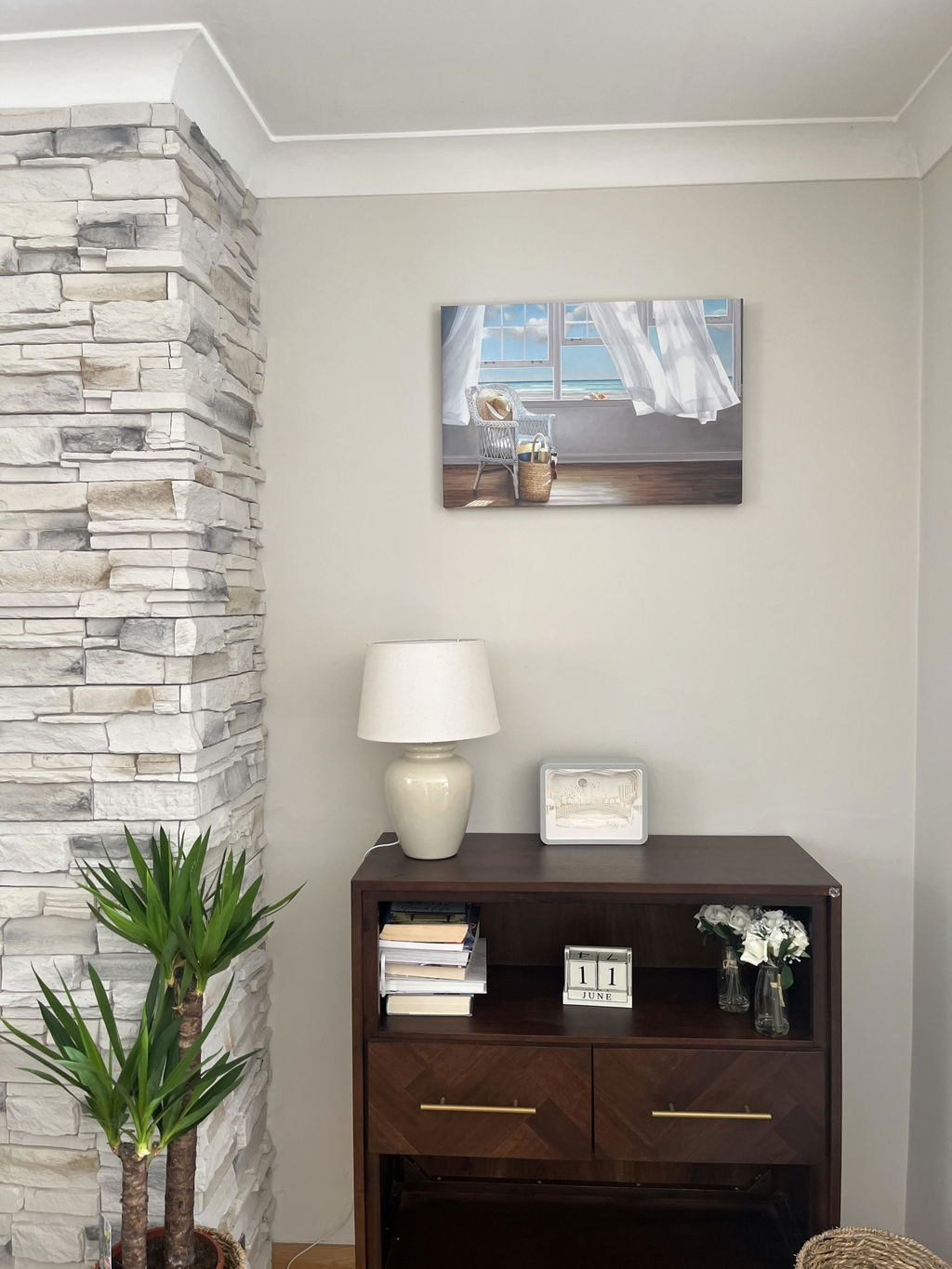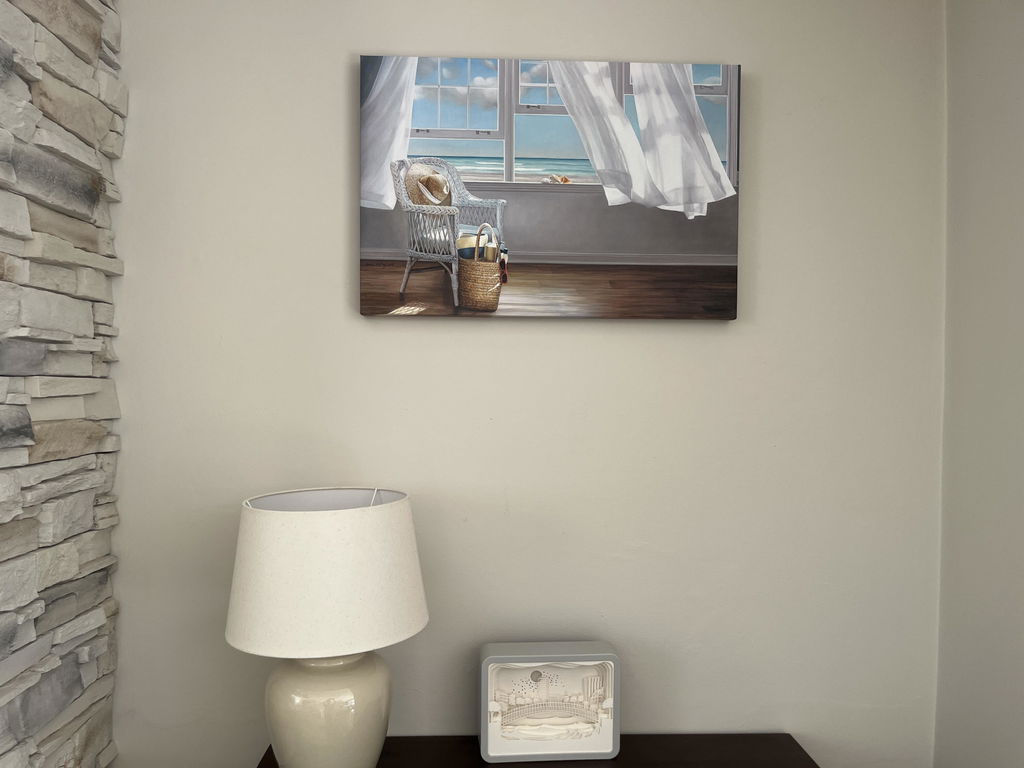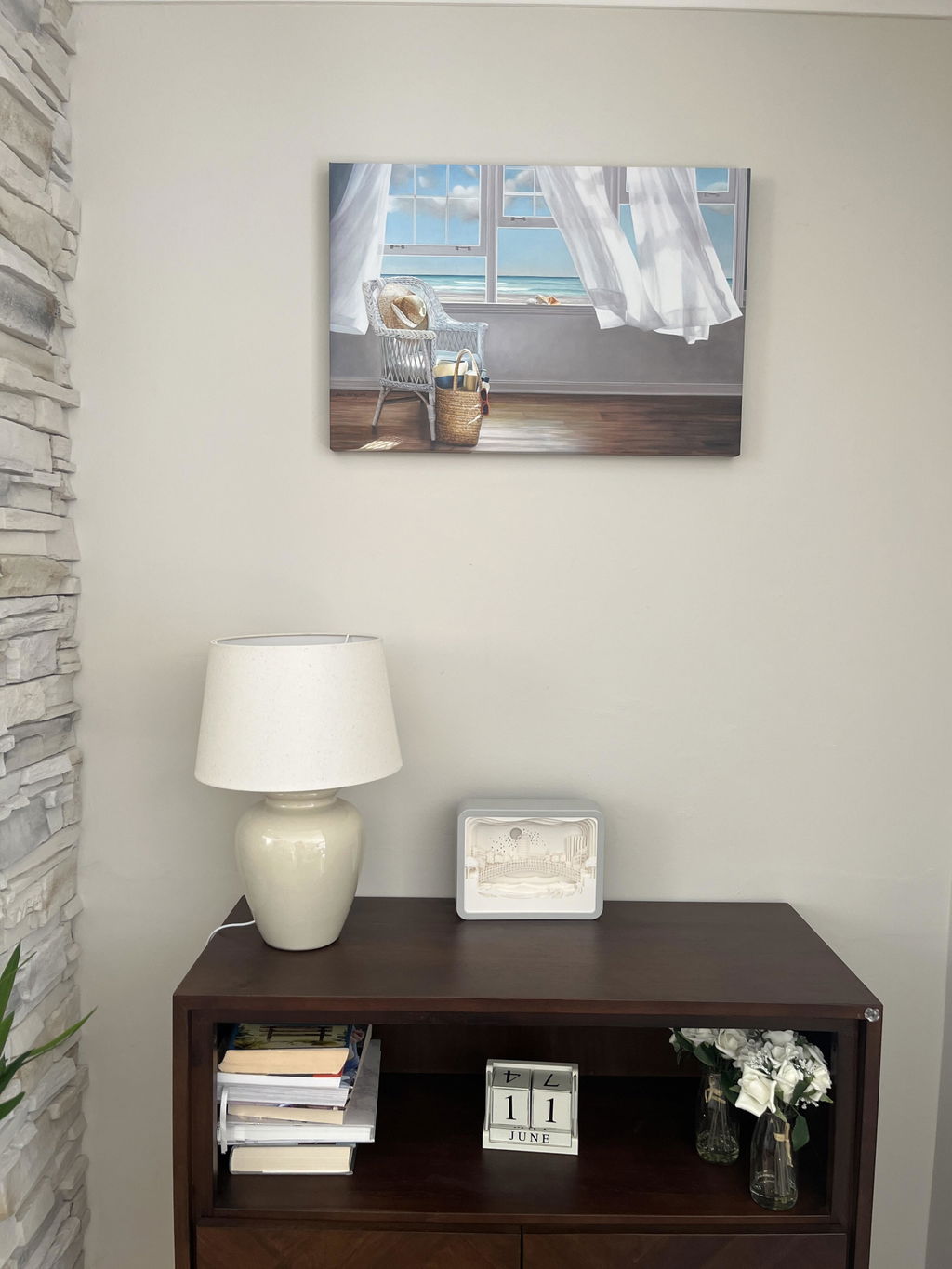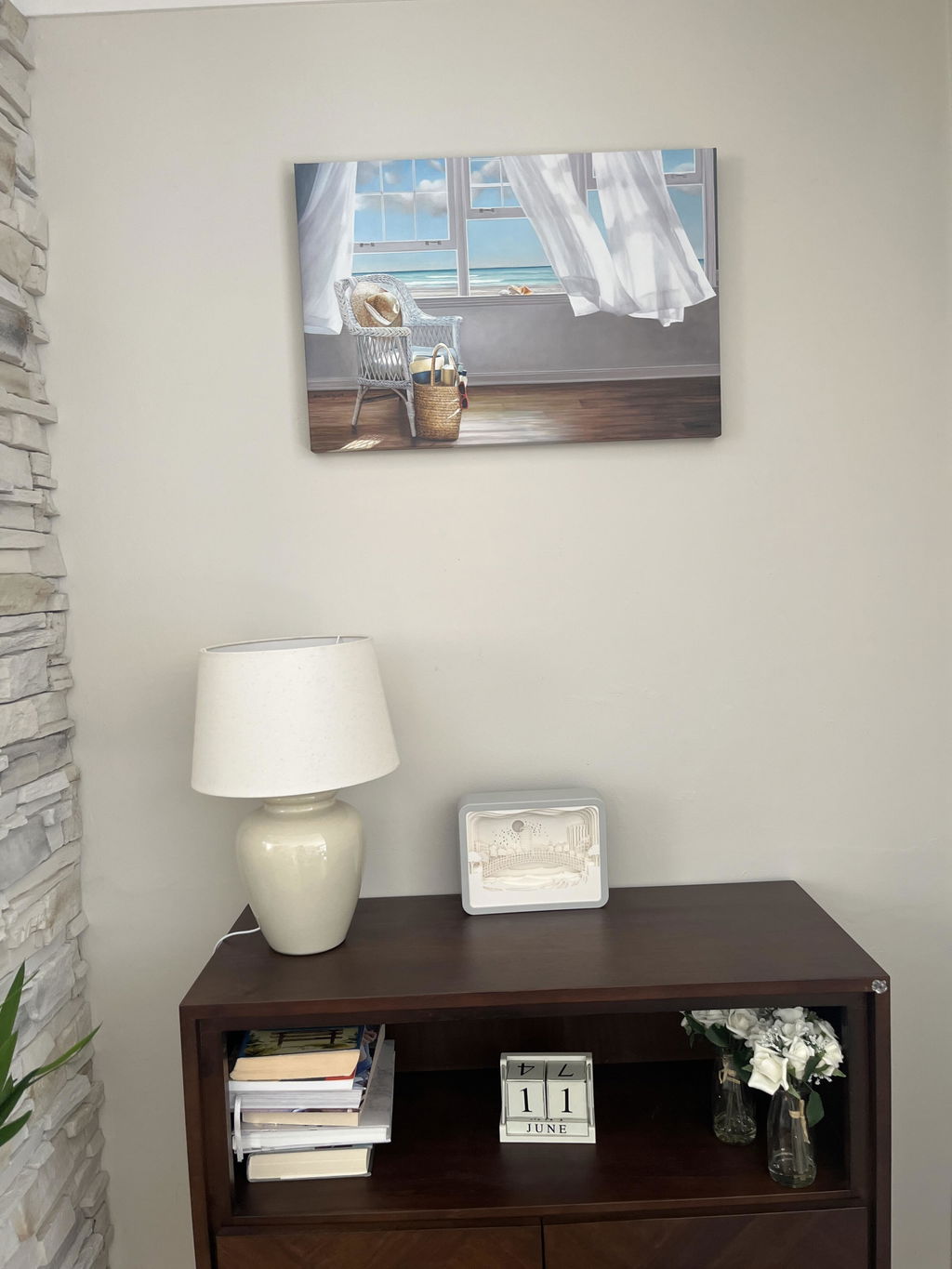

You've cleaned the grout, upgraded the mirror, replaced the towel hooks, and the bathroom still feels unfinished. That's when the unfinished feeling becomes clear. Bathrooms can be beautifully fitted out and still read as hard, cold, and slightly impersonal because almost every surface is functional. Tile, glass, porcelain, stone, chrome. They do their job, but they don't soften the room.
Art does.
The right artwork for bathroom walls adds warmth where surfaces feel slick, introduces color without crowding a small footprint, and gives the room a point of view. In a powder room, that might mean a framed print that feels collected and a little unexpected. In a busy family bath, it usually means choosing something that can handle real steam, splashes, and constant use without curling at the edges or trapping moisture behind the frame.
That distinction is where many bathrooms go wrong. People shop by style first and room conditions second, then wonder why a lovely print starts looking tired. A much better approach is to treat bathroom art as both decoration and specification. You want the piece to look right, but you also want it to survive the room you're asking it to live in.
If you're also pulling together finishes, a guide to mosaic art for homes is useful for thinking about how decorative surfaces and wall art can support each other instead of competing. And if your bathroom leans pared back, this piece on wall decor for a minimalist approach is a smart reference for keeping the room calm rather than sparse.
Table of Contents
- Transform Your Bathroom from Blank to Beautiful
- Choosing Humidity-Resistant Art Materials
- Tailoring Art to Your Bathroom Type
- Finding Your Bathroom's Signature Art Style
- The Art of Sizing and Placing Bathroom Artwork
- Framing and Installation Secrets for Longevity
- Common Questions About Bathroom Art
Transform Your Bathroom from Blank to Beautiful
A bathroom rarely needs more stuff. It needs something that interrupts utility.
That's why art works so well here. It can soften hard finishes, pull a color out of a tile or painted vanity, and make even a simple room feel intentional instead of merely complete. The effect is especially strong in rooms with a lot of reflective surfaces, where a single piece can add visual depth that towels and accessories never quite manage.
Bathrooms are also where style can be more concentrated. You don't need to furnish a whole room around a print. You can let one image set the tone. A quiet botanical can make a compact ensuite feel restorative. A graphic piece can sharpen up a monochrome scheme. A playful print in a guest powder room can make the space memorable in a way that doesn't require a renovation.
Practical rule: If the bathroom feels cold, don't add another object to the counter. Add something to the wall.
The challenge, of course, is that a bathroom is not a forgiving place for delicate finishes. Steam doesn't always damage the visible front of the art first. It often creeps in through the back, the frame joints, or the hardware. That's why the best results come from pairing the look you want with the conditions of the room you have.
Some bathrooms can carry framed paper beautifully. Others need sealed acrylic or metal, no matter how much you love the look of a traditional print. Once you make that distinction, the styling decisions become much easier, and the art starts working with the room instead of fighting it.
Choosing Humidity-Resistant Art Materials
The fastest way to waste money on bathroom art is to ignore the substrate. In this room, material choice matters more than almost anywhere else in the home.
For bathroom use, the clearest framework is good, better, best. According to Tip Top Furniture's bathroom art guidance, good is framed paper with protective glazing for powder rooms, better is museum-wrap canvas for guest baths, and best is sealed acrylic or other wipeable, moisture-tolerant surfaces for full baths used daily.

Start with the room, not the print
If the bathroom is mainly decorative, such as a powder room used by guests, you have more flexibility. Properly framed paper can work well there because the air doesn't stay wet for long and the room usually sees less daily steam.
A guest bath sits in the middle. Museum-wrap canvas or sealed framed work can perform well if the room isn't handling repeated hot showers every day.
A primary or family bathroom needs a tougher answer. Acrylic and aluminum prints are especially effective in humid spaces because they repel water and won't warp or fade under moisture exposure, according to Edward Martin's guide to bathroom wall art materials. That same guidance stresses a point designers see constantly in real homes. Surface damage isn't the only issue. Moisture intrusion behind the artwork is often the bigger problem.
If you're coordinating your whole finish package, this guide to bathroom paint for renovations helps for the same reason. Paint, like art, has to match the room's moisture load, not just the palette. For framed pieces in other parts of the home, details like floating frame prints also help clarify how construction changes the final look and performance.
Bathroom Art Material Durability Guide
| Material Type | Best For (Bathroom Type) | Humidity Resistance | Key Consideration |
|---|---|---|---|
| Framed paper with protective glazing | Powder room | Low to moderate | Needs sealed backing and careful framing |
| Museum-wrap canvas | Guest bath | Moderate | Better than paper, but still needs thoughtful placement |
| Sealed acrylic print | Daily-use full bath | High | Wipeable and well suited to steam-heavy use |
| Aluminum or metal print | Daily-use full bath | High | Strong moisture resistance and crisp contemporary finish |
| Laminated or sealed frame system | Mixed-use bathrooms | Moderate to high | Performance depends on complete sealing, not just the front surface |
What usually fails first
It is commonly assumed that the face of the print is the weak point. It often isn't.
Frames fail when humid air gets behind the piece. Backs bow. Paper absorbs moisture. Hardware rusts. A beautiful print can look fine from the front while the assembly behind it is slowly breaking down.
A better checklist is this:
- Sealed edges: The perimeter should not invite moisture into the frame package.
- Finished back: An exposed paper dust cover isn't enough for a steamy room.
- Protective glazing: Paper-based work needs a barrier on the front.
- Corrosion-resistant hardware: The hanger should survive the same room the art is in.
Bathrooms don't reward half-measures. A moisture-tolerant print in a weak frame still behaves like a weak installation.
Tailoring Art to Your Bathroom Type
A powder room and a family bathroom should not be treated like the same design brief. They may both be bathrooms, but the air conditions, traffic, and cleaning patterns are completely different.
That's the distinction many guides skip, and it's the one that saves the most frustration. Andy Okay's bathroom wall art guide notes that high-traffic bathrooms require sealed, synthetic materials such as acrylic and metal, while low-traffic guest areas can display paper originals with proper sealing. It also notes that humidity cycles can degrade untreated paper frames within 6 to 12 months.

For a powder room or guest bath
Powder rooms offer an opportunity to be a bit more expressive. They usually have less lingering humidity, so they can handle framed paper, vintage prints, photography, and more delicate-looking pieces if they're assembled properly.
That makes them a good home for artwork with a little personality. You can go more formal, more playful, or more eccentric because guests experience the room briefly and at close range. The art becomes part of the surprise.
A few strong fits:
- Paper prints with glazing: Best when the frame package is sealed rather than decorative-only.
- Detailed linework or typography: Great in smaller rooms where viewers stand near the wall.
- More precious pieces: Appropriate if the room stays relatively dry and well ventilated.
If you're used to choosing pieces for utility spaces, it can help to think through a room with similar constraints, like art for kitchen walls, where heat, splashes, and practicality also shape what belongs on display.
For a daily-use family bathroom
This room needs discipline. It isn't the place for a vulnerable paper print you hope will “probably be fine.”
Choose sealed acrylic, metal, or another wipeable, moisture-tolerant surface. Family bathrooms see repeated hot showers, more door-open and door-closed humidity cycles, and a lot more incidental splashing. The art has to cope with all of it without becoming a maintenance project.
This is also where style should simplify rather than complicate. A crisp acrylic coastal print, a botanical on a sealed panel, or a metal piece with strong contrast tends to hold up both visually and physically. The room already has enough going on.
If the bathroom serves children, morning routines, and back-to-back showers, durability is part of the design, not a compromise.
Finding Your Bathroom's Signature Art Style
A powder room and a family bathroom should almost never wear art the same way. One can carry a sharper point of view because moisture is limited and guests use it briefly. The other needs artwork that still looks intentional after steam, fingerprints, and fast morning routines.
For style direction, broad bathroom art trends still point to botanical, spa-inspired, and coastal imagery, as noted in Gelato's bathroom wall art ideas report. Those categories stay popular for a reason. They sit comfortably with tile, stone, mirrors, and chrome without fighting the room.

The styles that feel right in a bathroom
Botanical art is one of the safest choices because it softens hard surfaces and still feels clean. In a family bathroom, I prefer simplified botanicals with strong composition over delicate vintage florals. They read clearly through mirrors, tile lines, and visual clutter. In a powder room, finer detail works better because people view the piece up close and the room usually stays drier.
Coastal and ocean-inspired art works best when it stays restrained. Water studies, shoreline abstracts, washed blue tones, and sandy neutrals feel appropriate without sliding into novelty decor. In humid full baths, these subjects also pair well with acrylic or metal formats because the crisp finish suits the calm palette. If the room needs more presence, a three-panel wall art arrangement for a narrow bathroom wall can add rhythm without making the space feel crowded.
Spa and zen imagery suits bathrooms with quiet finishes and clean lines. Misty scenes, tonal abstracts, and soft movement tend to age better than busy prints with lots of contrast. They also hold up visually in rooms that already have strong grout lines, patterned floors, or bold vanity lighting.
Typography is more selective. It can look sharp in a powder room with a deliberate black-and-white palette or a playful guest bath. In a daily-use full bathroom, text often feels more decorative than grounded, especially once towels, products, and family clutter enter the picture.
Use color to set the room's pace
Bathroom art has an outsized effect on mood because the palette is usually tight to begin with. One piece can calm the room, warm it up, or give it structure.
- Soft greens and muted blues support a quieter feel and pair well with white tile, pale stone, and light oak.
- Sand, clay, and blush tones help bathrooms that feel cold under overhead lighting.
- Black, cream, and charcoal sharpen classic rooms and suit more formal vanities or architectural fixtures.
- Layered color and deeper florals usually perform better in powder rooms, where you can afford more personality and less restraint.
Style should also match how the room is used. In a low-moisture powder room, art can be more detailed, more graphic, and slightly more daring. In a high-humidity family bathroom, the strongest choices are visually calm, easy to read, and disciplined enough to look good even when the room is busy.
A bathroom with good art feels finished because the style matches the room's real conditions, not just the color of the towels.
The Art of Sizing and Placing Bathroom Artwork
Bad placement can make good art look accidental. In bathrooms, the mistake usually goes one of two ways. The piece is too small and drifts above the fixture, or it's the wrong shape for the wall and never settles visually.
According to June Hunter's bathroom art placement guide, the optimal spots are above the toilet or over the towel rack, with 72% of designers recommending these positions. The same guidance notes that in smaller bathrooms, a single large print measuring 24 to 30 inches or a series of smaller pieces works well, and 64% of buyers choose vertical orientation for narrow spaces.

Where art works best
Above the toilet is popular for a reason. It's often the clearest uninterrupted wall area in the room, and it gives the artwork immediate visibility.
Over a towel rack can also work beautifully, especially in longer bathrooms where the toilet wall is broken up by cabinetry, windows, or tile transitions.
The wall opposite the door is another strong option when available, because the piece becomes the room's focal point the moment someone walks in. But whichever wall you use, the art has to relate to the architecture below it.
Match the format to the wall shape
This is one of the most overlooked decisions in bathroom styling. The wall above a toilet is usually narrow and vertical. A horizontal piece there often feels like it's floating awkwardly, even if the width technically fits.
A better match looks like this:
- Vertical or square artwork: Best above toilets and on narrow wall runs.
- Horizontal artwork: Better above towel bars, tubs, or wider stretches of wall.
- Grouped arrangements: Useful when one single piece feels too rigid or too small.
If you're creating a set rather than hanging one statement print, 3-piece wall art layouts are a helpful way to think about balance without defaulting to a random gallery wall.
Simple placement rules that prevent expensive mistakes
You don't need dozens of rules. You need a few good ones applied consistently.
- Choose scale with intent: In a small bathroom, one appropriately sized print usually looks more deliberate than several tiny frames.
- Keep groupings tight: If you use multiple pieces, the arrangement should read as one composition, not scattered accents.
- Respect fixture lines: The artwork should feel connected to the toilet, towel bar, or vanity beneath it, not detached from it.
- Avoid steam-heavy zones: Don't place art where shower spray or direct steam repeatedly hits the surface.
Designer check: Before hanging anything, tape the shape on the wall with painter's tape and look at it from the doorway. That view tells the truth fast.
Framing and Installation Secrets for Longevity
The artwork can be right, the style can be right, and the installation can still ruin the result. Bathrooms are where construction details stop being invisible.
Build the frame like a protective shell
For paper-based work, glazing is essential. Acrylic glazing is often the more practical choice in a bathroom because it's lighter and easier to handle than glass. The backing matters just as much. If the back of the frame is loosely finished, humid air will find its way in.
Frame material deserves more attention than it usually gets. Raw wood can react poorly in damp conditions, especially if the room runs humid often. Metal and moisture-resistant composite frames are generally safer choices for bathroom use.
A good bathroom frame package should include:
- A closed front barrier: Protective glazing over the artwork.
- A sealed back: Not just a decorative dust cover.
- Stable frame material: Better to use moisture-tolerant construction than unfinished timber.
- A finished edge condition: Gaps at the corners or backing reduce the whole assembly's performance.
Installation details that matter more than people think
Hardware is easy to overlook until it starts rusting. Corrosion-resistant hanging hardware is the better move in any bathroom, especially in a room used daily. It protects both the art and the wall.
Placement matters here too. Keep artwork away from direct steam paths and splash zones. If it's too close to a shower opening, a tub frequently used by kids, or a towel bar where wet towels brush the frame, the piece is doing harder work than it needs to.
For the final hang, use a method that gives you control over height, leveling, and wall anchors rather than guessing with a nail and hoping for the best. A clear step-by-step guide to how to hang wall art is useful here because precision matters more in a compact room where every inch is visible.
Some bathroom art fails because of humidity. A lot of it fails because the frame and hardware were never specified for humidity in the first place.
Common Questions About Bathroom Art
Can I hang original or valuable artwork in a bathroom
Treat this as a bathroom-type question first, not an art question. In a low-moisture powder room, an original can work if it is properly framed and kept away from the sink splash zone. In a hard-working family bathroom with daily showers, I rarely recommend putting anything valuable on the wall. The risk is not only steam. It is repeated moisture swings, cleaning products, damp towels, and rushed use by the whole household.
If the piece is expensive, sentimental, or difficult to replace, use a reproduction in the main bath and keep the original for a drier room.
What should I do if my bathroom has poor ventilation
Assume the room is tougher on art than it looks. Run the fan well after showers, keep the door open when possible, and avoid paper-based art unless the room stays consistently dry. In a poorly ventilated family bathroom, acrylic, metal, or properly sealed printed pieces are safer choices than works on paper.
A powder room is a different case. If nobody is showering there, ventilation matters less, and your material options open up.
How do I clean bathroom wall art
Clean the frame and surface based on the material. Acrylic and metal usually handle a soft, slightly damp microfiber cloth well. Framed paper art, canvas with texture, and anything with exposed edges need a lighter touch.
Never spray cleaner directly onto the artwork or glazing. Spray the cloth first, then wipe gently. If moisture gets behind the glazing or into the frame corners, the finish and the art package can both suffer.
Is one large piece better than several small ones
Usually, yes. One properly scaled piece gives a bathroom a finished focal point and keeps the walls from feeling busy.
A grouped arrangement can work in a powder room, where you have more freedom to be decorative. In a family bathroom, I prefer fewer pieces with more breathing room. It is easier to keep clean, easier to hang well, and less likely to feel crowded once mirrors, lighting, hooks, and storage are all in play.
Can I rotate art seasonally in a bathroom
Yes, and it is a smart strategy. I like it best in powder rooms, where lower moisture levels let you bring in more delicate framed prints for part of the year. In a humid full bath, rotation still helps, but every piece should be chosen as if the room is demanding, because it is.
If you're ready to choose artwork that looks polished and is easy to size for a real bathroom wall, Printano offers museum-quality wall décor in multiple sizes, orientations, and formats, which makes it easier to match a piece to a narrow toilet wall, a wider towel-bar span, or a more specific powder room setup.