
You're probably in one of two places right now. You love Jimi Hendrix, and you want that love to show up in your home without making the room feel like a college bedroom. Or you've found a Hendrix print you like, but you're unsure whether it belongs in a polished living room, office, or creative space.
That hesitation makes sense. Music-inspired wall art can swing in two directions very quickly. It can feel personal, layered, and design-forward, or it can look accidental. The difference usually isn't the subject. It's the way you read the visual language and how you place it in the room. Jimi Hendrix art is especially worth reading carefully because it carries more than celebrity appeal. It carries color theory, cultural memory, stage drama, and one of the strongest visual identities in rock history.
If you've ever admired the emotional intensity of a great Fiona Apple poster in a music-focused interior, you already understand the broader idea. The best music art doesn't just show an artist. It translates mood into form.
Table of Contents
- From Music Icon to Visual Legend
- The Visual Legacy of the Electric Church
- Exploring Styles of Jimi Hendrix Art
- How to Choose the Perfect Hendrix Print for Your Space
- Decorating with Jimi Hendrix Art in a Modern Home
- Ensuring Authenticity and Quality in Your Art
- Bring Home the Voodoo Child
From Music Icon to Visual Legend
A homeowner once described her decorating problem to me in a way I hear often: “I want the room to sound like my record collection, but I don't want the walls to shout.” That's the right instinct. Personal taste should shape a room, but it needs editing.
Jimi Hendrix art works when you stop treating it as merchandise and start treating it as a visual archive. His image isn't powerful only because he was famous. It's powerful because artists, photographers, designers, and poster makers built a world around him that still reads as vivid, expressive, and emotionally charged.
That's why Hendrix belongs in conversations about interiors, not just music memorabilia. A strong Hendrix piece can do the job of abstract art, portraiture, and color accent all at once. It can anchor a room, introduce movement, and set a creative tone without needing anything loud or gimmicky around it.
Jimi Hendrix art succeeds in a room when it expresses atmosphere, not fandom alone.
If you keep that one idea in mind, the whole category opens up. You're no longer limited to a poster pinned on the wall. You can choose from psychedelic works, moody photographs, graphic portraits, or contemporary reinterpretations that fit a modern home with ease.
The Visual Legacy of the Electric Church
Jimi Hendrix's visual legacy formed fast and hit hard. He released exactly three groundbreaking studio albums, Are You Experienced (1967), Axis: Bold as Love (1967), and Electric Ladyland (1968), within a 21-month period before his death in 1970, and those releases helped define the visual and sonic aesthetics of late-1960s rock art. They also established a visual language of vibrant colors, surreal composition, and abstract forms that directly inspired Hendrix-themed art prints, as noted in this historical overview of Jimi Hendrix's career and album output.

Why Hendrix became a visual reference point
Hendrix arrived at a moment when music and design were feeding each other. Album covers weren't just packaging. Concert posters weren't just announcements. They became visual declarations of a new culture that rejected stiffness and embraced sensation, movement, and altered perception.
That matters for interiors because the same qualities still affect a room today. Swirling linework creates motion. Saturated pinks, oranges, purples, and electric blues create emotional temperature. Layered imagery suggests improvisation and freedom. Even distorted lettering, used carefully, can make a piece feel musical before anyone recognizes the subject.
A lot of people assume psychedelic art only works in bohemian homes. That's not true. It can also work beautifully in restrained spaces because contrast creates interest. A clean room with neutral furniture often gives Hendrix-inspired color more space to breathe.
For readers who like color-led decorating, abstract wall art prints for contemporary rooms offer a useful comparison. The strongest Hendrix visuals often function the same way abstract work does. They energize the wall through composition and palette first, then tell a story second.
The design elements that still matter
When you study classic Hendrix imagery, a few recurring elements stand out:
- Vibrant color fields that feel almost illuminated rather than merely painted.
- Surreal layering where portrait, symbol, and atmosphere merge into one surface.
- Performance energy captured through gesture, hair, fabric, smoke, and light.
- Countercultural stylization that turns the image into an experience, not just a likeness.
These qualities explain why Hendrix imagery still feels current in design settings. It doesn't sit still.
A short live clip helps you reconnect the visual style to the performance energy that inspired it:
Practical rule: If a Hendrix print feels flat, it usually isn't the right one. The strongest pieces suggest sound, light, and movement even in silence.
Exploring Styles of Jimi Hendrix Art
The phrase Jimi Hendrix art covers more ground than many buyers expect. Some pieces preserve the late-1960s visual mood. Others isolate his face and stage presence. Others still use him as a starting point for entirely new artistic interpretations.
That range helps explain why Hendrix remains commercially and culturally present. Thirty-two years after his death, he is still statistically regarded as the greatest guitarist of all time by major music industry publications, and his image and album artwork continue to dominate rock art sales categories in major markets, according to this discussion of Hendrix's lasting legacy.

Classic psychedelia
This is the most widely recognized style. It includes vintage-inspired poster art, album-cover references, cosmic motifs, distorted type, and strong color contrast. These works suit rooms that can handle visual energy.
Classic psychedelia does well in spaces with:
- Mid-century furniture, especially walnut, teak, or low-profile silhouettes
- Warm neutrals, which keep the wall from becoming chaotic
- A single focal placement, so the print doesn't compete with many other loud objects
If you love the history of rock graphics, this category is often the most emotionally satisfying. It carries the period atmosphere that made Hendrix visually unforgettable.
Iconic photography
A black-and-white portrait of Hendrix can feel surprisingly elegant. It shifts the emphasis from psychedelia to presence. Instead of reading as colorful counterculture, the room reads the work as portraiture with cultural depth.
This style works well when you want:
- A quieter room
- A more mature palette
- A gallery-wall approach with other monochrome or minimally framed pieces
Unframed presentation can also be useful here, especially if you're building a custom wall arrangement or testing placement before committing. Buyers who want that flexibility often look first at unframed art prints for adaptable display options.
Modern interpretations
This category includes pop-inflected graphics, painterly abstractions, mixed-media tributes, and minimalist line-based designs inspired by Hendrix rather than tied to a specific historical image. These works often fit the broadest range of interiors because they don't ask the room to recreate the 1960s.
A simple comparison helps:
| Style | Best for | Visual effect |
|---|---|---|
| Psychedelic | Bold living rooms, music corners, creative studios | Movement, color, drama |
| Photography | Offices, bedrooms, gallery walls | Focus, elegance, mood |
| Modern interpretation | Contemporary homes, eclectic interiors | Personal, fresh, design-led |
Some buyers worry that modern reinterpretations are “less authentic.” That's usually the wrong question. The better question is whether the piece captures the spirit you want to live with. If it does, it belongs.
How to Choose the Perfect Hendrix Print for Your Space
Choosing the right piece gets easier when you stop asking, “Which print is best?” and start asking, “What job should this print do in my room?” Art can lead, support, soften, or electrify a space. Hendrix imagery can do any of those jobs, but not all at once.

Start with the room, not the print
Walk into the room and describe it in plain words. Is it calm, moody, social, minimal, textured, bright, or dark? That language matters more than any product description.
A Hendrix piece for a serene bedroom should usually feel different from one for a listening room. In a bedroom, a monochrome portrait or a softer-toned print tends to sit better. In a media room or creative studio, stronger color and larger gesture often make sense.
Ask yourself these questions:
- What's the emotional tone? A room for rest needs different energy than a room for conversation.
- What already commands attention? If you have a patterned rug, dramatic shelving, or a bold sofa, the art may need to simplify.
- What do you want the eye to do first? Land, travel, or pause.
A good art choice doesn't only match the room. It corrects what the room is missing.
Match format to feeling
Format changes the message. The same image can feel polished, relaxed, modern, or archival depending on how it's produced and displayed.
Here's a simple guide:
| Format | Best use | Why it works |
|---|---|---|
| Framed print | Living rooms, offices, hallways | Gives structure and finish |
| Canvas | Casual contemporary spaces, above sofas | Softens edges and feels painterly |
| Unframed print | Gallery walls, custom framing plans, flexible layouts | Lets you tailor the final look |
Canvas is often the right choice when you want Hendrix art to feel atmospheric rather than collectible. Framing is usually stronger when you want the piece to read as deliberate and architectural. If you're considering a textured, more relaxed presentation, it helps to compare the feel of canvas wall art in modern interiors.
Use size and color with intention
Most mistakes happen here. Buyers either choose a print that's too small for the wall or choose one with colors that fight everything around it.
For size, think in relationships. The print should relate to the furniture under it, the width of the wall, and the amount of negative space around it. A large Hendrix piece above a sofa can feel dramatic and refined. A small one floating alone on a wide wall often feels unfinished unless it's part of a grouping.
For color, use one of these approaches:
- Echo a room color Pick up a tone already present in a rug, cushion, throw, or chair. This makes a bold Hendrix print feel integrated.
- Introduce one controlled contrast If the room is mostly beige, charcoal, wood, and cream, a print with electric magenta or cobalt can act like a deliberate spark.
- Go monochrome for flexibility Black-and-white photography is the easiest route when you're unsure.
A short checklist helps before you buy:
- Measure first: Don't estimate wall width from memory.
- Check orientation: Vertical pieces pull the eye upward. Horizontal pieces calm and widen a wall.
- Study the edges: Busy compositions need breathing room around them.
- Think about lighting: Hendrix imagery often benefits from side light or soft lamp glow rather than harsh overhead light.
People often get stuck because they want certainty before seeing the art at home. You won't get certainty from the thumbnail alone. You get it by matching mood, format, scale, and color one choice at a time.
Decorating with Jimi Hendrix Art in a Modern Home
A common design problem with music art isn't the artwork itself. It's that people style the whole room around the celebrity instead of around the atmosphere. Hendrix-inspired decorating works better when the room stays grounded and the art provides the voltage.

A useful observation from design commentary on the subject is that there's a significant gap in content showing how Hendrix's psychedelic color palettes, smoke effects, and electric light can be translated into modern interior décor strategies, because most writing stays focused on biography or album covers rather than practical design application, as discussed in this piece on Hendrix's impact on visual art and creative collaborations.
Living room
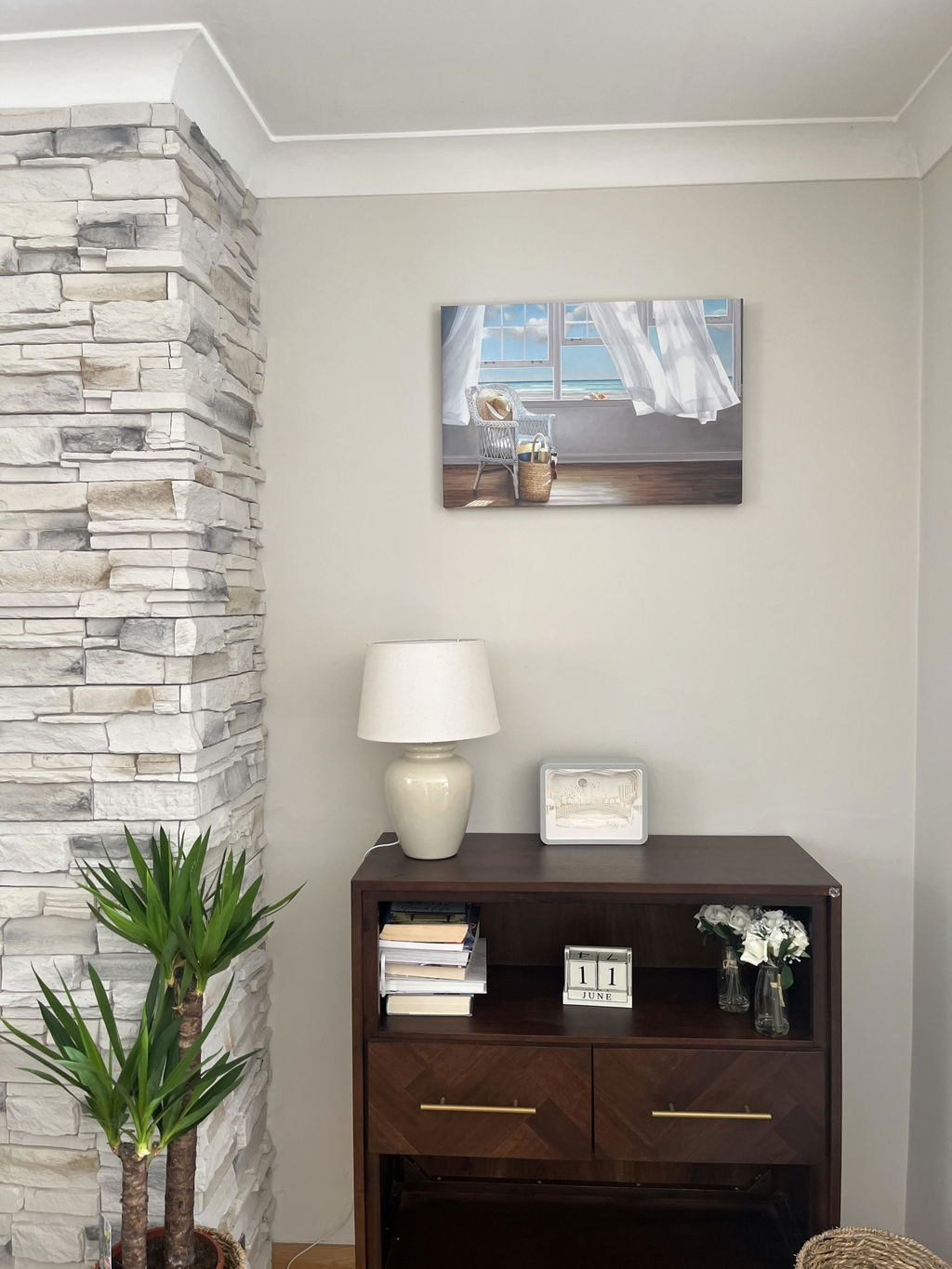
In a living room, Hendrix art usually works best as the focal point above a sofa, sideboard, or record cabinet. If the piece is colorful, let nearby furniture stay disciplined. Think clean-lined seating, one or two textured textiles, a dark wood surface, and a plant with sculptural height.
You don't need every object in the room to feel “rock and roll.” In fact, restraint makes the art look smarter. If you want supporting accents, look for materials with character rather than novelty. Browsing examples of one of a kind home decor can help you see how singular objects add personality without turning the room into a theme set.
Keep the room modern, then let the Hendrix piece introduce rhythm, color, and memory.
Home office and studio
A home office offers more freedom, allowing smaller framed portraits, graphic reinterpretations, or a compact gallery wall to shine. Try pairing Hendrix with abstract works, typography, or a single geometric print to prevent the arrangement from feeling too literal.
If the office has shelves, don't crowd the wall art with too many small objects beneath it. Visual noise weakens the image. Leave some quiet space so the eye can return to the print.
A creative studio can go further. Here, a large psychedelic work can energize the room, especially if repeated through a few subtle echoes such as a jewel-toned cushion, smoked glass, or brass lamp.
Bedroom and hallway
These spaces often benefit from a softer approach. In a bedroom, choose contemplative imagery. A photographic portrait, a low-contrast modern interpretation, or a print with muted dark tones can feel intimate rather than performative.
In a hallway, Hendrix art works best when it creates a moment of surprise. A single striking piece at the end of a corridor can turn an otherwise neglected area into a destination.
The key in both spaces is editing. One strong piece often does more than several average ones.
Ensuring Authenticity and Quality in Your Art
Once you've chosen a style and placement, two practical questions matter. Is the artwork authentic in the sense that it's responsibly sourced? And is the print quality good enough to live with for years?
What authenticity means for buyers
Authenticity doesn't always mean owning a rare vintage original. For many, it means buying a legal, well-produced reproduction or licensed artist interpretation from a reputable seller. That matters because artists, estates, photographers, and publishers all play a role in how visual culture is preserved and shared.
If the listing is vague about image origin, materials, or production quality, pause. A good seller should make those details easy to find. You want clarity, not mystery.
Look for:
- Clear product descriptions
- Consistent image quality across the catalog
- Transparent return and shipping information
- Signs that the platform values artist attribution
What quality looks like in practice
Quality shows up in the details your eye notices over time. Good color fidelity keeps saturated Hendrix palettes from turning muddy. Sharp reproduction preserves hair, fabric, hands, and guitar contours. Better paper or canvas gives the image a more stable, finished presence on the wall.
Museum-quality printing usually points to a combination of careful reproduction, durable materials, and a finish that supports the artwork rather than flattening it. If you want to understand what separates a decorative print from one made for longer display, this guide to archival-quality prints and long-term print standards is worth reading.
A quick buyer's filter can help:
- Surface: Does the material suit the image style?
- Color: Do darks, brights, and skin tones look balanced?
- Finish: Does the frame or edge treatment match the room?
- Longevity: Will you still want this piece on the wall years from now?
Buy the version you won't need to apologize for later.
That's the simplest test of quality.
Bring Home the Voodoo Child
Jimi Hendrix art has staying power because it offers more than recognition. It offers atmosphere. Some pieces pulse with psychedelic motion. Some bring quiet authority through portraiture. Others reinterpret Hendrix in ways that feel fresh inside a modern interior.
The best choice usually isn't the loudest or most famous image. It's the one that fits your room's emotional tone, scale, and palette while still carrying that unmistakable Hendrix charge. When you choose with those factors in mind, the art stops being decoration alone. It becomes part of how the home feels.
A well-placed Hendrix print can make a living room more alive, a home office more focused, or a hallway more memorable. This is the enduring value of music-inspired wall art. It lets your space reflect what moves you, in a form you can live with every day.
If you're ready to find a piece that balances musical legacy with strong design, explore the curated wall art collections at Printano. Their range of formats, sizes, and artist-made prints makes it easier to choose Jimi Hendrix art that feels personal, polished, and at home in a modern space.