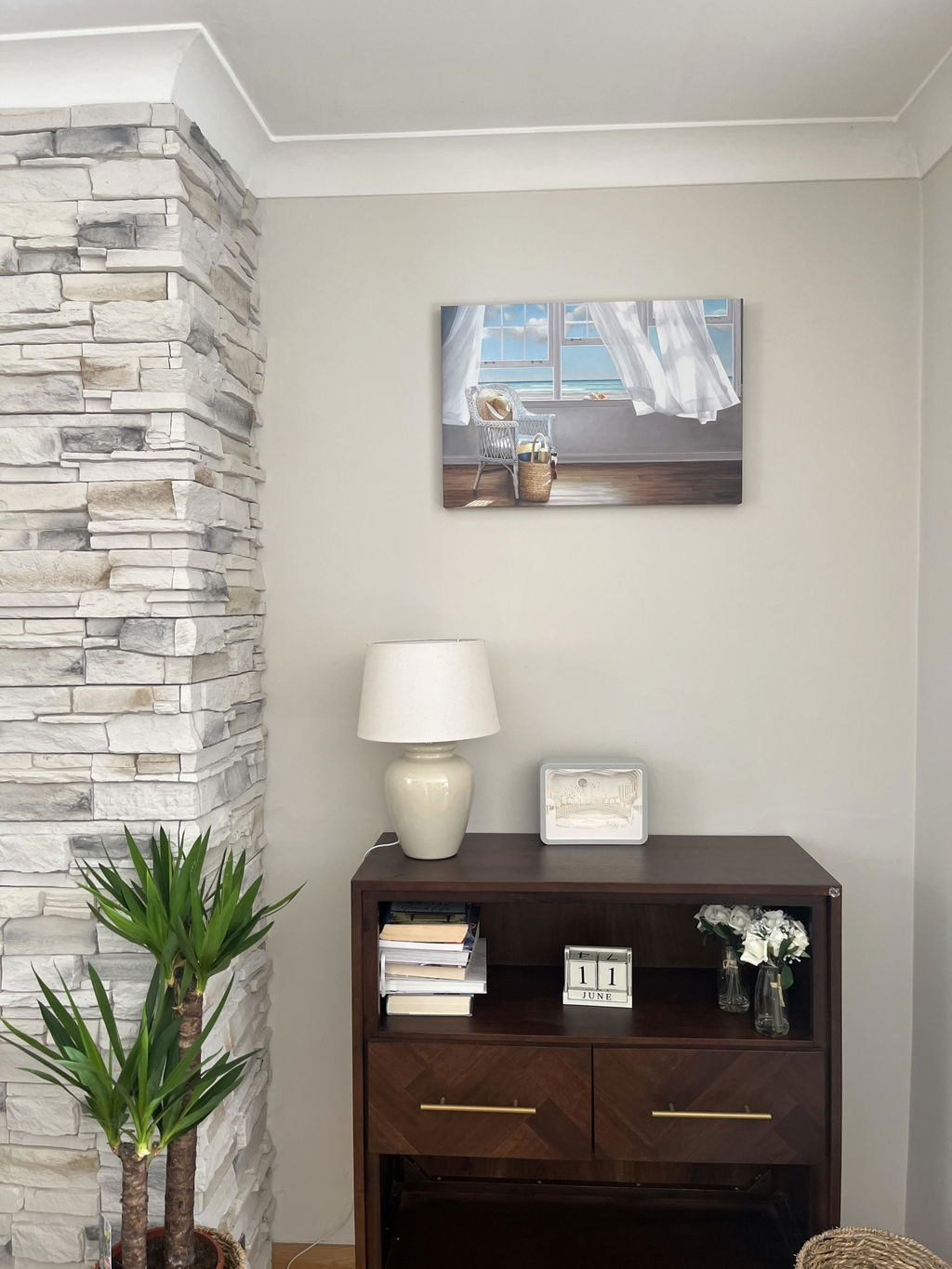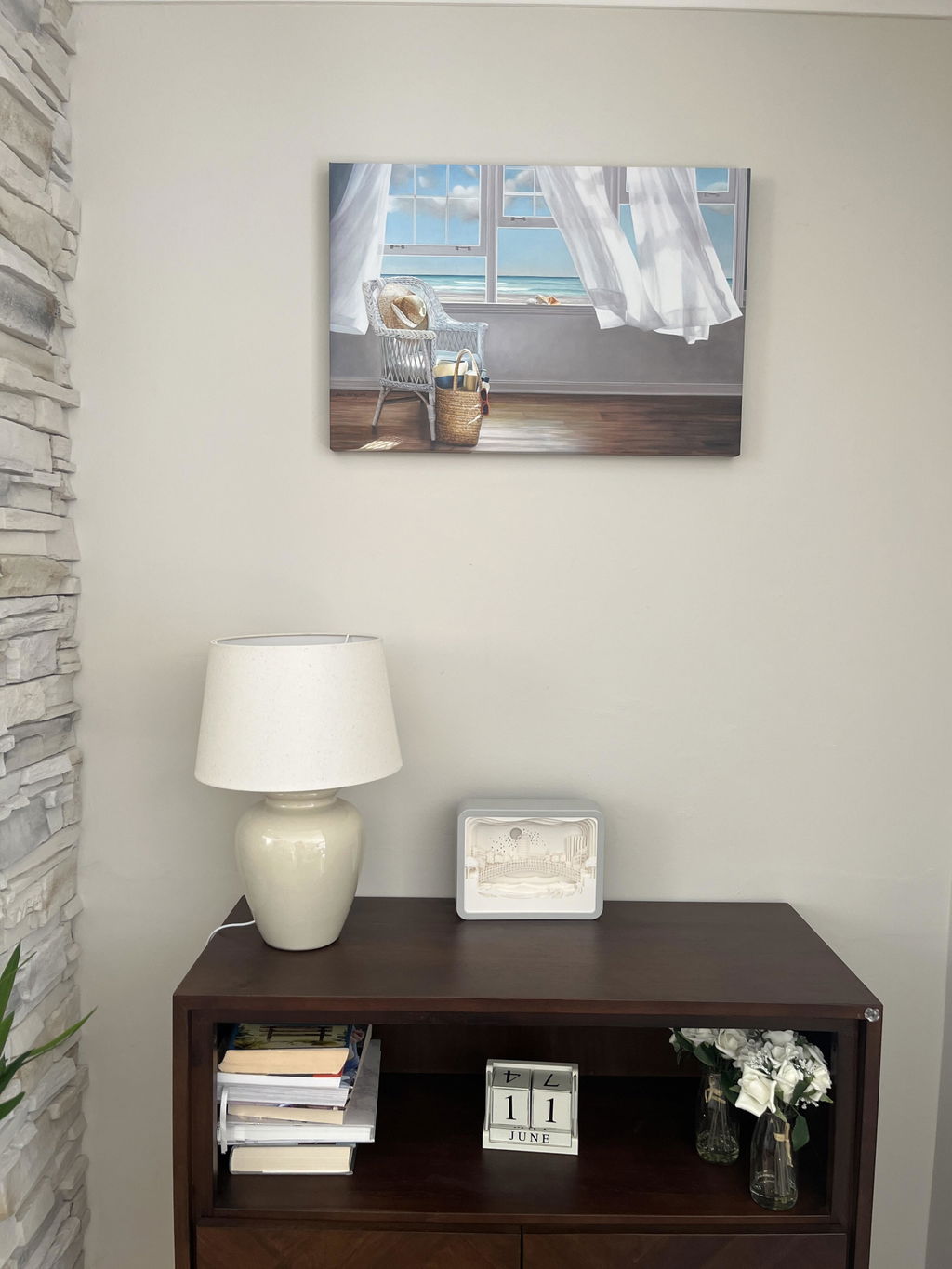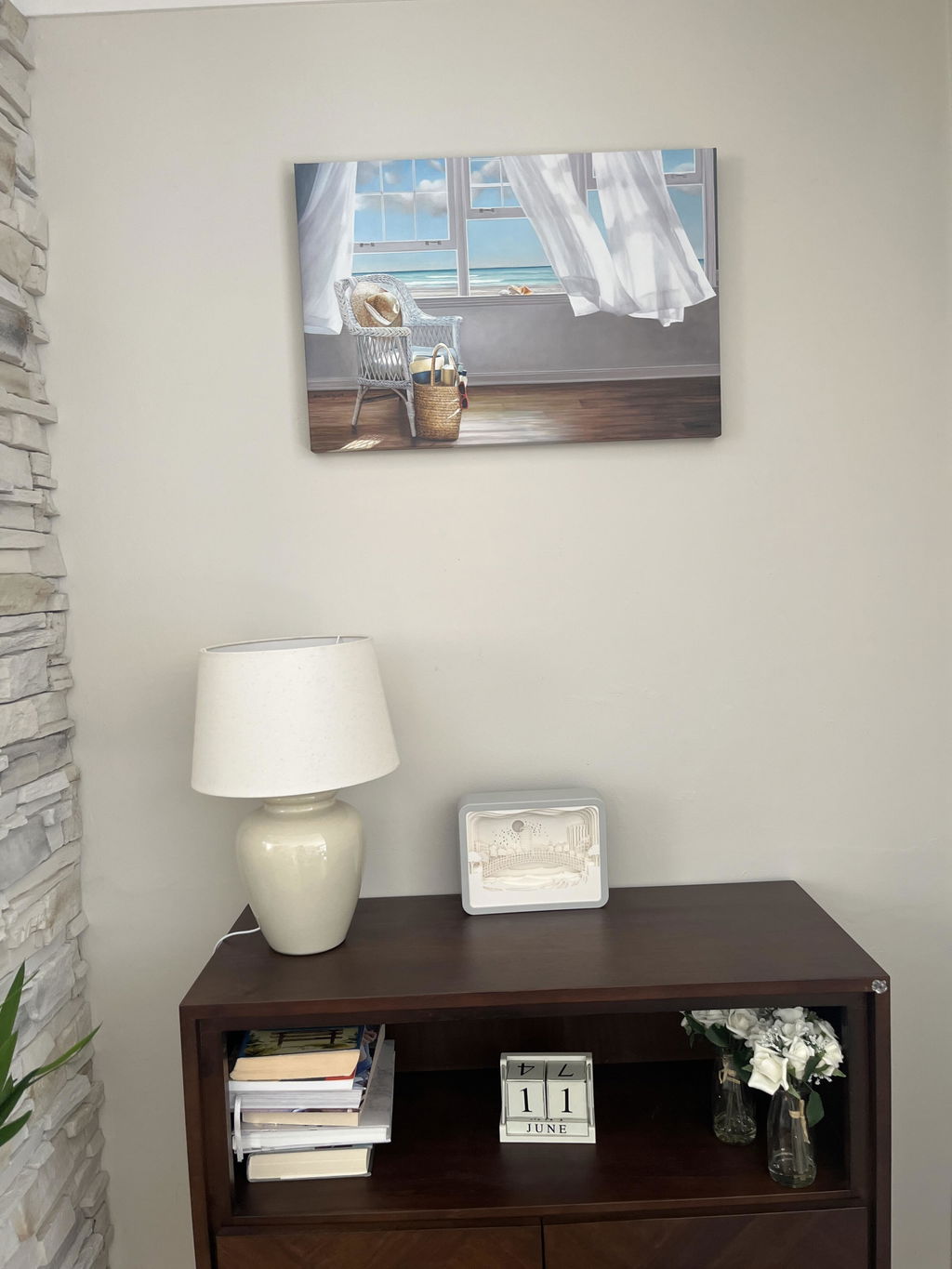

You're probably staring at a wall that feels bigger now that it's empty. The sofa is in place, the rug is down, the lamps are working hard, and still the room looks unfinished because that wide stretch above the furniture has no anchor. One small print disappears. A busy gallery wall can feel like too many decisions at once.
3 piece wall art earns its place. A triptych gives you scale without chaos. It creates presence, but it still feels organized. Instead of asking one small frame to do all the work, you let three related panels build a focal point together.
That's why so many people land here after trying to solve the same decorating problem. They want something polished, balanced, and easier to live with than a random mix of frames. If you've been thinking about a statement wall, looking at examples of feature wall artwork design can help you see how a single art direction changes an entire room. For a seasonal reset, this guide on refreshing your wall decor with framed art is useful too.
The good news is that triptych styling isn't mysterious. Once you understand what it is, how to choose the right set, and how to measure for placement, the whole process gets much simpler.
Table of Contents
- That Big Blank Wall Awaits Its Masterpiece
- The Power of Three What Is 3 Piece Wall Art
- How to Choose Your Perfect Triptych
- The Art of Proportion Sizing Your Artwork
- Perfect Placement Hanging and Spacing Your Art
- Styling 3 Piece Art in Different Rooms
- Find Your Perfect Triptych at Printano
That Big Blank Wall Awaits Its Masterpiece
A large blank wall can make a good room feel unfinished. You notice it when you sit down after a long day and your eye goes straight to the empty space above the sofa, bed, or console. The room has furniture, color, and texture, but it still lacks that one element that ties everything together.
A triptych solves that problem in a way few formats do. It has the presence of one larger composition, but the separation between panels keeps it light and architectural. The wall feels intentional instead of crowded.
Why one piece often feels too small
Many people start with a single framed print because it seems safe. Then they hang it and realize it looks stranded. The wall is still dominant, and the artwork feels like an afterthought.
Three coordinated panels change that relationship. The eye reads them together, so the composition has more breadth and more rhythm. That's why triptychs often feel custom to the room, even when the setup is straightforward.
A blank wall usually doesn't need more decoration. It needs better proportion.
Why a triptych feels easier than a gallery wall
Gallery walls can be beautiful, but they ask for a lot of decisions. You have to choose multiple pieces, balance shapes, mix frames, and commit to an arrangement that won't feel accidental.
A 3 piece wall art set gives you a clearer path:
- One visual direction: The panels already relate to each other.
- More wall coverage: You get width without needing lots of separate frames.
- A calmer result: The room gains a focal point without visual clutter.
That's why this format works so well for people who want a styled room but don't want to overcomplicate the process. It's a statement, but it's also practical.
The Power of Three What Is 3 Piece Wall Art
3 piece wall art usually refers to a triptych. The word sounds formal, but the idea is simple. It is one artwork divided into three panels so your eye reads the set as a single composition.
That matters because three panels do a job that one panel often cannot. They spread visual weight across the wall, create a steady rhythm, and make the arrangement feel planned. Designers use triptychs often because they bring structure without the complexity of arranging many separate pieces.

One artwork, three connected parts
A triptych works like a visual sentence broken into three lines. Your eye moves from one panel to the next, which gives the wall motion and direction.
Sometimes the center panel carries the main focus, and the side panels support it. In other sets, the middle acts as a pause while the outer panels balance the composition. Either way, the connection between panels is what makes the arrangement feel intentional instead of random.
This distinction becomes even more useful once you hang the piece. If the set is designed as one composition, spacing is not just decoration. Spacing becomes part of the artwork itself. That is why measurement rules matter so much with triptychs, especially when the panels are not all the same size.
Two common triptych styles
Three-piece sets usually fall into two clear categories:
| Type | How it looks | Best for |
|---|---|---|
| Continuous image | One larger image divided across three panels | Wide walls, dramatic focal points, open decorating schemes |
| Thematic series | Three separate but related images | Layered rooms, softer styling, more flexibility |
A continuous image feels more unified from across the room. It is often the better choice when you want the wall art to read as one strong statement.
A thematic series gives you more breathing room. Each panel can make sense on its own, but the set still feels cohesive because the color palette, subject, or mood repeats across all three pieces.
Why this format is easier to style well
Triptychs come with built-in order. The relationship between the pieces has already been resolved by the artwork itself, so you are not solving the whole design puzzle on your wall.
That is also why this format is such a helpful bridge between inspiration and installation. A beautiful set gives you the concept. Good spacing and sizing give you the professional finish. If you also enjoy grouped artwork beyond triptychs, this guide on how to decorate with sets of framed art shows how coordinated pieces can shape a room with the same sense of structure.
Practical rule: If the three panels do not connect through composition, color, or subject, they will read as three separate prints instead of one polished design choice.
How to Choose Your Perfect Triptych
You find a blank wall, spot a 3-piece set you love, and then hit the key question. Will it suit your room once it is hanging there?
The best choice starts with the feeling you want to create, then moves into practical filters that make the decision easier. That order matters. If you choose only by color or trend, the art can look fine on its own but disconnected from the room around it.
Start by naming the mood in plain words. Calm. Grounded. Airy. Dramatic. Collected. This gives you a target, like choosing the right lighting before you pick a lampshade. The triptych becomes much easier to choose when you know the emotional job it needs to do.
Match the subject to the room's mood
Different subjects shape a space in different ways.
Abstract triptychs bring rhythm and motion. They work well in rooms that need energy or a stronger visual pulse, especially if you want the artwork to echo accent colors already used in textiles or decor.
Expansive vistas and wide scenic views create a sense of distance. That can make a bedroom feel quieter or help a living room feel less heavy, especially when the furniture has strong lines or darker finishes.
Botanical, minimalist, and softly detailed sets often calm a busy room. If your space already has patterned upholstery, textured rugs, or noticeable materials like wood grain or stone, quieter art can keep the wall from feeling crowded.
A good question to ask is simple: do you want the art to lead the room or support it? If the room already has a lot happening, support is often the smarter choice.
Choose a format that matches the room's finish level
The same image changes character depending on how it is made and presented. Canvas feels softer and more relaxed. A framed print looks cleaner and more defined. Unframed paper gives you the most control if you already know the exact frame profile, mat, or glass finish you want.
Here is a practical way to compare them:
- Canvas: Works well for a gallery-style look and a more casual, approachable finish.
- Framed print: Suits rooms that need sharper lines and a more polished appearance.
- Unframed paper print: Gives flexibility if you plan to custom frame the set yourself.
Printano offers framed art prints, unframed satin photo paper, premium textured paper, and canvas options. That range helps you match the presentation to the room instead of forcing every space into the same format.
Use a short filter process while shopping
Too many good options can make people freeze. A simple filter solves that.
First, pull one or two colors from the room. Look at the rug, curtains, bedding, or sofa, not just the paint color. Repeating even a small color note helps the triptych feel intentional.
Next, check the visual direction of the wall. A wide wall usually suits a composition that reads horizontally. A taller, narrower area can handle artwork with more vertical movement, even within a 3-panel arrangement.
Then decide how polished the room should feel. Looser brushwork and organic shapes usually suit casual spaces. Cleaner lines, quieter palettes, and more structured imagery often fit formal rooms better.
If you are deciding between a triptych and one larger statement piece, this guide to oversized art for bold focal points can help you compare the two directions.
One detail many guides skip
Some triptychs use three equal panels. Others use one larger center panel with narrower side pieces, or three panels with different widths. That difference affects how the set feels before you ever get to installation.
Equal panels feel orderly and balanced. Uneven panels feel more custom and can look more architectural or more artistic, depending on the image.
If you are torn between two sets, choose the one whose panel structure matches the room's personality. Symmetrical furniture often looks stronger with evenly sized panels. Rooms with more organic layering can handle an uneven set beautifully.
Choose a triptych that fits the room's mood, finish, and visual structure. Filling wall space is easy. Making the wall feel considered is what creates a professionally styled result.
The Art of Proportion Sizing Your Artwork
You find a triptych you love, hold up your phone mockup above the sofa, and something still feels off. The art itself is beautiful. The problem is often simple math. If the set is too small, the wall swallows it. If it is too wide, the furniture underneath starts to feel crowded.
A useful rule is to size the full triptych so it spans about 60% to 75% of the furniture width above it. Measure the whole arrangement, not just the frames. That means the empty space between panels counts too.

Start with the anchor below the art
Measure the width of the sofa, bed, console, desk, or bench first. That piece acts like the visual base for the artwork above it, much like a frame supports a picture. Once you know that width, multiply it by 0.60 and 0.75. That gives you a comfortable target range for the total span of your 3-piece set.
For example, if your sofa is 84 inches wide, your triptych should usually span about 50 to 63 inches overall.
Count the full composition, including gaps
This is the step many guides skip, especially with uneven panel sets.
Your total width should include:
- Left panel width
- Gap between left and center panel
- Center panel width
- Gap between center and right panel
- Right panel width
If your panels are 16, 24, and 16 inches wide with 2-inch gaps, the total span is 60 inches. Not 56. Those gaps are part of what your eye reads on the wall, so they belong in the math.
That same rule applies if all three panels match in size. The eye sees one grouped composition, not three isolated pieces.
Uneven panel sizes need a different sizing check
An uneven triptych can be beautiful, but it asks for a little more planning. You cannot judge it by the center panel alone. A wide middle piece with narrow side panels may feel substantial in your hands but still read smaller on the wall than expected once spacing is added.
A quick way to avoid mistakes is to sketch the set as one long rectangle at its full outside width. Painter's tape works well for this. Tape the outer edges and the panel gaps directly on the wall, then stand back. You will get a much clearer read than you would from holding up one frame at a time.
A simple balance check
Use this table if you are deciding between two sizes:
| If the art feels... | It usually means... | What to do |
|---|---|---|
| Too small for the setup | The overall span is too narrow | Choose a wider set or larger panels |
| Too heavy above the furniture | The composition takes up too much width | Go down a size |
| Comfortably grounded | The set relates well to the piece below | Stay with that size |
For open walls with no furniture underneath, use the same logic. The set should claim enough space to feel intentional while still leaving clear wall around it.
If your room calls for something with more visual presence than a triptych can provide, this guide to oversized wall art for bold focal points can help you compare options.
One last sizing habit that saves frustration
Treat the triptych as one shape while planning. Then install each panel with precision.
If you want a practical refresher on leveling and measuring before you hang anything, this guide on how to hang pictures perfectly is a helpful reference.
Perfect Placement Hanging and Spacing Your Art
You have the art. You have the wall. Then the main question shows up. Where, exactly, does each panel go so the whole set looks intentional instead of slightly off?
Hanging a triptych is a little like aligning three notes in a chord. If one note shifts, the whole thing feels wrong. A beautiful set can lose its impact when the gaps are uneven, the center panel sits a touch high, or the side pieces are measured as if they were identical when they are not. That last mistake happens often with uneven sets, and it is the detail many guides skip.

Start with the center panel
The center panel is your anchor. Set it first, and the rest of the layout has a clear reference point.
Use this order:
- Mark the midpoint of the wall or the furniture below. This gives you the visual center.
- Hang the center panel first. Build the arrangement outward from there.
- Confirm it is level before adding anything else. Even a slight tilt becomes much easier to notice once all three pieces are up.
For general picture-hanging technique, this guide on how to hang pictures perfectly is a useful companion.
Here's a visual walkthrough before you start marking the wall:
How to space equal panels
When all three panels are the same width, the math is simple. Treat the set as one long composition and keep the gaps identical from left to right.
A small, consistent gap usually looks clean and connected. For many triptychs, about one inch works well, but consistency is the primary rule. A half-inch gap on one side and a wider gap on the other will read as a measuring error, even if viewers cannot explain why.
Keep these measuring habits in mind:
- Measure gap from frame edge to frame edge. Hardware placement can vary, so do not measure from hooks or wires.
- Check each panel with a level. Do not trust the ceiling line or the top of the sofa.
- Step back after each piece. Walls, floors, and furniture are not always perfectly straight, so a distance check matters.
How to hang uneven triptychs without guessing
Uneven sets need a slightly different method. If the center panel is wider than the two side panels, symmetry still matters, but mirror-image placement does not mean identical marks at every step.
Here is the easier way to handle it:
- Set the center panel first and measure out from its outer edges.
- Use the same visible gap on both sides.
- Mark each side panel based on that panel's actual width and hanging hardware.
That means your left and right hook marks may not land at matching distances from the wall center. That is normal. What needs to match is the finished visual spacing, not every measurement behind the frame.
A quick example helps. If your center panel is 24 inches wide, each side panel is 16 inches wide, and you want a 1-inch gap, start by hanging the 24-inch panel on center. Then measure 1 inch out from the left edge of the center panel to find where the next panel begins, and do the same on the right. After that, locate the hanging point for each 16-inch side panel according to its own hardware. This keeps the visible composition balanced, even though the hidden hook positions differ.
If your set uses floating frames, frame depth and shadow lines can change how wide the spacing looks once everything is on the wall. This guide to floating frame prints can help you judge that finished appearance before you commit to your marks.
One last practical tip. Tape the panel outlines and gaps on the wall before you drill. It takes a few extra minutes, but it can save you from three extra holes and a lot of second-guessing.
Styling 3 Piece Art in Different Rooms
The same triptych can feel entirely different depending on where it hangs. Room function changes what the artwork should do. In one space, it needs to anchor. In another, it should soften. In a narrow area, it may need to guide the eye instead of dominate the wall.
That's where styling gets fun. You stop asking, “Will this fit?” and start asking, “What job should this art do?”

Living room, bedroom, hallway, dining space
A living room usually benefits from a horizontal triptych above the sofa. That shape echoes the width of the seating and helps the whole area feel grounded. Abstract art works well here because it adds movement without becoming too literal.
A bedroom calls for a quieter mood. A soft depiction of a serene setting or restrained abstract set above the headboard can make the room feel settled and restorative. You want the art to support rest, not perform for attention.
Hallways and entry zones often need vertical energy. A three-piece arrangement that draws the eye upward can make a narrow stretch feel more designed. In a dining area, a bolder set can help create atmosphere and become a conversation piece during gatherings.
Let the room's architecture guide the art
Good wall styling doesn't happen in isolation. Light fixtures, furniture shape, and ceiling lines all affect what the triptych should look like once it's up. If you're pairing art with a dining room pendant or entry chandelier, this reference on how to size your lighting helps you coordinate the visual weight of both elements.
Try thinking about room-by-room styling this way:
| Room | Best triptych effect | Good subject direction |
|---|---|---|
| Living room | Anchors the seating area | Abstract, landscape, graphic neutral |
| Bedroom | Softens the wall above the bed | Landscape, botanical, calm abstract |
| Hallway or entry | Adds rhythm and direction | Minimal forms, architectural lines |
| Dining room | Sets mood and conversation | Bold abstract, expressive imagery |
The right triptych doesn't just fill a wall. It changes how the whole room feels when you walk in.
Find Your Perfect Triptych at Printano
You've measured the wall, pictured the room, and narrowed down the style. Then comes the part that often stalls the decision. Which set will look right once it is out of the box and on the wall?
That is where a curated collection helps. Instead of sorting through endless art with no context, you can filter by color, format, and mood, then compare each option against a real wall in your home. The goal is not to find a piece that is attractive on its own. The goal is to find one that fits the space the way a well-sized rug or pendant light fits a room.
Printano is useful here because the shopping process supports the same decisions you just worked through in this guide. You can choose framed, canvas, or paper formats, review color direction, and shop with a specific wall in mind rather than guessing and hoping it works later.
A lot of hesitation comes from two practical questions. Will the quality feel good in person, and will the buying process feel manageable? Clear print standards, sustainable materials, protective packaging, shipping with tracking, and a 30-day return policy help answer those concerns before you commit.
If you want a starting point, Three Vases I is a strong example of a triptych with clear structure. It has enough presence to anchor a wall, but the composition is calm enough to work in a layered, design-conscious room.
Use this simple checklist before you buy:
- Start with one wall: Shop for the exact spot, not for a vague future room.
- Match the room's existing palette: Repeating one or two colors already in the space makes the art feel connected.
- Choose the format early: Framed art presents a polished appearance. Canvas feels softer and more relaxed. Paper gives you flexibility if custom framing is part of the plan.
- Review panel proportions: If one panel is taller or wider, make sure you are ready to hang the set using the measurement method from earlier, not by eyeballing the tops.
- Picture the final span: The full width of the three panels plus the gaps matters just as much as the art itself.
Good triptych styling sits right at the meeting point between inspiration and installation. You need both. A piece can be beautiful and still feel off if the scale, spacing, or panel relationship is wrong.
Once you know how to choose with measurements in mind, the process gets much easier. Browse Printano with your wall width, target span, and preferred format written down, and you will shop with the confidence of someone who already knows how the finished result should look.